Why Sales Automation Services Are Changing the Way Businesses Grow
Sales automation services are tools and strategies that replace repetitive, manual sales tasks — like data entry, follow-ups, and scheduling — with automated workflows, freeing your team to focus on closing deals.
Here's a quick overview of what sales automation services typically include:
What It Does Example Automates lead capture and scoring Ranks prospects by purchase readiness Manages CRM data entry Auto-fills contact records from web forms Sends follow-up sequences Triggered emails after a demo or inquiry Schedules meetings Calendar booking without back-and-forth Generates sales reports Real-time pipeline dashboards Routes leads to reps Assigns hot leads instantly based on score
Here's a number that should stop you in your tracks.
According to a Salesforce study, sales reps spend only 28% of their time actually selling. The other 72%? Gone. Eaten up by admin work, data entry, pipeline updates, and endless follow-up emails.
That means if you have a sales team, most of their day has nothing to do with sales.
And it gets worse. Research shows that almost 41% of a sales rep's time goes into non-revenue activities — things like scheduling meetings, managing pipelines, and sending invoices. Tasks that feel necessary but don't move the needle.
The good news? More than 30% of all sales-related tasks can be automated right now, with tools that already exist.
That's exactly what this guide is about. No fluff, no hype — just a clear breakdown of how sales automation works, which tools matter, and how to implement it without disrupting your team.
I'm Mike Ibrahim, Founder and CEO of RewardLion and Marketing Director for several companies, with over a decade of hands-on experience designing and deploying sales automation services that actually drive revenue. I've seen what happens when businesses stop letting their best salespeople drown in admin work — and the results are hard to ignore.
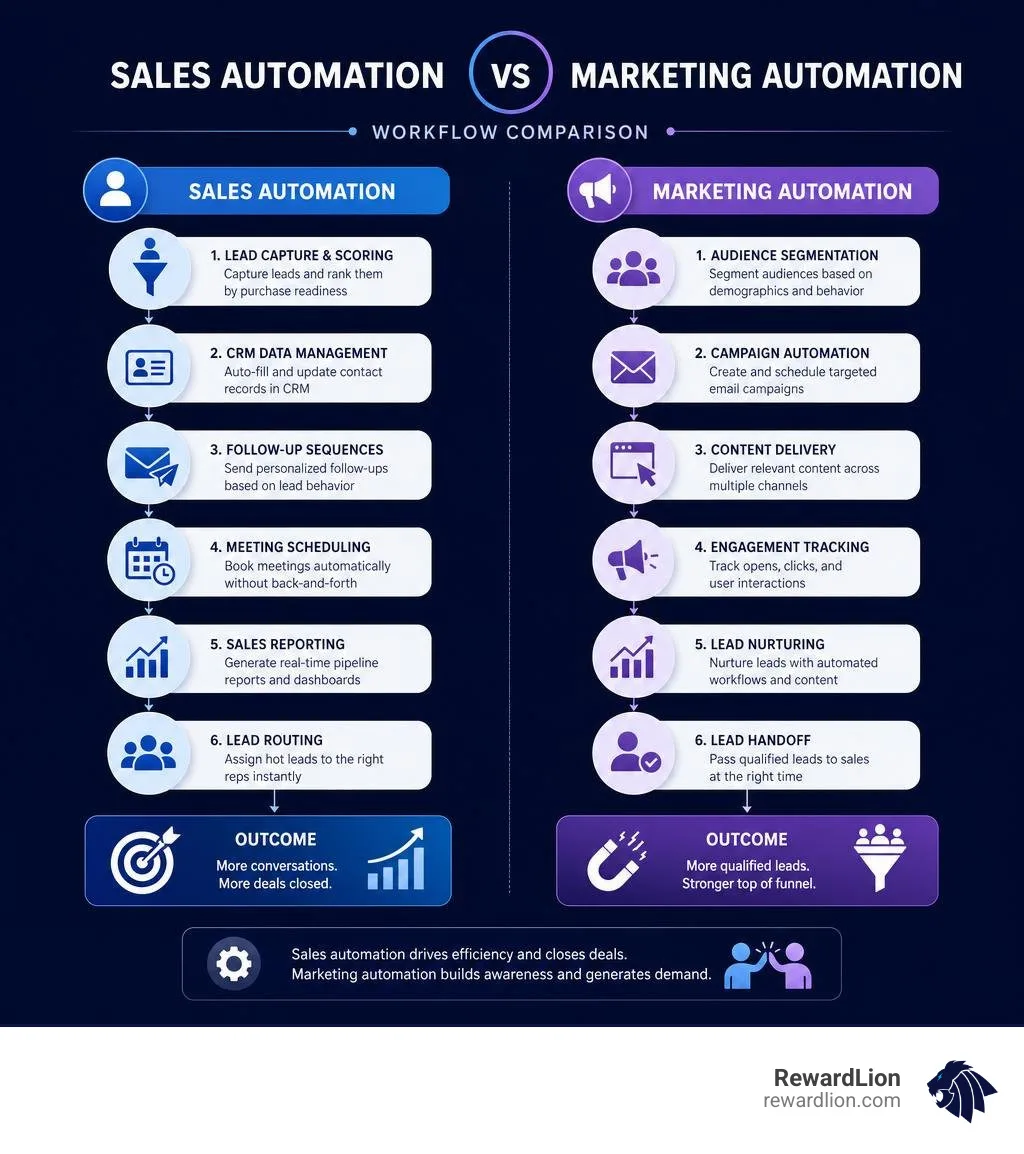
What is Sales Automation and How Does It Differ From Marketing Automation?
To understand how to fix your sales pipeline, we first need to define what we are actually building. At its core, sales automation is the strategic use of software to eliminate the manual, repetitive administrative tasks that keep your reps chained to their desks. Instead of manually copying email addresses, typing out standard follow-ups, or dragging deals across a digital board, an automated marketing platform and an integrated sales pipeline handle these tasks in the background.
This integration relies on bidirectional data sharing. When a prospect interacts with your website, that data flows directly into your CRM. When a sales rep closes a deal, that outcome loops back to update your system. This continuous feedback loop ensures that your customer journey is seamless and that your sales pipeline remains accurate without requiring hours of manual data entry.
Defining Sales Automation Services for Modern B2B Growth
When we talk about professional sales automation services, we are referring to the systematic design, setup, and optimization of your sales technology stack. This is not just about buying a subscription to a software tool and hoping for the best. It is about workflow streamlining, custom CRM integration, and establishing operational efficiency.
For many growing organizations, setting up these systems can be incredibly daunting. That is why businesses often look for a marketing automation software for small business that can grow with them. True sales automation services align your tools with your actual sales process, ensuring that every trigger, email sequence, and lead routing rule matches how your human reps actually close deals.
Sales Automation vs. Marketing Automation: Key Differences
It is incredibly common for businesses to confuse marketing automation with sales automation. While they work together to drive customer acquisition, they serve different stages of your pipeline:
Marketing Automation: This focuses primarily on the top-of-funnel activities. It manages broader marketing initiatives, such as running email newsletter campaigns, tracking social media engagement, and nurturing cold leads over time.
Sales Automation: This steps in at the middle and bottom-of-funnel. It is highly focused on direct, one-to-one sales activities, such as pipeline management, scheduling specific discovery calls, generating custom proposals, and managing the direct lead handoff from marketing to sales.
When these two systems are aligned, the handoff is seamless. Marketing captures and warms the lead, and the moment that lead exhibits buying behavior, the sales automation system routes it to the right representative for immediate personal outreach.
The Core Benefits of Implementing Sales Automation Services
When you implement professional sales automation services, you are not just buying back time; you are fundamentally changing the revenue potential of your business. Organizations that adopt sales automation report higher customer satisfaction, massive efficiency improvements, and a significant sales uplift.
If your team is managing deals manually, you are leaving money on the table. Moving to a modern sales automation software saas allows you to scale your outreach without losing the personal touch that closes deals.
Driving Efficiency and Job Satisfaction
The impact of automation on your internal team is profound. Industry reports show that 89% of workers report higher job satisfaction when their roles incorporate automation tools. Why? Because nobody goes into sales to fill out spreadsheets. They go into sales to talk to people, build relationships, and close deals.
By eliminating non-revenue generating activities, you allow your team to do what they do best. High-performing sales reps spend 20% to 25% more time with customers than lower-performing reps. Automation closes this gap by handling the admin work, giving your entire team the freedom to focus on direct customer interaction.
Enhancing Lead Generation, Scoring, and CRM Accuracy
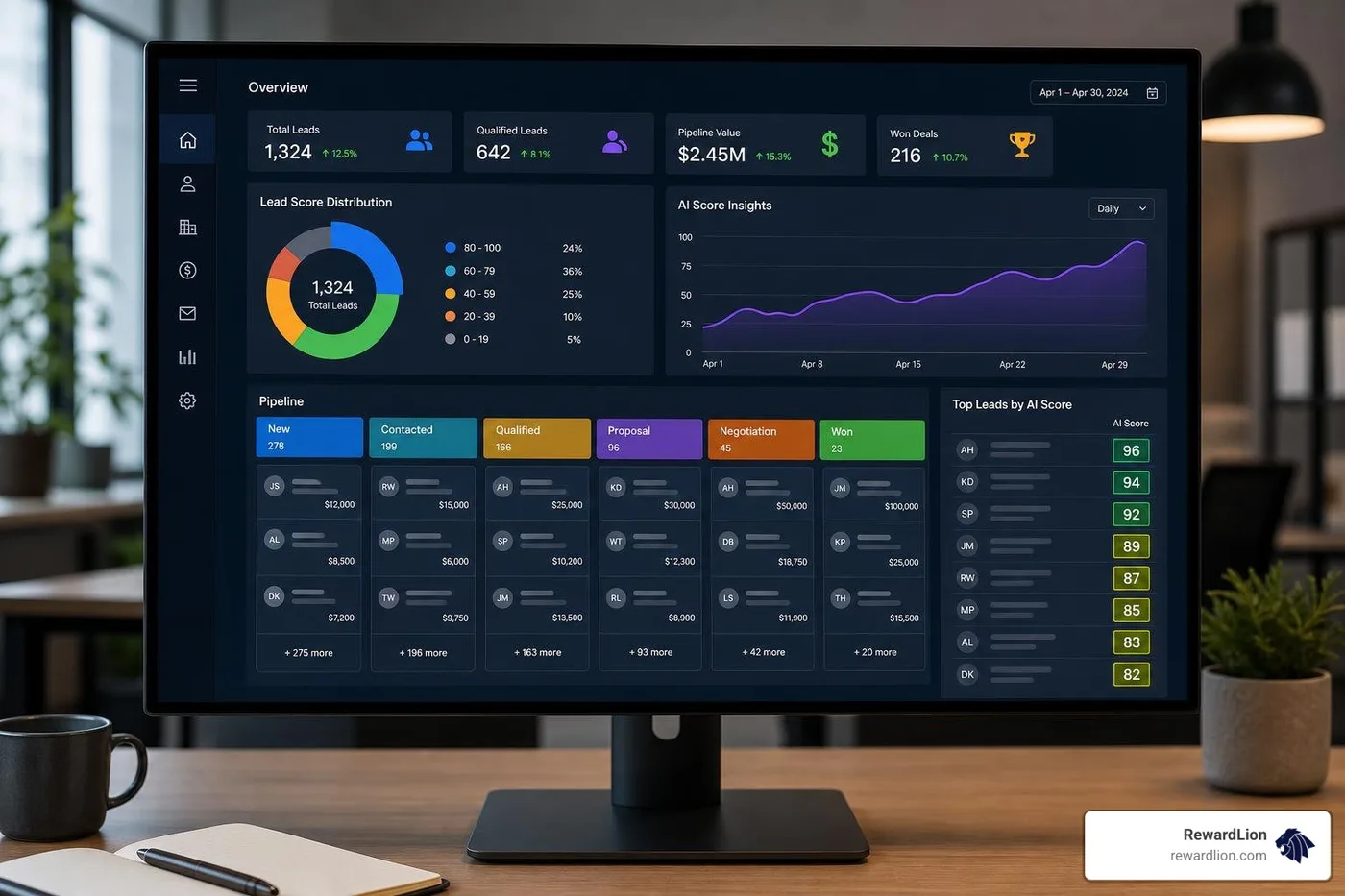
One of the most immediate financial impacts of sales automation is in lead management. Companies that implement automation in their sales process generate around 16% more leads compared to those using manual processes.
Using intelligent lead automation software, you can automatically score leads based on demographic data and behavioral triggers (such as visiting a pricing page or downloading a case study). Instead of your reps wasting hours calling cold contacts, the system automatically prioritizes the hottest leads, ensuring your team only speaks to prospects who are ready to buy.
Manual Tasks You Can Automate to Reclaim Your Sales Pipeline
If you look closely at your sales team's daily calendar, you will find it is clogged with tasks that do not require human creativity or empathy. Salespeople spend roughly 70% of their time on non-selling activities, and 41% of their time is swallowed by pure administrative tasks.
By utilizing small business automation software, you can turn these manual bottlenecks into hands-off workflows.
Manual Sales Task Automated Workflow Solution Manually typing contact details into CRM Web forms automatically parse and create CRM contact records Sending follow-up emails one-by-one Triggered personalized sequences deploy based on prospect behavior Playing email tag to schedule a call Integrated booking links let prospects pick a time directly Manually drafting and calculating proposals CPQ systems generate accurate, localized proposals instantly Copying data to create invoices Integrated billing tools generate invoices upon deal closure
Streamlining Administrative Tasks and Customer Data Entry
Think about the steps your reps take after a successful discovery call. They have to create a contact, schedule the next meeting, update the pipeline stage, and perhaps even generate an invoice or proposal.
With modern digital marketing automation software, these steps happen instantly. A single button click can move a deal to "Proposal Sent," trigger an automated email sequence containing the proposal, and schedule a reminder for the rep to follow up three days later if the document remains unopened.
Leveraging CRM, CPQ, and Email Platforms
Enterprise-level efficiency requires your core platforms to speak to one another. A bi-directional CRM sync ensures that any update made by a sales rep on their mobile app instantly reflects in your central database.
Furthermore, integrating CPQ (Configure, Price, Quote) software allows your team to generate highly complex, customized proposals in seconds. These tools can automatically pull localized tax data, apply pre-approved discount rules, and route the document for internal approval before sending it to the client. This dramatically shortens the sales cycle, a benefit highlighted in extensive McKinsey research on sales automation.
The Role of AI, Machine Learning, and Future Trends in Sales Automation
We are currently living in the most exciting era of sales technology. In 2026, sales automation has evolved far beyond simple rules-based "if-this-then-that" workflows. Today, machine learning and predictive analytics are helping businesses understand customer behavior before a sales rep even picks up the phone.
By integrating sales automation ai tools into your stack, your system can analyze customer interactions, email sentiment, and even behavioral signals during video calls to determine a prospect's true level of interest.
How Generative AI and Agentic AI Power Modern Sales
Generative AI and autonomous AI agents are completely redefining outreach personalization. Instead of sending generic email templates, an ai driven sales platform can draft hyper-personalized messaging at scale, tailored to a prospect's specific industry, job title, and recent company news.
These AI-driven systems are incredibly effective. For instance, in real-world applications, businesses deploying natural language processing (NLP) and generative AI to power customer-facing virtual assistants have successfully reduced direct customer queries by 30%, freeing up human teams to handle only the most complex, high-value conversations.
Predictive Analytics and the Future of Forecasting
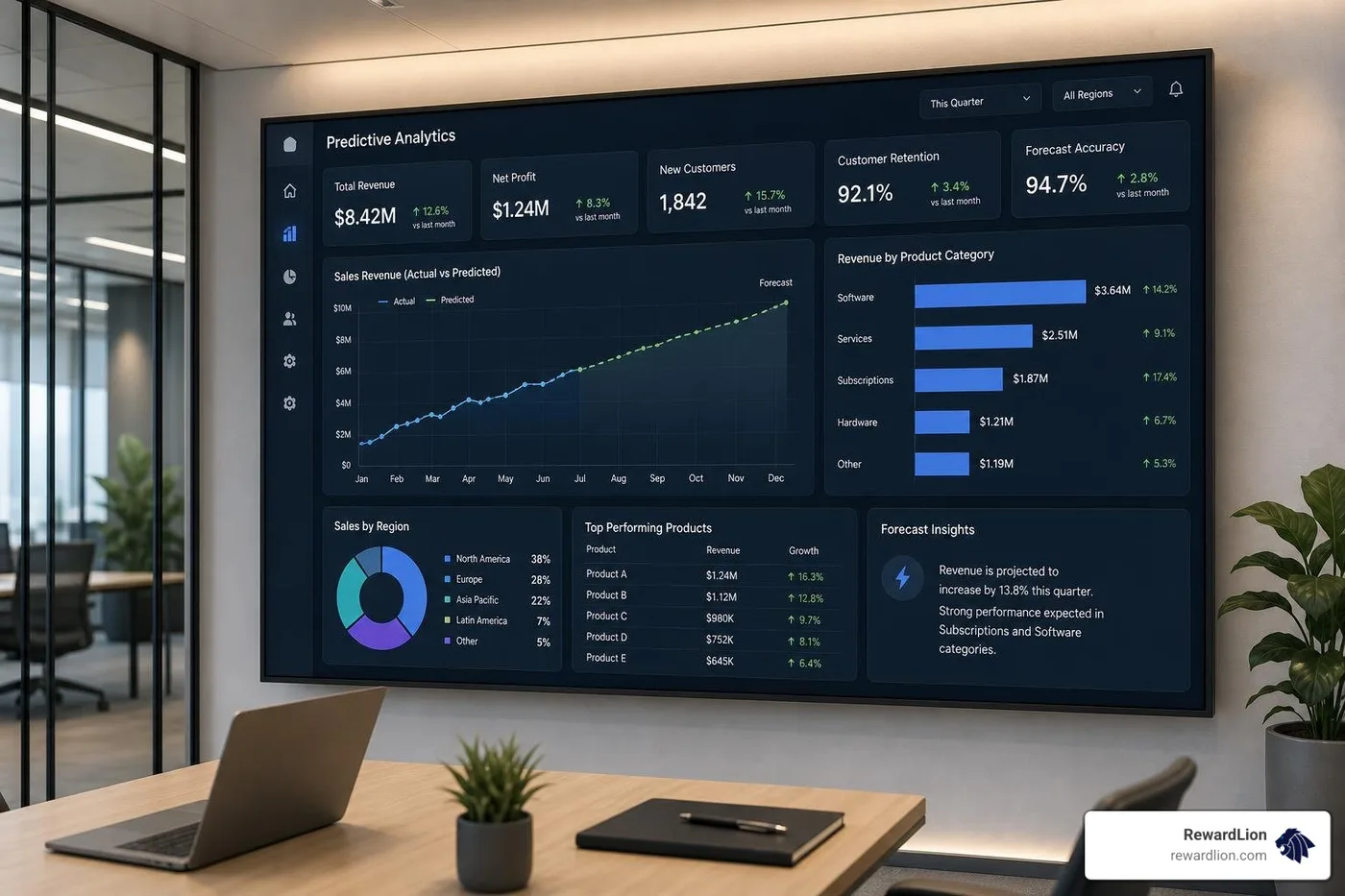
Accurate sales forecasting has historically been a major headache for sales managers. However, sales teams that leverage intelligent, predictive capabilities experience a 10.5 times more positive impact on forecasting accuracy compared to teams relying on manual spreadsheets.
By analyzing historical data, pipeline risk, conversion probabilities, and real-time buyer intent, an ai sales funnel builder can tell you exactly which deals are likely to close this month and which ones require immediate attention to save.
Overcoming Implementation Challenges: A Step-by-Step Strategy
While the benefits are clear, implementing sales automation is not without its challenges. Many businesses struggle with fragmented technology stacks, legacy systems that refuse to communicate, and internal data silos.
Without a clear strategy, adding new software can create more technical friction rather than solving it. To prevent this, your implementation must be guided by clean sales and marketing analytics to ensure you are automating the right steps.
Navigating Upskilling, Data Privacy, and Software Selection
One of the biggest hurdles in adopting new technology is change management. Your sales reps may be hesitant to adopt new tools if they feel the software is too complicated or designed to micromanage them. Upskilling your team and proving that automation is there to help them sell more—not replace them—is vital.
Additionally, data privacy must be a top priority. As you automate customer data collection and outreach, you must ensure your tools and workflows comply with international and local regulations, such as GDPR and CCPA. Selecting scalable, secure platforms is essential for protecting both your business and your customers.
Step-by-Step Implementation and Team Training Best Practices
To successfully roll out sales automation in your organization, we recommend following a structured, phased approach:
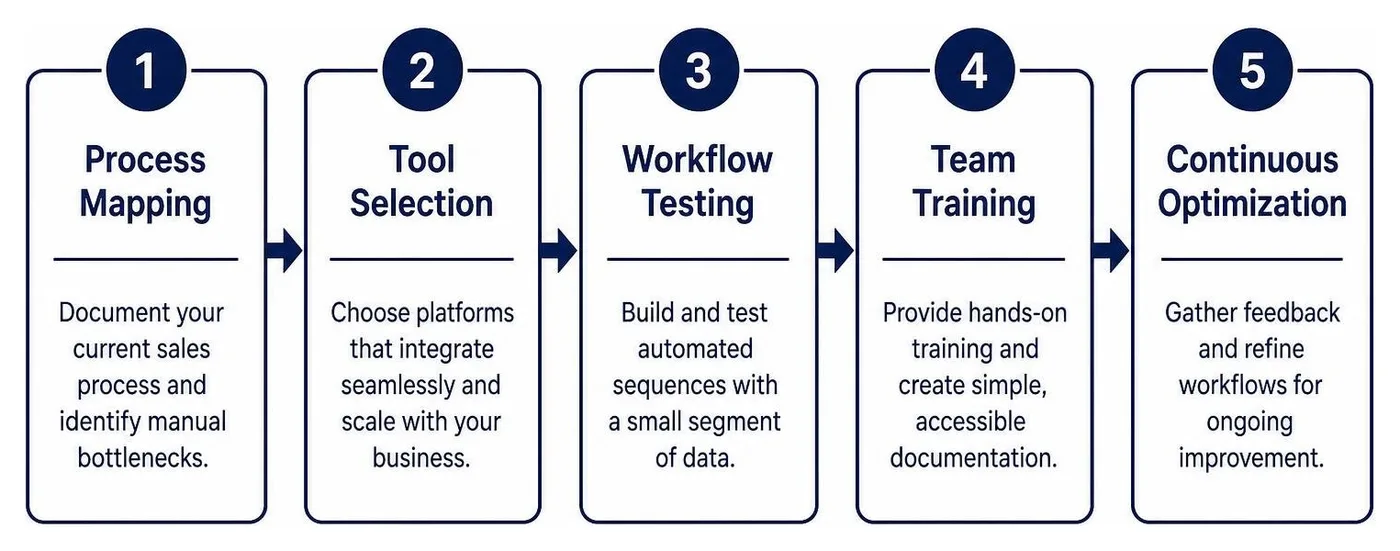
Process Mapping: Document your current sales process from the very first touchpoint to the final signature. Identify the manual bottlenecks.
Tool Selection: Choose platforms that integrate seamlessly with your existing CRM and offer the flexibility to grow with your business.
Workflow Testing: Build and test your automated sequences with a small segment of data before rolling them out to the entire team.
Team Training: Provide hands-on training sessions and create simple, accessible documentation for your reps.
Continuous Optimization: Establish feedback loops with your sales team to find out what is working and where workflows need to be adjusted.
Frequently Asked Questions About Sales Automation Services
What are the most critical sales automation services for small businesses?
For small businesses, we recommend starting with the fundamentals: a robust CRM setup, automated email follow-up sequences, instant lead routing, and automated calendar scheduling. Automating these four areas removes the immediate administrative burden from your team and ensures no lead falls through the cracks.
Does automating the sales process replace human sales representatives?
Absolutely not. Sales will always rely on the human touch, relationship building, and trust. Automation is a tool for sales enablement; it is designed to handle the administrative busywork so your reps can spend more time having meaningful, high-value conversations with actual human buyers.
How do you measure the ROI of sales automation tools?
You should track key performance metrics such as lead-to-opportunity conversion rates, overall sales cycle length, average revenue generated per sales rep, and your customer acquisition cost (CAC). When automation is implemented correctly, you should see a noticeable decrease in your sales cycle length and a significant increase in revenue per rep.
Conclusion: Let RewardLion Build Your Automated Sales Engine
Building, integrating, and managing a modern sales automation system is a massive undertaking. Between selecting the right software, writing personalized email sequences, connecting APIs, and training your team, it is easy for business owners to get overwhelmed by the technical complexity.
That is where RewardLion comes in.
We don't just sell you another piece of software and leave you to figure it out. RewardLion provides an AI-powered all-in-one operating system that unifies your marketing, sales, automation, and analytics into a single, connected platform.
But the real magic is our hybrid model. Each component of your system is fully implemented, optimized, and managed by your dedicated CAPSS team — our fractional, in-house marketing and automation experts. We handle the heavy lifting, from CRM configuration and pipeline setup to deploying 24/7 AI assistants and automated lead nurturing systems.
Whether you are based near our Florida roots in Fort Lauderdale, Las Olas, Miami, or Boca Raton, or operating anywhere across the United States and internationally, we are ready to install a fully connected growth system built to scale your business.
Stop letting your sales team waste 72% of their day on administrative tasks. Let us build an automated sales machine that runs 24/7.
Ready to see how we can transform your pipeline? Get Your Custom Quote today and let's build something incredible together.