Why Most Businesses Are Already Behind on Marketing Automation
If you're evaluating an automated marketing platform for your business, you'll find a wide range of solutions tailored to different needs—from AI-driven workflow automation and comprehensive CRM suites to specialized tools for ecommerce and newsletter management. Pricing typically scales with your business, offering everything from entry-level free tiers to robust professional plans.
Marketing used to mean manually scheduling emails, copying data between spreadsheets, and hoping the right message reached the right person. In 2026, that approach doesn't just slow you down — it costs you real revenue.
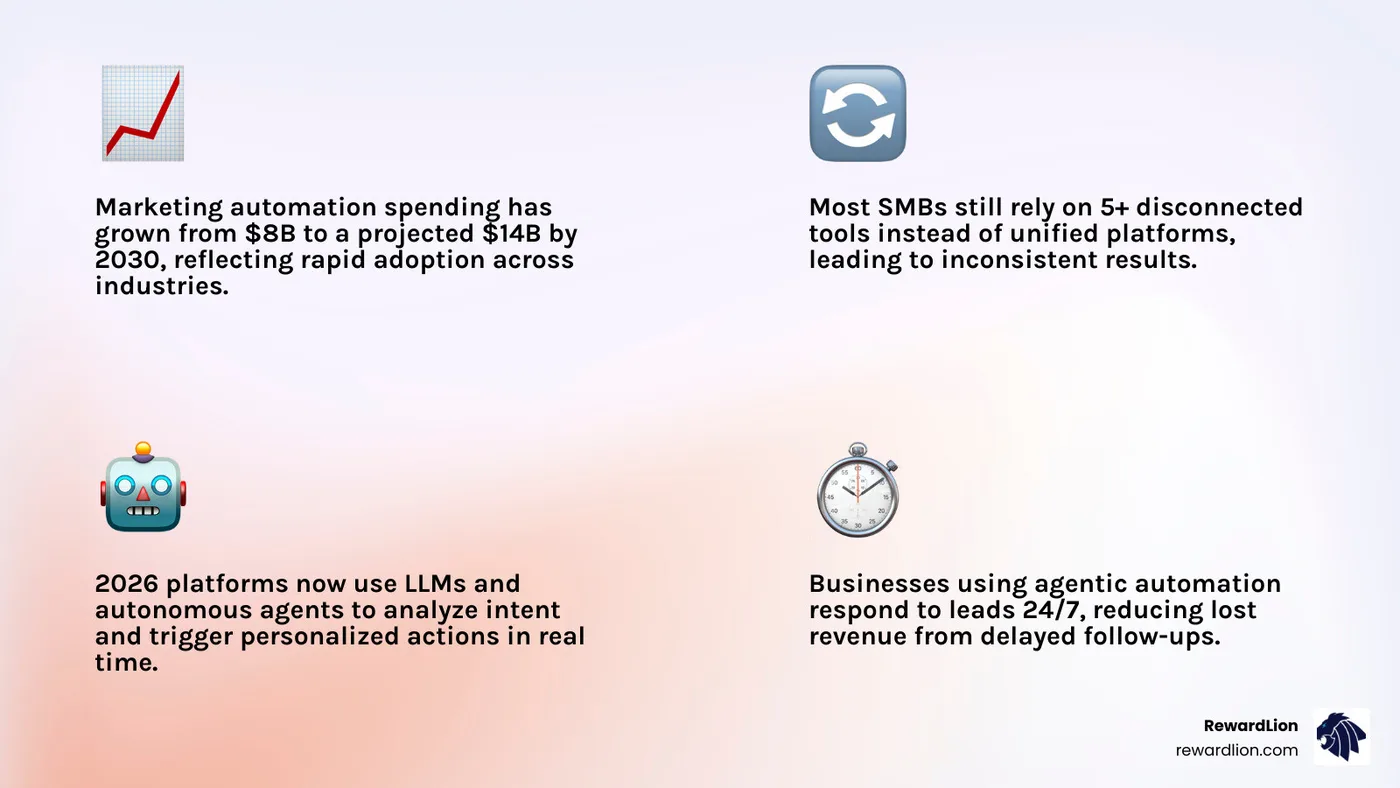
The marketing automation industry is now worth over $8 billion per year and is projected to climb to nearly $14 billion by 2030. That growth isn't hype. It reflects how many businesses are replacing manual, fragmented workflows with platforms that run campaigns, qualify leads, and personalize experiences automatically — around the clock.
The problem? Most small and medium-sized businesses are still stitching together five or six disconnected tools and wondering why results are inconsistent.
I'm Mike Ibrahim, Founder and CEO of RewardLion and Marketing Director for several companies, and I've spent over a decade testing automated marketing platform solutions across industries to find what actually drives growth. In this guide, I'll walk you through the platforms worth your time — and help you find the right fit for your business size and goals.
Evolution of the automated marketing platform in 2026
The landscape of marketing has shifted dramatically as we move through 2026. If you look back just a few years, automation was primarily "if-this-then-that" logic. Today, an automated marketing platform is no longer just a series of static triggers; it is a living, breathing ecosystem powered by Large Language Models (LLMs) and autonomous agents.
We have moved into an era where Digital Marketing Automation Software does more than just send an email when someone clicks a link. It analyzes the intent behind that click, cross-references it with your CRM data, and decides whether to send a personalized video, a discount code, or alert a sales rep.
One of the most significant shifts we've seen is the rise of the "GTM (Go-To-Market) Engineer." Modern platforms have essentially created this new job category, where the focus is on engineering complex data flows rather than just "setting up a campaign." These systems allow us to scrape the web, enrich lead data from dozens of providers, and feed it directly into LLMs to write hyper-personalized outreach at a scale that was impossible two years ago.
According to the 13 Best Marketing Automation Platforms for 2026 - Insider One, the standard for success is now real-time data integration. If your platform isn't reacting to customer behavior within seconds, you're losing the window of opportunity.

The Role of Agentic AI in an automated marketing platform
The buzzword of 2026 is "Agentic Marketing." But what does it actually mean for your business? Unlike traditional automation that follows a rigid path, agentic AI acts as an autonomous collaborator. It doesn't just execute the strategy; it helps you build it.
Through Ai Automation For Agencies, we are seeing "autonomous agents" that can handle specialized tasks like:
Sentiment Monitoring: AI agents that scan social media and review sites in real-time to adjust brand messaging.
Predictive Audiences: Targeting users based on their "discount affinity" or predicted churn risk before they even realize they are unhappy.
Two-Way Conversations: Moving away from "Do Not Reply" emails to AI-powered chat and SMS that can actually answer customer questions and book appointments 24/7.
These agents use Ai Driven Sales Platform technology to ensure that every interaction feels human, even when it's fully automated.
Scaling Your Business with an automated marketing platform
For businesses in competitive markets like Miami, FL or Boca Raton, scaling requires being everywhere at once without hiring a massive team. This is where localized automation and similar regional strategies come into play.
By utilizing an automated marketing platform, you can achieve:
Omnichannel Reach: Syncing your message across email, SMS, WhatsApp, and even programmatic billboards.
24/7 Lead Response: Ensuring that a lead generated at 2 AM in Fort Lauderdale gets a response in seconds, not the next morning.
Workflow Templates: Using pre-built blueprints for abandoned carts or webinar nurtures so you don't have to reinvent the wheel.
Scalability is about efficiency. When your systems handle the repetitive tasks, your human team can focus on the creative strategy that actually moves the needle.
Essential Features for High-Growth Businesses
When we help businesses implement an automated marketing platform, we look for specific "non-negotiable" features. If a tool doesn't have these, it’s just an expensive email sender.
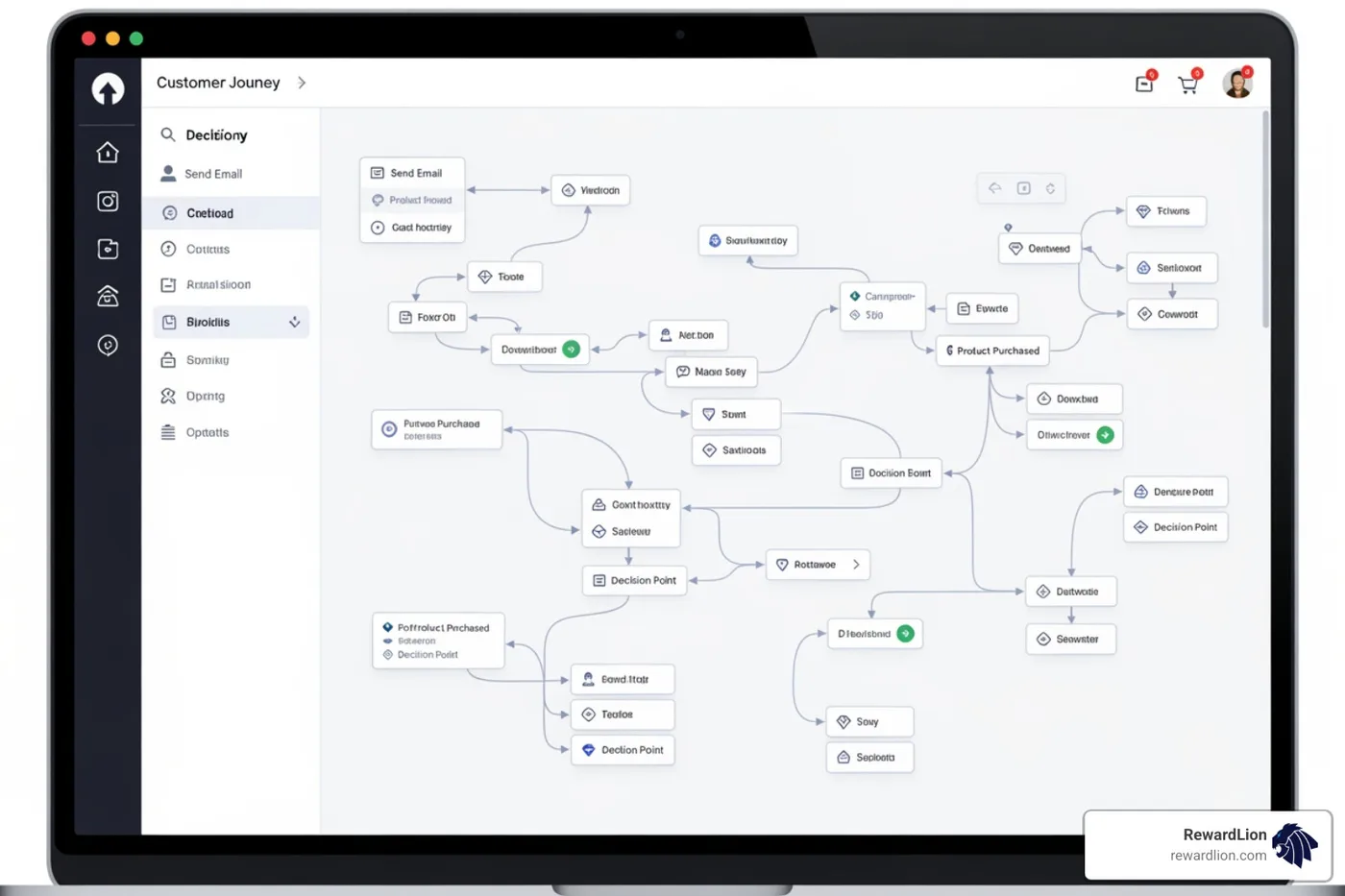
Cross-Channel Orchestration: Your platform must be able to "talk" to your social ads, your website, and your SMS gateway simultaneously.
Behavioral Triggers: The ability to trigger actions based on specific user actions—like spending more than 30 seconds on a pricing page.
CRM Synchronization: If your marketing tool doesn't update your sales CRM in real-time, your data is already stale.
Data Enrichment: Advanced tools that automatically pull in LinkedIn profiles, company size, and recent news about a lead.
A/B Testing with Auto-Selection: Modern platforms use machine learning to automatically send the majority of your traffic to the winning version of a campaign.
All-In-One Analytics: You need All In One Analytics to see the full journey from the first ad click to the final purchase.
Comparing Automation Solutions: SMBs vs. Enterprises
Choosing the right tool depends heavily on your scale. An SMB in Boca Raton has different needs than a global enterprise.
Feature SMB Point Solutions Enterprise Agentic Clouds Primary Focus Ease of use & Email/SMS Full lifecycle & AI Agents Pricing Model Contact-based (Starts low) Volume-based + Onboarding fees Implementation Days to Weeks Months Customization High within templates Infinite via API/Code Support Chat/Email Dedicated Account Managers
For smaller teams, Lead Automation Software needs to be intuitive. You shouldn't need a computer science degree to build a welcome sequence. However, enterprises require granular security compliance (GDPR, HIPAA) and the ability to handle millions of contacts without a glitch.
Implementation Strategies for Maximum ROI
Buying the software is only 20% of the battle. The other 80% is how you implement it. We've seen incredible results when businesses get this right:
Vodafone used on-site cart reminders to increase conversion rates by a staggering 159%.
Clarins implemented journey orchestration that led to a 45% increase in lead capture and a 30x ROI in just 12 weeks.
To see these kinds of numbers, you need to use Sales Automation Ai Tools to build a "Content Library" for every stage of the customer lifecycle. You also need a robust Sales Automation Software Saas strategy that includes:
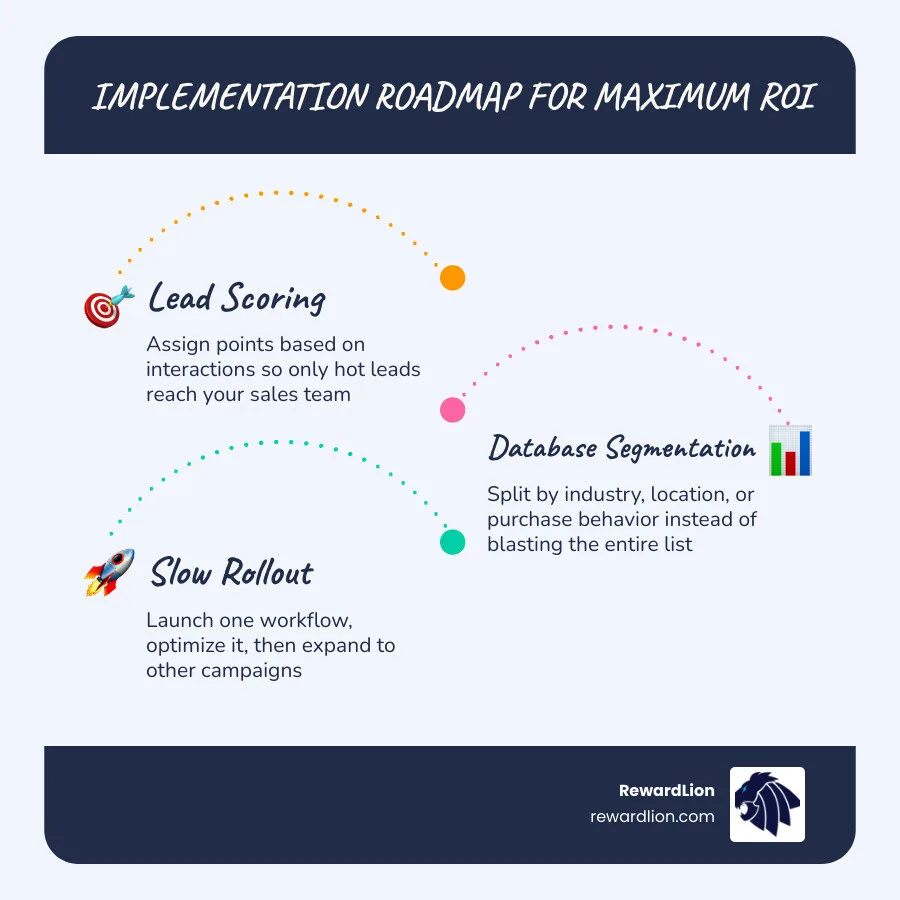
Lead Scoring: Assigning points to leads based on their interactions so your sales team only calls the "hot" ones.
Database Segmentation: Don't blast your entire list. Segment by industry, location (like Miami vs. Fort Lauderdale), or past purchase behavior.
Slow Rollout: Start with one workflow (like a Welcome Series), optimize it, and then expand.
Frequently Asked Questions
What is the difference between standard automation and agentic marketing?
Standard automation follows a "linear" path that you pre-define (e.g., "If Tag A is added, send Email B"). Agentic marketing uses AI agents that can reason. If a customer asks a question in a reply, the agent can understand the context, find the answer in your knowledge base, and reply appropriately without you ever touching a keyboard.
How do pricing models vary for marketing platforms in 2026?
Most platforms use one of three models:
Contact-based: You pay for the number of people in your database.
Volume-based: You pay for the number of emails or SMS sent.
Credit-based: AI-heavy platforms use credits for each "task" or "enrichment" the AI performs.
Can small businesses afford enterprise-grade automation?
Yes! In 2026, the "trickle-down" of technology has been fast. Many platforms offer enterprise-grade workflow builders for very affordable monthly rates. The key for small businesses is not to buy the most expensive tool, but the one they will actually use.
Conclusion: The RewardLion Advantage
Navigating an automated marketing platform can feel like a full-time job. Between managing LLM API keys, setting up CRM workflows, and ensuring your data is clean, it's easy to get overwhelmed.
At RewardLion, we believe you shouldn't have to choose between powerful software and expert execution. We provide an AI-powered all-in-one OS that unifies your marketing, sales, and analytics. But we don't just give you the keys and walk away.
Our unique Hybrid SaaS + Expert Team model means our dedicated CAPSS team acts as your fractional in-house marketing agency. We implement the systems, optimize the AI agents, and manage the creative production—from video to SEO—all within one connected system. Whether you are looking for advanced CRM marketing automation or a complete "done-for-you" growth engine, we handle the technical heavy lifting so you can focus on running your business.
Ready to stop spinning plates and start scaling? Explore our platform today and see how we can install a fully connected growth system into your business.
Our Locations:
Las Olas, FL | Fort Lauderdale, FL | Miami, FL | Boca Raton, FL
Serving all 50 states and international clients.