Why a Marketing Agency Poster Can Win Attention Fast
A strong marketing agency poster can turn a quick glance into a sales conversation. Start with one clear promise, name the services that support it, use a bold visual hierarchy, and give people one easy next step - such as scanning a QR code or booking a consultation.
For best results, include:
A headline focused on a client outcome, not a vague claim.
Three to five clearly grouped services, such as SEO, paid ads, or social media.
A recognizable logo, brand colors, and no more than two font families.
Proof that reduces doubt, such as a short verified client testimonial or a concise result.
A clear CTA with a trackable QR code, landing page, or phone number.
Posters still work because they create a physical and visual touchpoint at events, in offices, and around local business communities. But a poster is not a brochure. It should communicate one idea people can understand at a glance, then make it simple to learn more.
I am Mike Ibrahim, founder and CEO of RewardLion and a marketing leader with more than a decade of experience in sales, client growth, and e-commerce strategy. I have helped businesses sharpen their marketing message, and the same principles make a marketing agency poster clearer, more credible, and easier to act on.
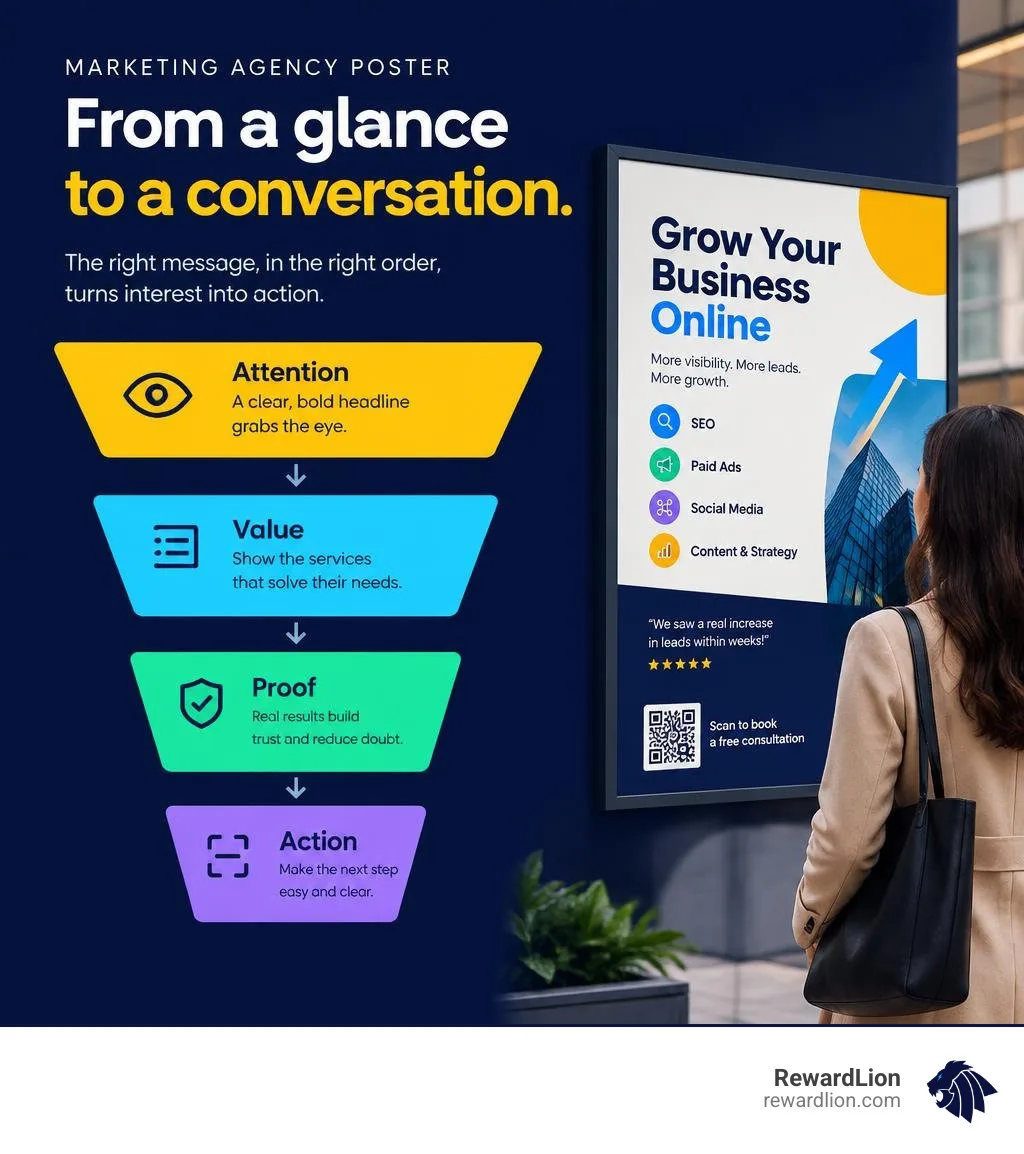
7 Key Elements of a High-Converting Marketing Agency Poster
Turning a piece of paper or a digital signage screen into a reliable lead generator requires deliberate structure. When developing high-impact commercial poster design, we focus on balancing clean aesthetics with direct psychological triggers.
Dominant Visual Hierarchy: Your viewer’s eyes should move naturally from the primary hook down to the supporting details. If your headline, imagery, and contact info all fight for attention at the same volume, nobody hears anything.
Crystal-Clear Value Proposition: Avoid generic jargon like "Synergistic Marketing Solutions." State the direct commercial benefit: "We Scale Local Service Businesses to 7 Figures" or "Automate Your Lead Pipeline on Autopilot."
Curated Service Clarity: Do not list thirty separate capabilities. Highlight three to five primary pillars—such as local SEO, paid media, CRM automation, or video production—so prospects immediately recognize how you solve their problems.
Digestible Social Proof: Include a single high-impact metric (e.g., "+312% Average Organic Growth") or a short, glowing client review. Credibility bridges the gap between casual interest and genuine trust.
Intentional Typography & Color Harmony: Limit your layout to two complementary font families—such as Montserrat for bold headers and Open Sans for crisp subheadings. Leverage high-contrast color psychology (e.g., deep navy for stability, vibrant electric blue or neon amber for conversion accents).
Direct, Frictionless Call to Action: Give a single clear directive. Whether it is scheduling a free growth audit or downloading an industry benchmark report, clarity drives engagement.
Interactive Scannable Entry Points: Bridge physical encounters with digital pipelines using dynamic QR codes or short vanity URLs. For layout inspiration, you can browse creative agency portfolio inspiration to see how industry leaders balance typography with interactive elements.
How to Plan and Execute an Agency Poster Campaign
Before placing ink on paper or pushing a graphic live to digital display networks, you need an integrated campaign roadmap. Poster placements must align directly with where your ideal B2B buyers gather—whether in conference halls across Florida, regional networking hubs in Fort Lauderdale and Miami, or trade show floors nationwide.
Executing effective advertising strategies means matching the physical print dimension or digital canvas size to the specific environment.
Format / Size | Standard Dimensions | Optimal Resolution | Primary Use Case |
|---|---|---|---|
A2 Poster | 42.0 × 59.4 cm (16.5 × 23.4 in) | 300 DPI (CMYK) | Trade show booths, corporate lobbies, event banners |
A3 Poster | 29.7 × 42.0 cm (11.7 × 16.5 in) | 300 DPI (CMYK) | Local business bulletin boards, agency office hallways |
US Letter / Tabloid | 8.5 × 11 in / 11 × 17 in | 300 DPI (CMYK) | Direct client handouts, co-working space promotional boards |
Social Media 4:5 | 1080 × 1350 px | 72–150 DPI (RGB) | Instagram feeds, cross-platform sponsored ads |
Landscape 1.91:1 | 1200 × 628 px | 72–150 DPI (RGB) | LinkedIn sponsored updates, digital out-of-home landscape |
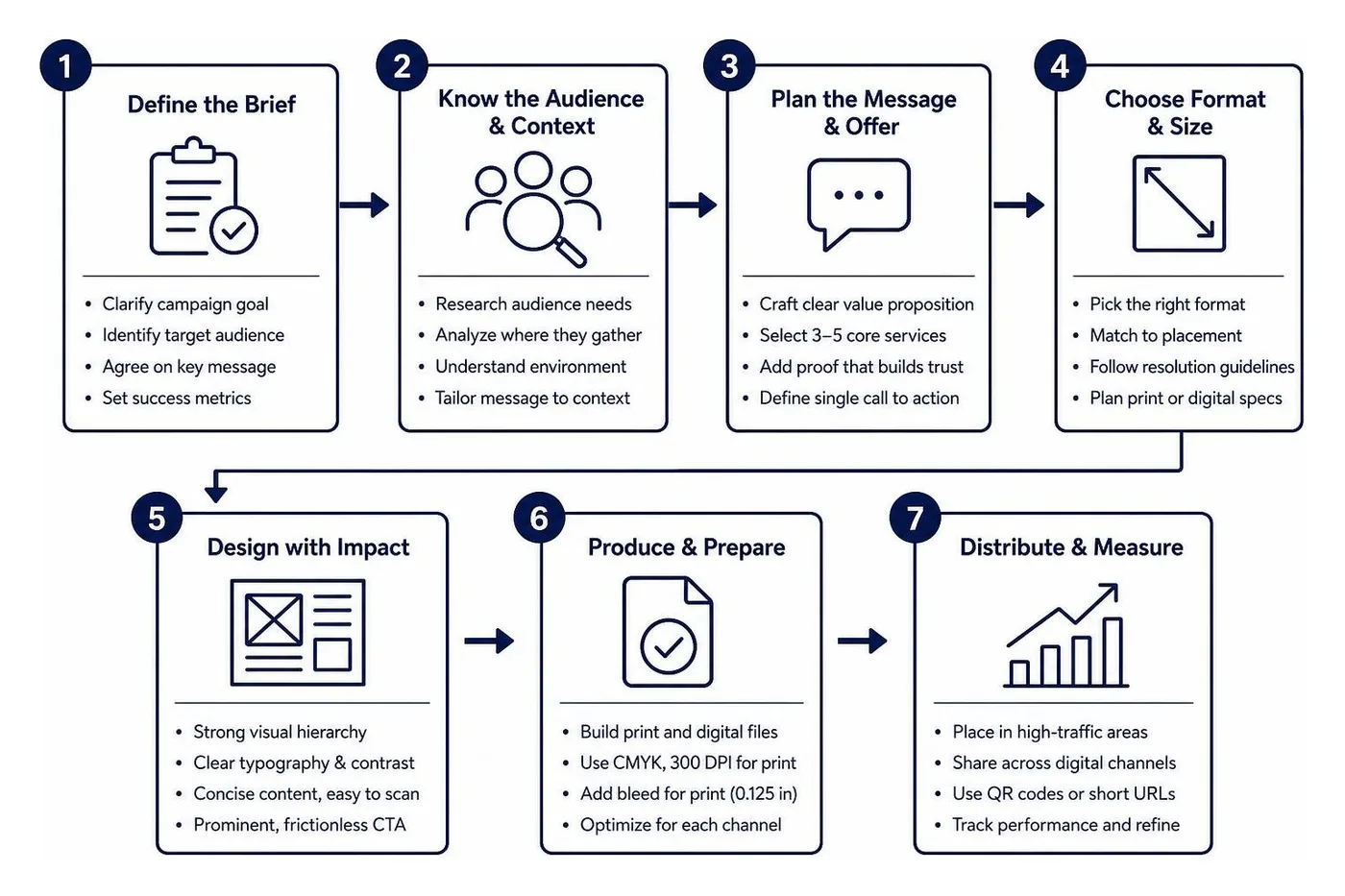
Designing a Marketing Agency Poster for Omnichannel Campaigns
A truly efficient design workflow treats a poster not as a static, isolated asset, but as the visual foundation for multi-channel distribution. By keeping headline, hero graphic, service icons, and call-to-action on distinct, editable layers, you can transition a physical A2 print display into vertical social media ads or digital billboards in minutes.
Print Settings: Always configure physical print files in CMYK color mode at 300 DPI, incorporating a minimum 0.125-inch (3mm) bleed around the perimeter to prevent white edging during cutting.
Digital Display Settings: Export digital versions in RGB color mode (sRGB profile) at platform-native pixel ratios (such as 4:5 for mobile feeds or 16:9 for office lobby displays).
Customizing Templates to Align with Brand Identity
Pre-built layouts from design platforms offer speed, but failing to customize them can leave your agency looking generic. Utilizing professional graphic design services ensures that every visual asset aligns strictly with your agency’s style manual.
Reviewing a comprehensive branding services list can help you establish foundational assets—such as custom brand typography, strict color codes (HEX/CMYK/Pantone), and unified icon sets—that keep vector layouts polished across both Adobe Illustrator vector workflows and cloud-based editing tools.
Visual Trends Shaping Agency Posters in 2026
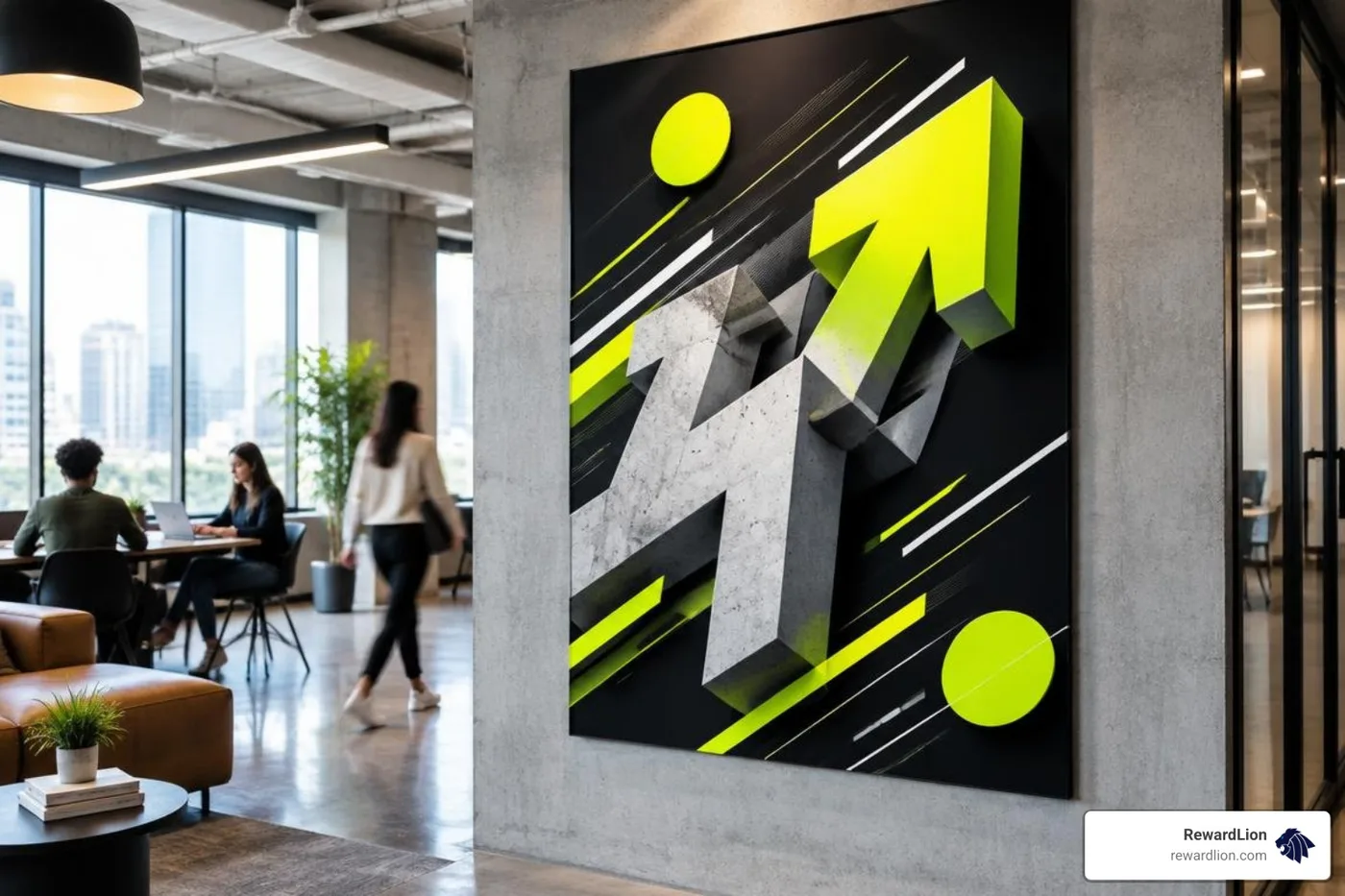
Poster aesthetics have evolved rapidly. In 2026, leading agencies avoid cookie-cutter corporate visuals in favor of bold, memorable creative directions:
Kinetic & 3D Typography: Type is no longer just text; it acts as the primary visual art. Bold, dimensional lettering leaps off the page to command immediate focus.
Brutalist & High-Contrast Layouts: Clean, grid-defying layouts paired with neon accents cut through visual noise in busy event centers and co-working spaces.
Augmented Reality (AR) Triggers: Static posters now incorporate AR markers that let prospects point their smartphone camera to trigger interactive 3D case studies or founder video greetings.
Micro-Data Storytelling: Instead of long-winded descriptions, top designs incorporate miniature infographics and bite-sized proof metrics that deliver clarity in under three seconds.
Pitfalls to Avoid in Poster Advertising
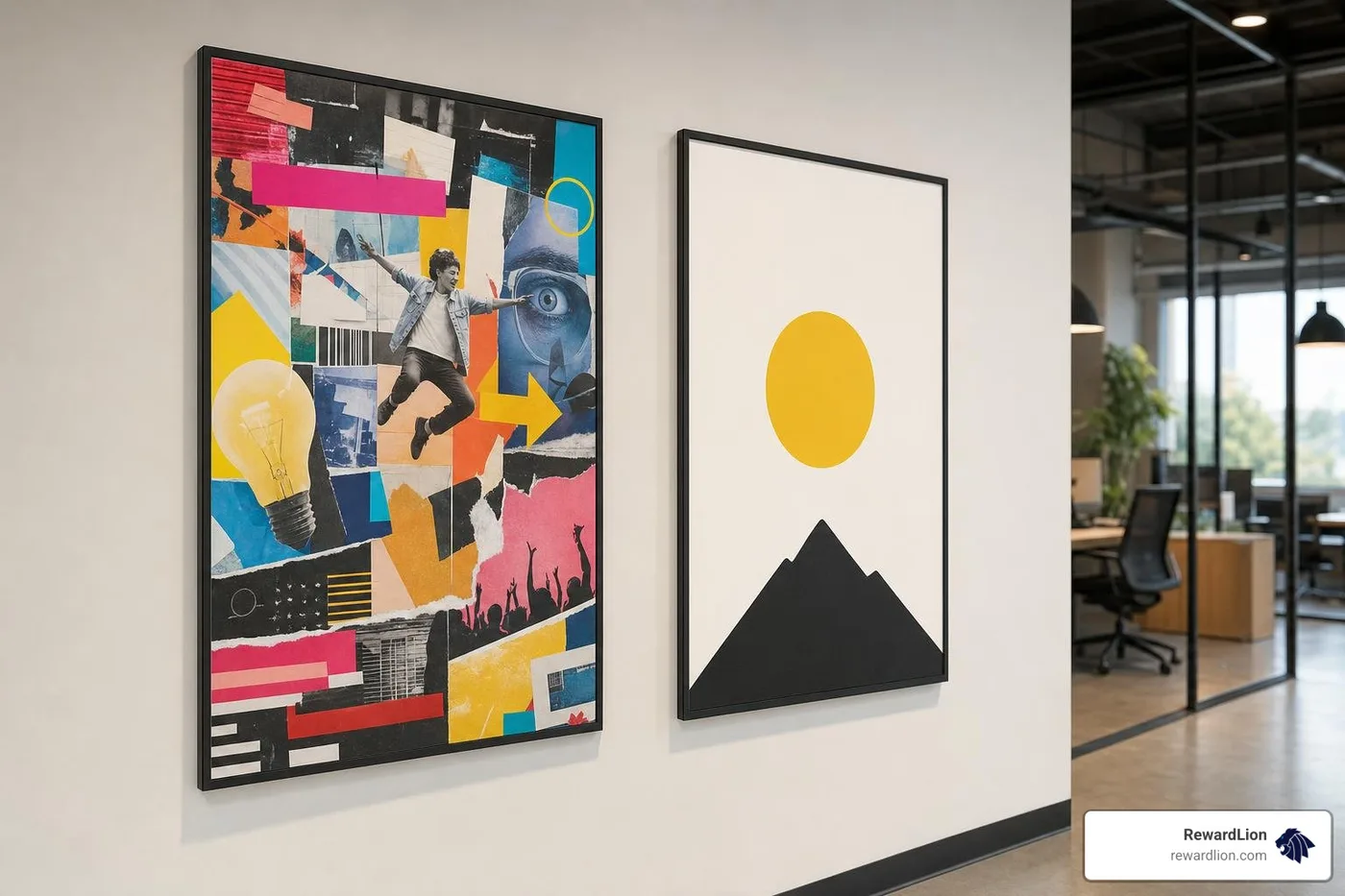
Even experienced teams sometimes make critical mistakes that destroy a poster's return on investment.
Common Mistakes to Avoid in Marketing Agency Poster Layouts
When analyzing a real-world poster advertisement example, poor performers almost always suffer from the same foundational errors:
Text Overcrowding: Attempting to cram your entire agency history and twenty service offerings onto a single sheet turns your poster into an illegible wall of text.
Vague Value Messaging: Headlines like "We Do Digital Right" say nothing. Speak directly to measurable business growth and customer acquisition.
Untracked Web Addresses: Placing a standard homepage URL (e.g.,
agency.com) without UTM parameters or dedicated tracking renders your offline campaign attribution invisible.Low-Resolution Assets: Pulling low-res 72 DPI web screenshots for a 300 DPI large-format print creates pixelated, unprofessional graphics that undermine your authority.
Frequently Asked Questions About Agency Posters
What are the standard dimensions for agency print posters?
The most widely used sizes are international A2 (42.0 × 59.4 cm) and A3 (29.7 × 42.0 cm), as well as standard US Tabloid (11 × 17 inches) and Letter (8.5 × 11 inches). Always include a 0.125-inch (3mm) bleed allowance and design at 300 DPI in CMYK.
How do marketing agencies track offline poster conversions?
Agencies measure direct response by generating dynamic QR codes linked to dedicated landing pages with pre-configured UTM parameters. You can also deploy custom vanity URLs (e.g., agency.com/growth) or dedicated call-tracking phone numbers to measure calls and form submissions specifically generated by poster impressions.
What software is best for creating agency poster templates?
Professional designers rely on vector-based applications like Adobe Illustrator and layered PSD files in Adobe Photoshop for complete typographic and print control. For rapid team collaboration, browser-based tools with built-in brand kits allow teams to adjust text and export multi-format assets quickly.
Conclusion
A well-crafted poster is an enduring visual touchpoint that bridges offline awareness with digital conversion pipelines. When backed by compelling messaging, refined visual hierarchy, and seamless tracking, print and digital posters give your agency an authoritative physical presence that digital ads alone cannot match.
At RewardLion, we help ambitious businesses scale through our all-in-one AI operating system and dedicated in-house execution teams—unifying brand design, paid media, automated sales funnels, and analytics into one connected engine. To master the core design principles that make your promotional media convert, discover our complete breakdown on what makes a good advertisement poster and start transforming casual impressions into loyal clients.