What Is B2B Lead Generation and Why Does It Matter?
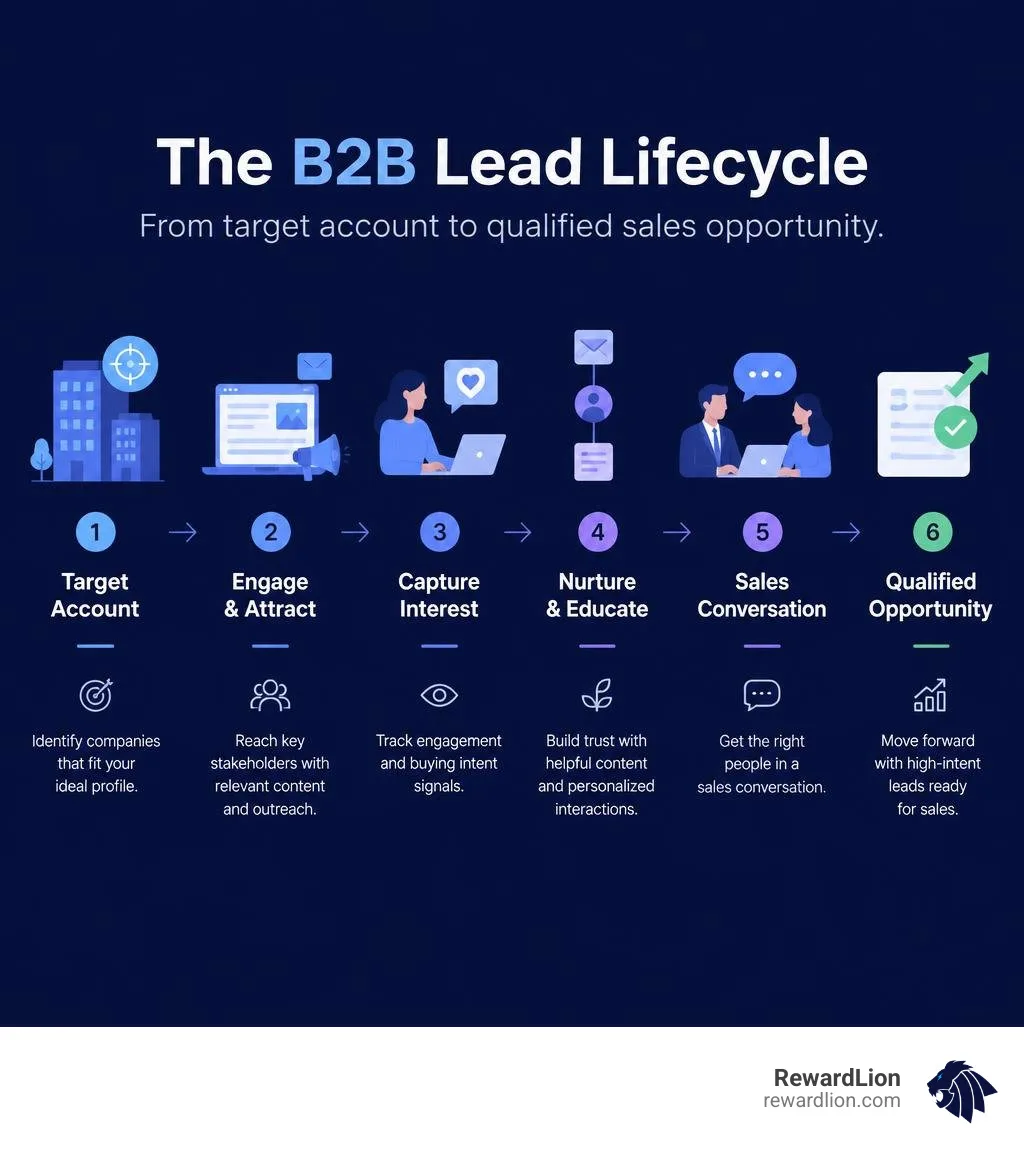
B2B lead generation is the process of finding businesses that may need your product or service, earning their interest, and moving the right people toward a sales conversation. In simple terms, it turns unknown visitors and target accounts into qualified opportunities your team can pursue.
A strong program does more than collect email addresses. It identifies companies that fit your Ideal Customer Profile (ICP), reaches several stakeholders, tracks signs of buying intent, and gives sales a clear reason to follow up. This matters because business purchases often involve 6 to 10 people and can take months to close.
Modern B2B lead generation blends inbound work, such as useful content, SEO, webinars, and conversion-focused pages, with targeted outbound outreach through email, LinkedIn, calls, partners, and events. The goal is not the biggest contact list. It is a healthier pipeline of buyers who are likely to become customers.
I am Mike Ibrahim, Founder and CEO of RewardLion and a marketing leader with more than a decade of experience building sales and growth strategies. In this guide to what is B2B lead generation, I will break down how to build a practical system that creates better-fit leads and supports long-term revenue growth.
What is B2B Lead Generation and How It Works in 2026
B2B lead generation has shifted away from mass outreach and toward precision targeting. Today’s buyers conduct nearly 70% of their research independently before ever reaching out to a vendor. Rather than relying on cold email blasts, modern growth teams align their messaging with buyer intent signals, organic engagement, and targeted account data.
Understanding modern lead generation fundamentals requires looking at your revenue operations as an integrated whole. Instead of disconnected marketing campaigns that send unvetted leads over a fence to sales, organizations require a unified lead generation system that coordinates first-party data capture, automated nurturing, and intent scoring into a single workflow.
The Core Mechanics: From Anonymous Traffic to Sales Pipeline
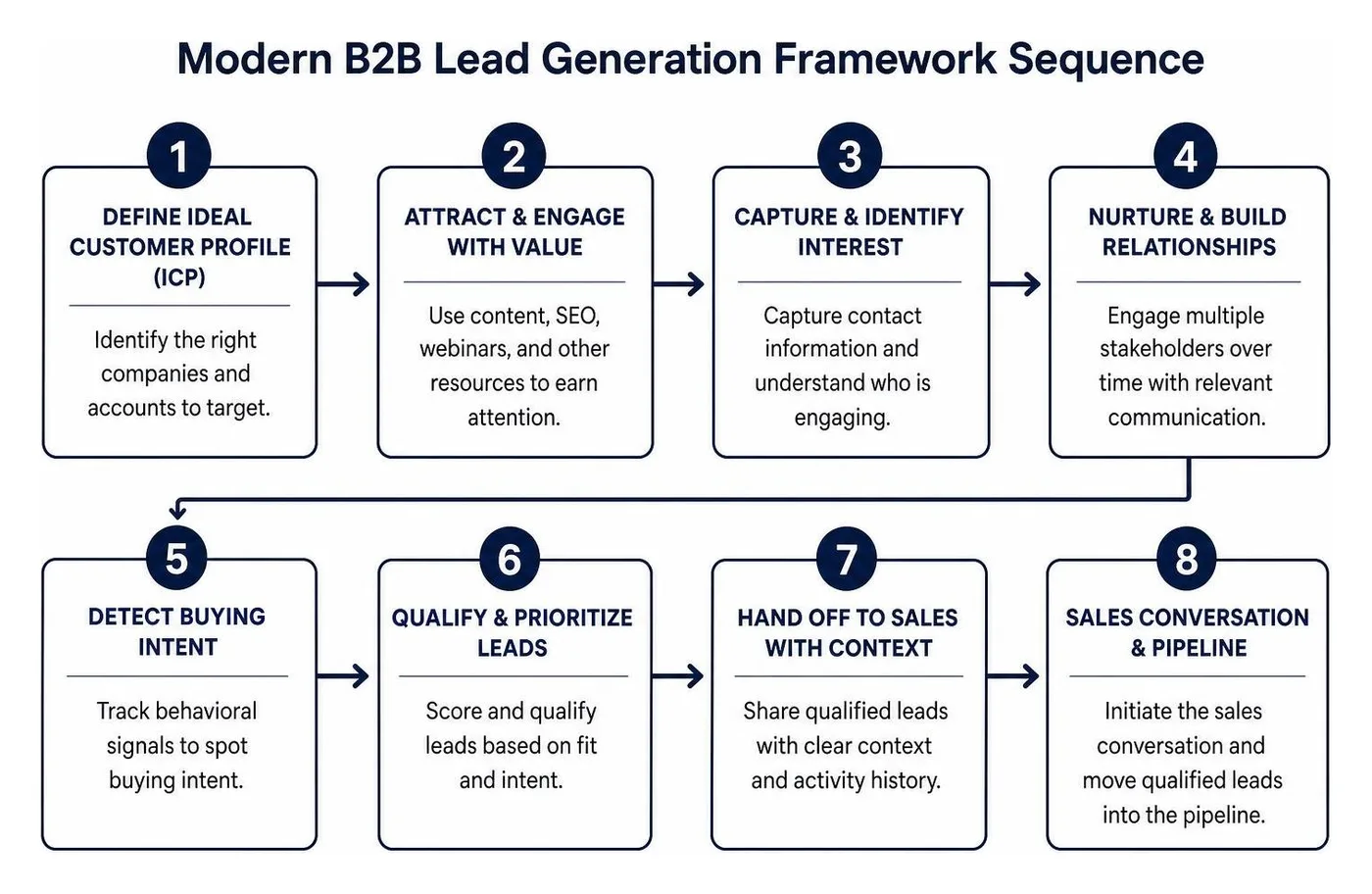
Turning anonymous website traffic into closed-won business follows a structured sequence. When prospective buyers visit your digital assets, your primary objective is capturing verifiable interest while delivering immediate value.
Implementing modern lead capture solutions allows you to capture contact information through value-driven assets such as self-serve calculators, ungated tools with gated export capabilities, and deep technical research. Once a prospect provides their details, tracking behavioral triggers—such as reading product documentation for several minutes or revisiting pricing pages—helps prioritize follow-up for the sales team.
Marketing Qualified Leads vs Sales Qualified Leads
One of the most persistent bottlenecks in revenue generation is the breakdown between marketing and sales handoffs. Marketing teams celebrate hitting lead volume targets, while sales teams spend valuable time filtering out unready or unqualified contacts.
To bridge this divide, high-growth revenue operations use shared criteria to categorize prospects across clear operational stages:
Stage | Definition | Primary Criteria | Next Step |
|---|---|---|---|
Marketing Qualified Lead (MQL) | A prospect that fits demographic criteria and shows engagement. | Whitepaper downloads, webinar attendance, newsletter signups. | Automated email nurture and behavioral monitoring. |
Sales Qualified Lead (SQL) | A verified decision-maker ready for a direct sales evaluation. | Budget confirmed, explicit problem match, demo request. | Immediate SDR/Account Executive outbound consultation. |
Product Qualified Lead (PQL) | An active user of a trial or freemium tool hitting usage thresholds. | Frequent product logins, key feature adoption, license limits reached. | In-app prompts and sales outreach for enterprise upgrades. |
By using analytics to align sales and marketing teams, organizations establish agreed-upon scoring thresholds so sales reps spend their energy exclusively on high-probability opportunities.
What is B2B Lead Generation in Modern Demand Generation?
While lead generation captures contact information to begin direct engagement, demand generation creates market awareness and educates prospective buyers before they enter a formal sales cycle.
Relying entirely on short-term lead capture leads to diminishing returns and inflated acquisition costs. A mature demand generation platform builds category authority through open-access content, industry podcasts, and thought leadership. When buyers encounter a specific operational bottleneck, brand familiarity ensures your company is included on their shortlist.
Navigating Complex Buying Committees and Account-Based Strategies
Modern enterprise purchases rarely depend on a single decision-maker. Recent data indicates the average enterprise deal involves 6.8 to 13 stakeholders spanning executive leadership, legal, IT, security, and departmental operations. Focusing lead generation efforts on a single point of contact often causes sales pipeline stalls.
Applying proven B2B enterprise pipeline strategies requires account-based orchestration. In fact, 87% of research participants report that account-based marketing (ABM) programs deliver higher returns on investment than generic, broad-brush marketing initiatives.

Multi-Threading Across 6-10 Decision-Makers
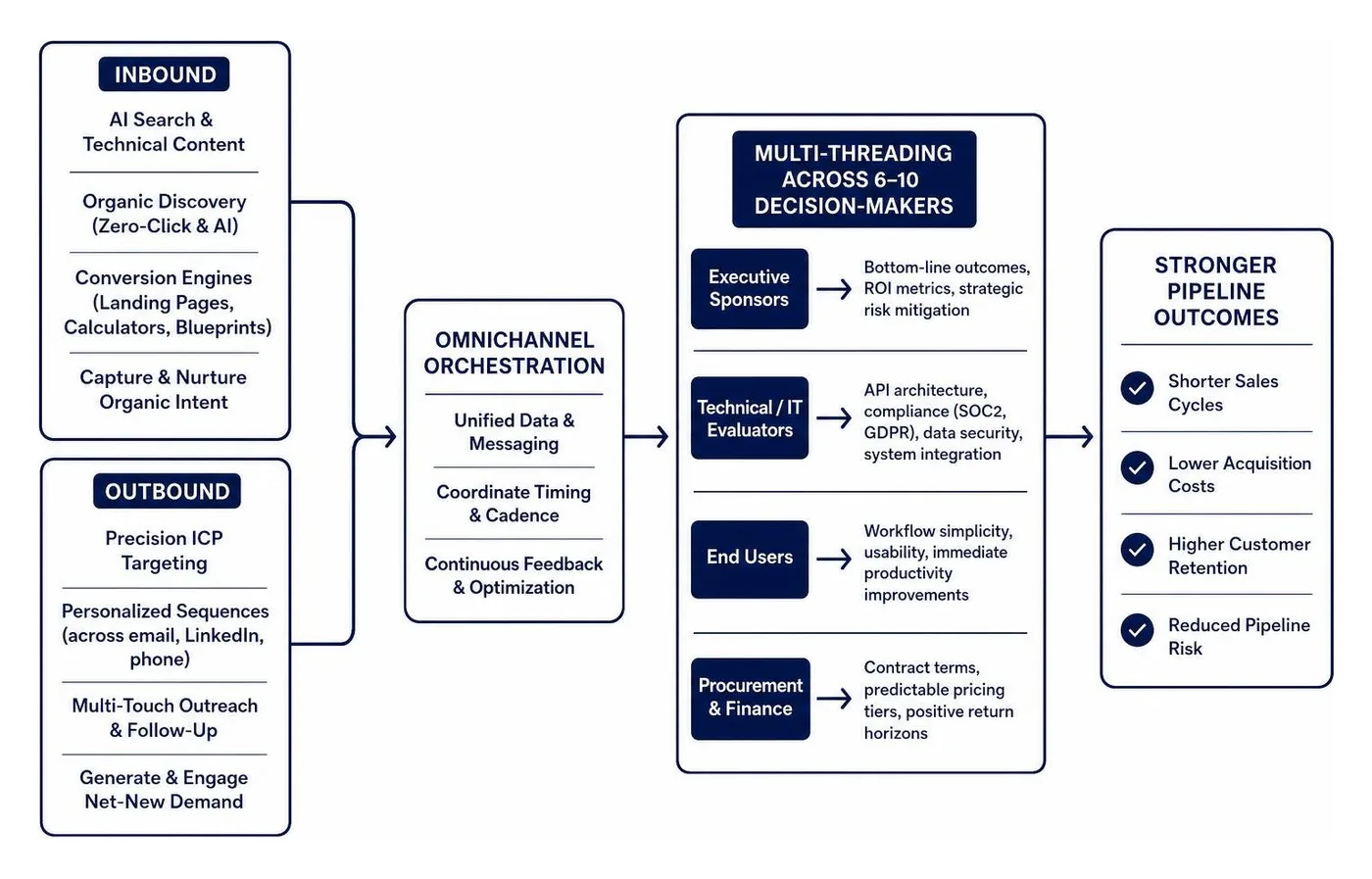
Multi-threading is the practice of building relationships with multiple contacts within the same target organization. Because the average business purchase takes between three and eighteen months to complete, relying on a single internal champion creates high pipeline risk if that contact changes roles.
Effective lead generation maps different content assets to specific committee roles:
Executive Sponsors: Require bottom-line business outcomes, overall ROI metrics, and strategic risk mitigation.
Technical/IT Evaluators: Focus on API architecture, compliance certifications (SOC2, GDPR), data security, and system integration.
End Users: Prioritize workflow simplicity, day-to-day usability, and immediate productivity improvements.
Procurement & Finance: Require clear contract terms, predictable pricing tiers, and positive return horizons.
Building a Precision Ideal Customer Profile (ICP)
A high-converting Ideal Customer Profile moves beyond broad demographics to analyze firmographics, technographics, operational pain points, and commercial triggers.
Focusing exclusively on accounts that meet strict ICP parameters shortens overall sales cycles, lowers acquisition costs, and drives higher customer retention.
Inbound vs Outbound Lead Generation Strategies for 2026
Relying solely on one channel introduces revenue vulnerability. Combining inbound assets that capture organic intent with precision outbound sequences builds a resilient pipeline.
High-Impact Inbound: AI Search, Technical Content, and Conversion Engines
Inbound lead generation now operates in an environment shaped by conversational AI engines and zero-click search experiences. With search engines synthesizing answers directly on search result pages, winning traffic requires deep technical expertise, unique proprietary data, and recognized market authority.
Building an SEO authority solution helps ensure your business appears both in traditional organic results and inside AI-generated summaries across platforms like Perplexity and ChatGPT. Once visitors reach your site, pairing informative content with a dedicated lead generation landing page builder provides frictionless conversion points like interactive ROI calculators, product blueprints, and technical comparison frameworks.
Multichannel Outbound: Precision Email, Social Selling, and Cold Calling
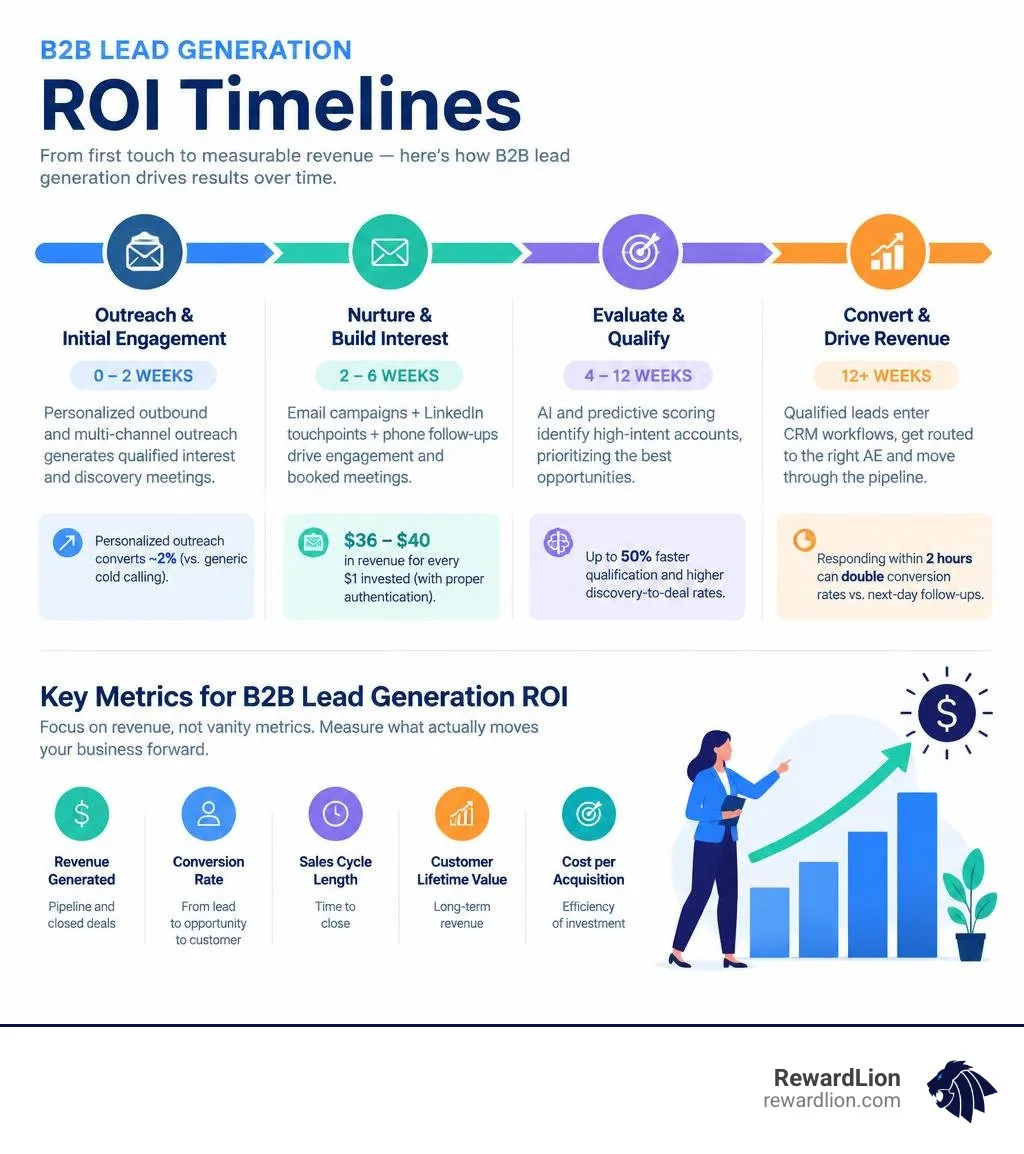
Outbound lead generation remains effective when structured around personalized relevance rather than volume. Generic cold calling converts at a low 2%, whereas personalized, multi-touch cadences deliver predictable discovery meetings.
Email marketing continues to be a high-return channel, producing $36 to $40 for every dollar invested when backed by strong domain authentication (DKIM, SPF, DMARC) and message relevance. Well-structured campaigns achieve open rates around 30% by combining personalized cold email outreach with LinkedIn touchpoints and direct phone follow-ups to qualified target accounts.
AI, Predictive Lead Scoring, and Modern Sales Automation
Artificial intelligence has transformed lead scoring from static point calculations into dynamic, real-time intent modeling. Modern systems analyze micro-interactions—including scroll depth, content consumption paths, and technical document engagement—to predict purchase probability.
Predictive Intelligence and Behavioral Intent Signals
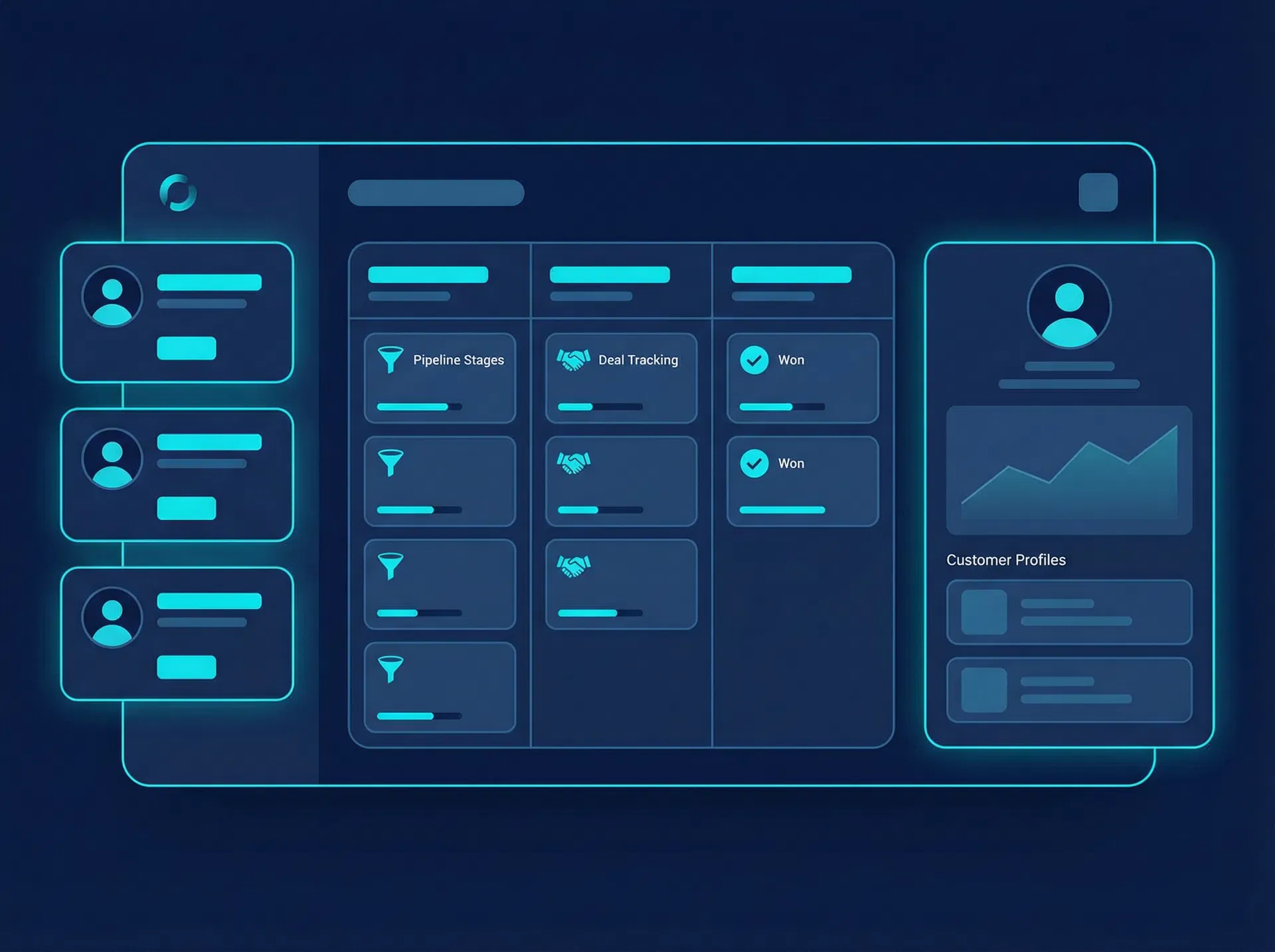
Deploying AI sales automation tools enables organizations to evaluate buyer intent at scale. When an enterprise account shows a sudden surge in research across external review boards and internal service pages, machine learning models calculate an account-level intent score.
This predictive scoring allows sales representatives to prioritize accounts actively evaluating solutions, cutting qualification times by up to 50% while improving discovery-to-deal conversion rates.
Streamlining Handoffs with Automated CRM Workflows
Speed-to-lead remains a critical operational metric; responding to high-intent inbound inquiries within two hours can double conversion rates compared to next-day follow-ups.
Implementing end-to-end CRM setup automation ensures incoming leads are instantly verified, enriched with technographic data, and routed to the correct account executive. Automated notification triggers and dynamic booking links remove friction, creating a smooth transition from marketing capture to sales discovery.
Measuring ROI, Setting Timelines, and Avoiding Critical Mistakes
Measuring lead generation performance requires focusing on bottom-line business metrics rather than vanity indicators. Form fills and raw page views provide little value if they do not convert into pipeline revenue.
What is B2B Lead Generation Success: Metrics and Measurement
Evaluating program success requires analyzing downstream revenue efficiency through unified sales and marketing analytics.
Key metrics include:
Pipeline Velocity: The speed at which qualified leads move through your sales pipeline to generate realized revenue.
Customer Acquisition Cost (CAC) to LTV: Maintaining a healthy Lifetime Value to Customer Acquisition Cost ratio (ideally 3:1 or higher).
Cost Per Qualified Opportunity: The total marketing and sales expense required to create a verified, sales-accepted pipeline deal.
Lead-to-Close Rate: The percentage of qualified opportunities that convert into closed-won contracts.
Setting Realistic Timelines and Expected ROI
Because the typical B2B sales cycle runs three to nine months—and often stretches to eighteen months for enterprise software and service contracts—lead generation programs require realistic operational timelines:
Months 1 to 3: Technical stack integration, ICP validation, messaging optimization, and outbound pipeline testing.
Months 4 to 6: First outbound deal conversions, early inbound traction, and refinement of qualification scoring.
Months 7 to 12: Inbound organic content compounding, scalable pipeline predictability, and clear closed-loop ROI realization.
Common Pitfalls and How to Overcome Them
Avoiding common operational mistakes saves marketing budget and protects brand reputation:
Chasing Lead Volume Over Lead Fit: Generating thousands of low-intent form fills clogs sales capacity. Focus on strict ICP qualification instead.
Operating in Departmental Silos: Disconnected marketing and sales data creates lead leakage and friction. Unify reporting inside a central revenue CRM.
Delayed Speed-to-Lead: Letting high-intent demo requests sit unanswered for days reduces conversion rates. Automate routing and initial response workflows.
Neglecting Long-Term Nurture: Abandoning prospects who are not ready to buy this month loses future pipeline. Implement automated, value-rich email workflows across 6-to-12-month periods.
Frequently Asked Questions About B2B Lead Generation
How long does it take to see positive ROI from B2B lead generation campaigns?
Targeted outbound campaigns often generate initial sales conversations within 3 to 6 weeks. Inbound organic strategies typically require 3 to 6 months to gain momentum. A combined program generally proves positive return on investment within 6 to 9 months, depending on your overall sales cycle length.
What is the most significant difference between demand generation and lead generation?
Demand generation creates category awareness and educates the broader market without requiring gatekeeper forms. Lead generation captures verified contact details and explicit buying signals from prospects ready to evaluate a solution directly.
How do AI search engines and zero-click results impact B2B lead capture?
AI-powered search overviews answer basic informational queries directly on search results pages. To capture qualified B2B leads, brands must produce technical, original research, proprietary frameworks, and interactive self-serve tools that provide value beyond summarized text.
Conclusion
Building a dependable B2B lead generation engine requires combining precise targeting, valuable content, aligned sales handoffs, and modern automation. When inbound discovery, outbound cadences, and predictive data work together, your business gains a predictable path to revenue growth.
To streamline this process without managing disconnected agencies or fragmented software, explore RewardLion's all-in-one growth platform. Our unified operating system pairs AI automation with hands-on management to help your team scale predictably.