What Is a TV Product Commercial and Why Does It Still Matter?
A TV product commercial is a short, paid video advertisement — typically 15 to 60 seconds long — broadcast on television or streaming platforms to promote a product or service to a large audience.
Here's a quick breakdown of what you need to know:
What Details Definition A short video ad aired during programming breaks on linear TV or streaming platforms Common lengths 15 seconds, 30 seconds, 60 seconds, or long-form infomercials Primary goal Drive brand awareness, product consideration, or direct purchase Where they run Broadcast TV, cable, connected TV (CTV), streaming apps, FAST channels Key advantage Massive reach combined with sight, sound, and motion for emotional impact Modern twist Streaming TV ads can now be targeted, interactive, and directly tied to measurable sales
Television advertising has been around since 1941, when the first paid TV ad aired for a watch brand on a New York station for less than $10. Today, the industry looks very different. US TV ad spending reached an estimated $69.87 billion in 2018 alone, and that figure has continued to shift as streaming platforms reshape where and how people watch.
What hasn't changed is the core power of the format. A well-made commercial can build brand recognition, trigger emotional responses, and move people to act — all in under a minute.
But in 2026, "TV" means much more than a cable box. It means Prime Video, FAST channels built into smart TVs, connected TV devices, and programmatic ad buying. Brands that understand this are capturing audiences across every screen.
I'm Mike Ibrahim, Founder and CEO of RewardLion and Marketing Director for several companies, with over a decade of experience developing high-impact marketing strategies — including TV product commercial campaigns that integrate broadcast reach with digital performance tracking. In the sections below, I'll walk you through everything you need to know to plan, produce, and measure a TV commercial that actually delivers results.
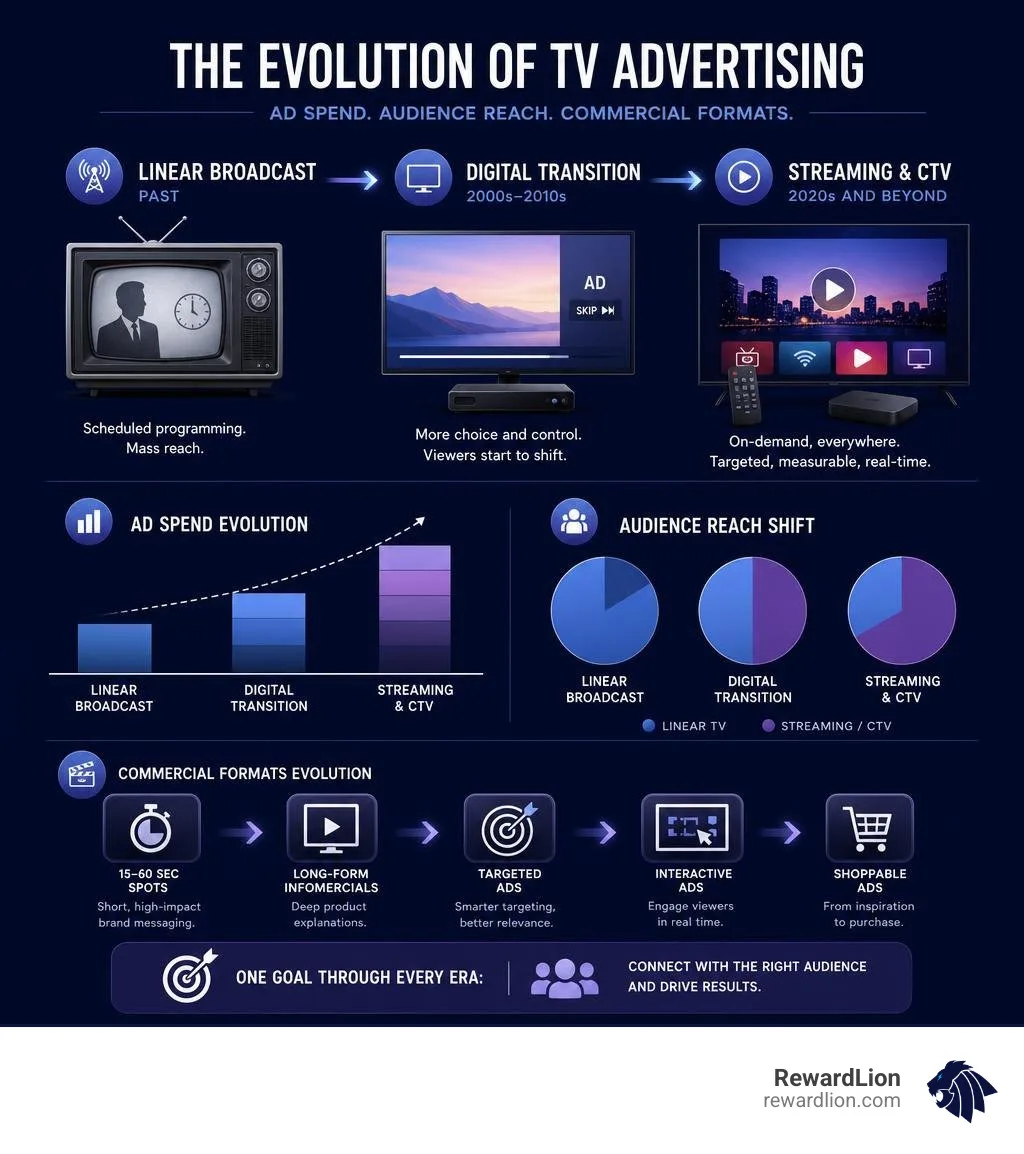
The Evolution of the TV Product Commercial: From Linear to Streaming
For decades, the traditional television model was simple: families gathered around a physical TV set, tuned into linear programming broadcast at specific scheduled times, and watched commercials during scheduled breaks. However, as digital technology evolved, television underwent a massive transformation. The introduction of digital video recorders (DVRs) and digital TV recorders (DTR) initially made advertisers nervous. There was a widespread fear that fast-forwarding through ads would destroy the commercial model.
Yet, historical data showed a surprising resilience. By the end of 2008, 22% of UK households owned a digital TV recorder, and studies revealed that 82% of their viewing remained focused on normal, linear broadcast TV without fast-forwarding ads. Furthermore, when households acquired a DTR, they actually watched 17% more television overall. Even in the 18% of viewing that was time-shifted, audiences still watched 30% of the advertisements at normal speed.
Today, in 2026, the landscape has expanded far beyond the traditional cable box. The rise of over-the-top (OTT) media services and connected TV (CTV) has introduced addressable TV and programmatic buying. This allows us to deliver highly targeted, dynamic video ads directly to specific households. Understanding the power of ads in this dual-screen era is crucial for any brand looking to scale.
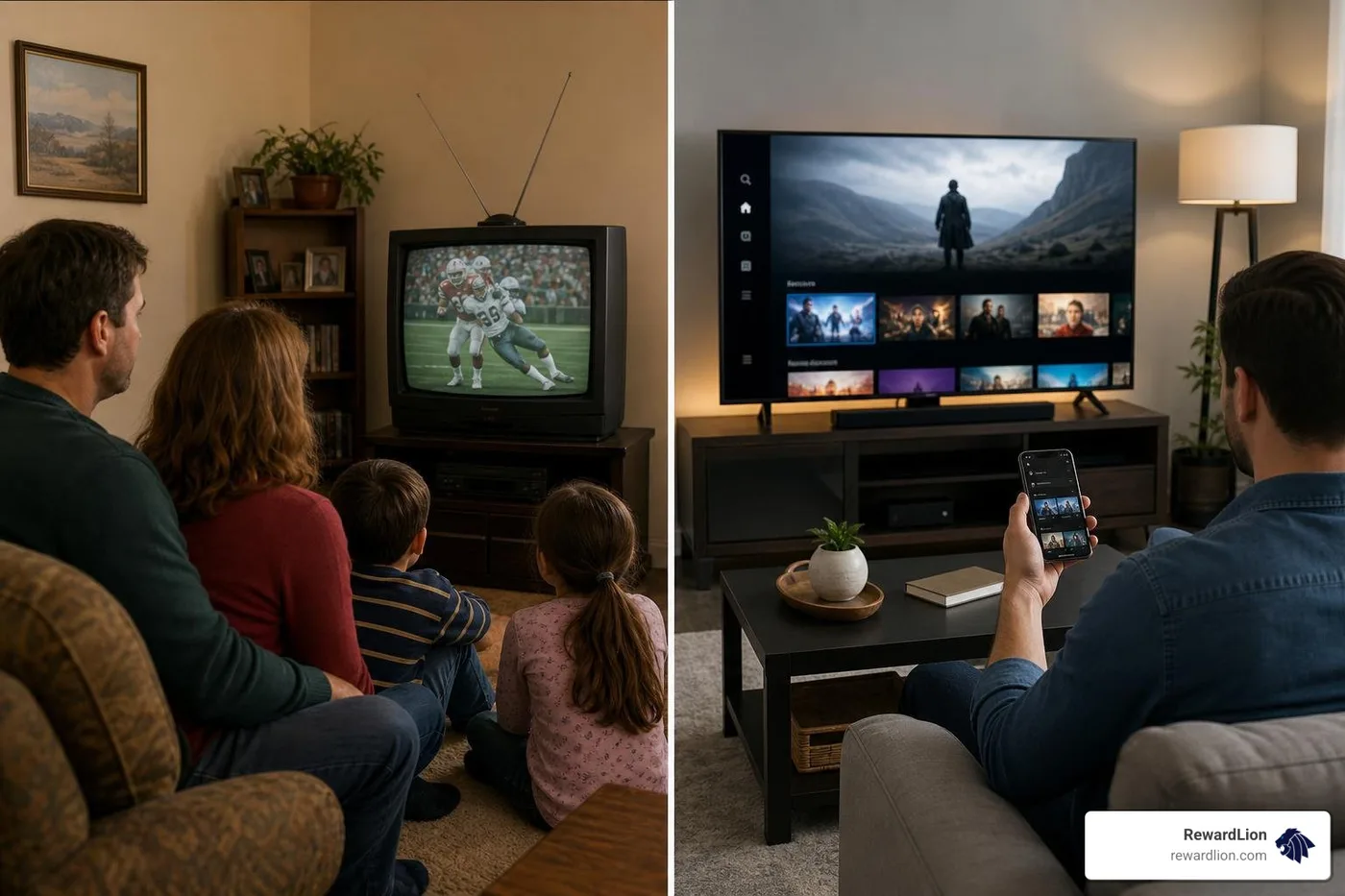
Traditional Broadcast vs. Connected TV (CTV)
While traditional linear TV still commands massive reach during major live events, Connected TV (CTV) has completely redefined audience targeting. Linear programming relies on broad demographic estimates based on show ratings. In contrast, streaming platforms leverage rich first-party data to target viewers based on real-time behaviors, shopping habits, and geographical locations.
To see how these two execution styles differ, let's compare their structural differences:
Feature Traditional Linear TV Ads Connected TV (CTV) / Streaming Ads Targeting Broad demographics (age, gender, region) Granular first-party data, behavior, and interests Buying Method Upfronts, manual media buying contracts Programmatic buying, real-time bidding (RTB) Pricing Model Estimated ratings (CPM varies by show) Precise CPM (Cost Per Thousand Impressions) Interactivity Static, non-clickable Interactive (QR codes, clickable remote actions) Ad-Skipping Skippable via fast-forwarding (on DVR) Generally non-skippable, full-screen formats Measurement Delayed panel ratings (Nielsen) Real-time attribution, conversion tracking, device graphs
This evolution has opened up incredible reach. For example, Amazon's streaming TV ad network has achieved a monthly ad-supported reach of over 200 million viewers in the United States. Even better, this audience is highly active: 80% of ad-exposed streaming TV viewers browse on Amazon, and 77% ultimately make a purchase on the platform.
The Rise of FAST Channels and Smart TV Ecosystems
Another major shift in 2026 is the growth of Free Ad-Supported Streaming TV (FAST) channels integrated directly into smart TV operating systems. Rather than paying for multiple expensive subscriptions, millions of households now stream free, ad-supported linear networks through native systems.
Hardware manufacturers have built massive programmatic inventory networks right into their interfaces. For example, the 75 Inch Class LG QNED AI QNED7S Mini LED 4K Smart TV 2026 features LG Channels, which offers instant access to over 400 free channels. Similarly, Samsung's smart TV ecosystems and Philips' Google TV models (such as the QLED Series with Gemini AI 7000 series 4K UHD Google TV 75PQL7456/F7 | Philips) provide hundreds of free, ad-supported streams.
These platforms represent a goldmine for running a targeted tv product commercial. Because these channels are streamed over the internet, we can inject programmatic video ads that are tailored to the exact household watching the screen.
Anatomy of an Effective TV Commercial: Formats and Creative Strategies
A successful television advertisement is not just a finished video file; it requires a clear audience, a compelling hook, and a memorable message. To understand what goes into a high-converting campaign, we must first analyze what makes an ad effective from both a structural and creative standpoint.
Choosing the Right TV Product Commercial Format
Choosing the right format depends heavily on your campaign goals, budget, and distribution channels. Each length requires its own scriptwriting precision and strategic approach:
15-Second Spots: These are highly cost-effective and work beautifully as quick brand reminders or retargeting ads. Because the runtime is so short, they must focus on a single, clear offer or message.
30-Second Spots: The gold standard of the industry. This format offers the perfect balance between storytelling depth and media budget efficiency, allowing enough time to introduce a problem, present your product, and deliver a call to action.
60-Second Narratives: Typically reserved for high-budget brand awareness campaigns. They provide the time needed to develop complex emotional arcs, character development, and cinematic visuals.
Infomercials: Longer-form commercials (ranging from 5 to 30 minutes) designed specifically for direct response, in-depth product demonstrations, and immediate phone or web conversions.
To make the most of your media spend, we recommend exploring effective advertising strategies that plan for multiple versions of your ad—such as building 15-second cutdowns alongside your main 30-second spot during the pre-production phase.
The Power of Creative Elements: Celebrities, Humor, and Music
Creative choices can make or break your commercial's memorability. When executed correctly, elements like celebrity endorsements, humor, animation, and music work together to build strong brand recall.
Celebrity Endorsements: Aligning your brand with a recognizable figure can instantly build trust and authority. For instance, when DIRECTV launched a major national campaign, they teamed up with NFL star Saquon Barkley. By showing him performing absurd, over-the-top athletic training hurdles, the ad created a humorous visual metaphor for the "hurdles" fans face when trying to find their favorite games across fragmented streaming apps. Read more about this campaign in the official press release: DIRECTV TEAMS UP WITH SAQUON BARKLEY IN NATIONAL AD CAMPAIGN TO HELP FOOTBALL FANS EFFORTLESSLY FIND EVERY GAME THIS SEASON.
Humor and Absurdity: Unexpected, funny scenarios keep viewers from looking away. A great example is Roku's "TV Is Better Here" campaign, which used highly contrasting, ridiculous backdrops—like showing people watching TV in a medieval torture chamber or on a desert island—to emphasize that their streaming experience is superior anywhere. You can read a breakdown of how they turned these absurd settings into a memorable brand message here: AdWatch: ROKU | TV Is Better Here » Speaking Human.
Animation: Utilizing animated characters protects your commercial from going out of style due to changing human fashions. It also allows you to create unique visual appeals that would be impossible or incredibly expensive to film with live actors.
Music and Sound Design: Audio is a powerful tool for emotional association. While early commercials relied heavily on custom jingles, modern campaigns often license popular rock or pop tracks to build immediate, positive emotional connections with target demographics.
Step-by-Step Guide to Producing a High-Impact TV Commercial
Filming a professional tv product commercial requires a coordinated effort across a specialized production team. Whether you are creating a local spot or a national campaign, following a structured production workflow is essential to keep the project on time and on budget. For a broader look at video marketing, check out our guide to commercial video advertising.
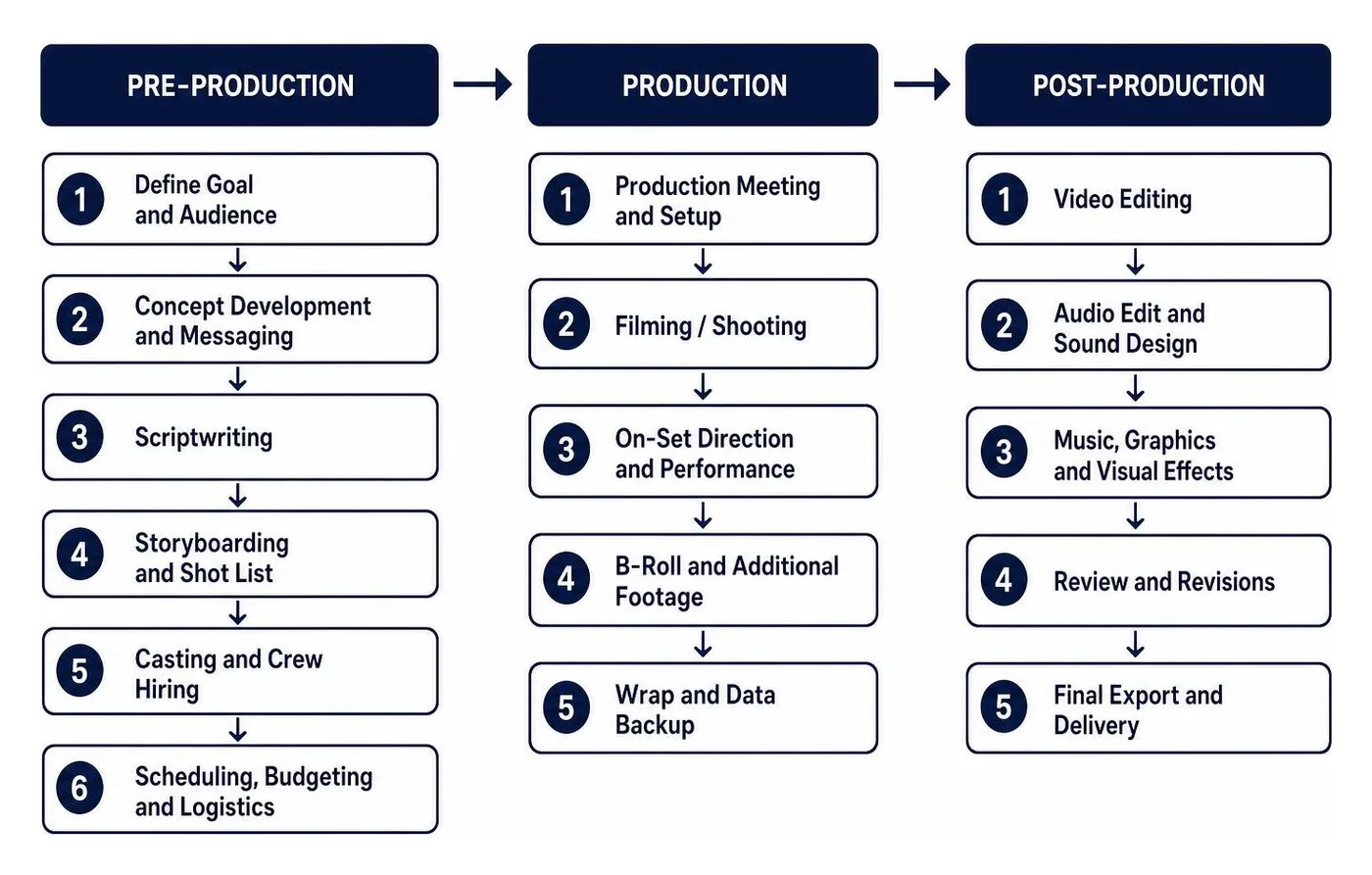
Pre-Production: Scripting and Storyboarding Your TV Product Commercial
The pre-production phase is where your commercial's foundation is built. If you do not plan carefully here, you will face expensive delays on set.
Define the Goal and Audience: Clarify your core message, budget constraints, and where the video will ultimately live (broadcast TV, CTV, or social media).
Scriptwriting Precision: Every second counts. A 30-second script must be read at a natural pace and fit perfectly within 29.5 seconds. The language should be clear, avoiding overly complex metaphors that might confuse viewers. For guidance on structuring your narrative, you can read our guide on how to create a product advertisement video.
Visual Storyboards: Create a shot-by-shot visual guide. This helps the director, camera operators, and set designers align on the framing, lighting, and pacing before the cameras start rolling.
Casting and Location Scouting: Find the right talent to represent your brand and secure locations that match your script's aesthetic.
Production and Post-Production: Bringing the Vision to Life
Once pre-production is locked in, the team moves into active production and post-production:
Production (The Shoot): This is where the director, cinematographers, and actors execute the storyboard. To make sure your product looks its absolute best on modern high-end screens—like the TCL QM7K Series QD-Mini LED QLED 4K UHD Smart TV with Google TV | TCL USA – TCL North America—it is highly recommended to shoot in 4K or higher with professional lighting that highlights product details.
Post-Production (The Edit): The editor pieces the footage together, while specialists handle color grading, visual effects, and sound design. Color grading should be optimized for modern high-contrast displays, such as the 77" Class OLED 4K Glare Free TV 2026 S95H | Samsung US, ensuring the colors are rich, natural, and eye-catching.
Multi-Platform Formatting: Modern campaigns rarely run on TV alone. During editing, we render alternative aspect ratios (such as vertical 9:16 for mobile and square 1:1 for social media feeds) to make sure your video is optimized for every channel.
Rights Clearance and Approvals: Secure all licensing agreements for background music, voiceover talent, and actor appearances before submitting the final cut for client approval.
Measuring Success: Metrics, ROI, and Regulatory Compliance
A beautiful commercial is only successful if it drives business growth. In 2026, we no longer have to guess if our TV campaigns are working. By combining traditional metrics with digital tracking tools, we can measure the exact return on investment of our video assets. For a deeper dive into performance tracking, read the power of advertisement complete guide.
Key Performance Indicators (KPIs) and Attribution
To measure your campaign's success, we track several key performance indicators (KPIs) depending on your goals:
Ad Likeability and Brand Lift: Measured through post-campaign consumer surveys. Highly optimized video strategies can drive incredible results; for example, Cox Automotive achieved a 31% increase in ad likeability by refining their video ad creative.
Cost Per Thousand (CPM): The cost to deliver 1,000 ad impressions. This helps you evaluate the media-buying efficiency of your placements.
Direct Response and Conversions: Tracked via custom landing pages, promo codes, or on-screen QR codes.
Interactive Ad Lift: Interactive CTV ads allow viewers to click their remotes or scan a QR code to browse or buy. Interactive video formats yield a 30% uplift in brand awareness compared to non-interactive controls, and they generate 36% more orders than standard streaming ads.
Navigating Legal Guidelines and Ad Censorship
Before your commercial can air, it must comply with strict advertising standards and legal guidelines.
Truth in Advertising: All product claims, performance metrics, and pricing details must be realistic and verifiable. Exaggerated or false claims can lead to immediate ad bans, legal penalties, and severe damage to your brand's reputation.
Age-Restricted Products: Advertising for products like alcohol, gambling, or pharmaceuticals faces strict time-of-day restrictions (such as watershed rules) to protect younger audiences.
Clearance Processes: In many regions, commercials must receive formal regulatory clearance before broadcasting. For example, in the UK, ads must be cleared by Clearcast to guarantee they meet all legal and ethical guidelines.
Frequently Asked Questions about TV Product Commercials
What is the ideal length for a TV product commercial?
The ideal length depends entirely on your campaign goals and budget. If you want to introduce a new product with a detailed story, a 30-second spot is the industry standard for balancing narrative depth and media cost. If you are running a retargeting campaign to keep your brand top-of-mind, a 15-second spot is highly cost-effective.
How do streaming TV ads differ from traditional linear TV commercials?
Traditional linear TV commercials are broadcast to everyone watching a specific channel at a scheduled time. Streaming TV ads (on CTV and OTT platforms) use digital targeting to show different commercials to different households watching the exact same program. Streaming ads also support interactive elements like clickable buttons and QR codes, allowing for real-time conversion tracking.
Can a TV commercial be repurposed for social media and digital platforms?
Yes, but it requires careful planning. During pre-production, you should design your shots to look great in both wide (16:9) and vertical (9:16) formats. Repurposing your TV spot for social media is an excellent way to maximize your production budget and build a cohesive, multi-platform campaign.
Conclusion: Scale Your Brand with RewardLion
To get the best results in 2026, you cannot treat your tv product commercial as an isolated project. Real success comes from an omnichannel marketing strategy that connects your television reach with digital lead generation, social media retargeting, and automated sales follow-ups.
At RewardLion, we make this easy. You don't have to manage disconnected software tools or hire multiple agencies. We install one fully connected growth system — powered by AI, executed by our expert creative and media buying teams, and optimized continuously to grow your business.
Ready to launch a high-impact TV commercial campaign that drives real sales? Get Your Quote today, or visit our main platform at RewardLion to explore our creative production and programmatic media buying solutions.