Why Social Media Management Is the Backbone of Modern Business Growth
Social media management is the process of planning, creating, scheduling, publishing, and analyzing content across social platforms to grow a brand and connect with its audience.
If you're looking for a quick overview, here's what it covers:
What it is: Managing content, engagement, and strategy across platforms like Instagram, LinkedIn, Facebook, TikTok, and more
Who does it: Social media managers, marketing teams, agencies, or AI-assisted tools
Core tasks: Content creation, scheduling, community engagement, analytics, and reporting
Key tools: Dedicated software platforms and AI-assisted tools help centralize the workflow
Why it matters: Consistent, well-managed social media builds brand awareness, drives leads, and retains customers
Running a business in 2026 means your customers are on social media — every single day. Yet most small and medium business owners are juggling six platforms, three disconnected apps, and a content calendar that nobody follows.
The result? Inconsistent posting, missed leads, and a brand that looks different everywhere.
That's exactly why social media management has become one of the most critical — and most overwhelming — parts of growing a business today. Over 25 million users have turned to dedicated management tools just to keep up, and the demand for skilled social media professionals keeps climbing, with a median salary of $69,780 as of May 2024 according to the Bureau of Statistics.
This guide breaks down everything you need to know — from core skills and top tools to content strategy, AI features, and legal compliance — so you can manage social media with clarity and confidence.
I'm Mike Ibrahim, Founder and CEO of RewardLion and Marketing Director for several companies, with over a decade of hands-on experience building and executing social media management strategies that drive real business results. Throughout this guide, I'll share the frameworks and tools that have worked across industries so you can skip the guesswork.
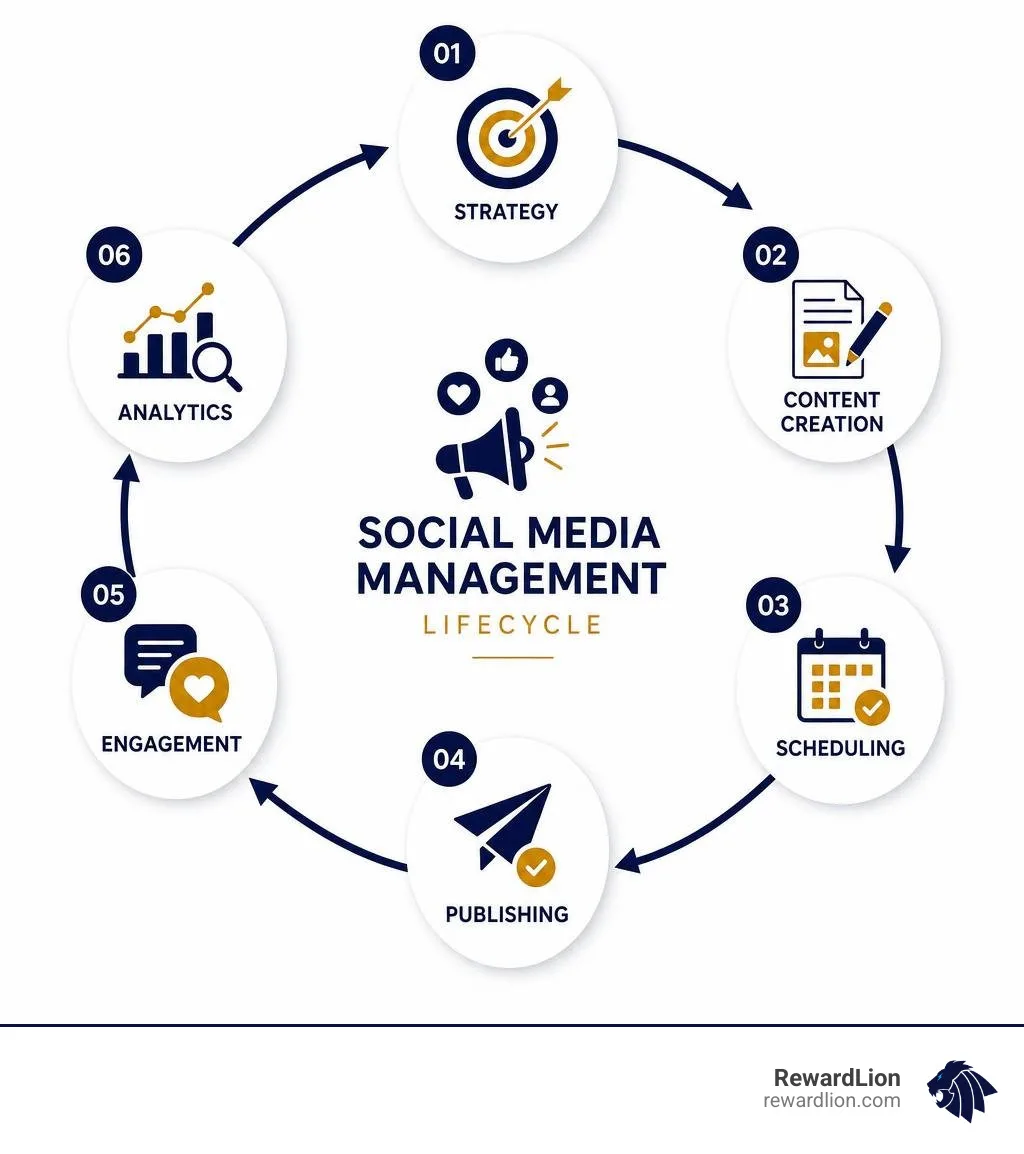
What is Social Media Management?
At its core, social media management is the art and science of guiding a brand's digital presence across various social networks. It is not just about posting random photos or writing witty captions when inspiration strikes. Instead, it is a highly structured business function that connects your brand strategy directly to your customer service, community building, and business growth.
To manage social media effectively, we must understand our target audience demographics. Different platforms attract different groups of people. For example, a business targeting corporate executives will focus heavily on LinkedIn, while a brand selling visual lifestyle products will prioritize Instagram and TikTok.
A comprehensive management strategy coordinates multiple moving parts:
Brand Strategy: Defining how your business shows up online, including your visual identity, values, and core messaging.
Customer Service: Responding to direct messages, comments, and reviews in real-time to build trust.
Community Building: Fostering genuine conversations with your followers so they transition from passive viewers to active brand advocates.
Why Modern Businesses Need Professional Social Media Management
In 2026, social media is often the very first touchpoint a customer has with your business. If your profiles are inactive, look unprofessional, or post inconsistent messaging, you risk losing credibility instantly. Professional management ensures absolute brand consistency across every channel.
Furthermore, social media algorithms are constantly changing. What worked six months ago to get organic reach might not work today. Algorithms heavily punish inconsistency. When a business experiences a "feast-or-famine" posting cycle, platforms suppress their reach, making it incredibly difficult to rebuild momentum.
For businesses looking to expand, social media offers unparalleled global reach. However, managing this scale requires specialized expertise, which is Why you need a great international social media manager to navigate cultural nuances, local trends, and localized customer service expectations.
Core Skills and Career Paths for Social Media Managers
Becoming a successful social media manager requires a unique blend of creative and analytical talents. Because the field moves incredibly fast, professionals must be comfortable wearing many different hats.

Essential Skills for Effective Social Media Management
If you are looking to excel in this industry or hire the right talent, these are the non-negotiable skills required:
Content Creation & Copywriting: Writing engaging, platform-specific captions and scripts that capture the brand’s voice.
Graphic Design & Video Editing: Crafting eye-catching visuals and editing short-form video content (Reels, TikToks, Shorts) that stop users from scrolling.
Data Analysis: Interpreting metrics to understand what is working, what isn't, and how to allocate marketing resources.
Public Relations & Community Moderation: Managing public comments, answering customer inquiries, and handling potential brand crises before they escalate.
Campaign Leadership: Planning and executing multi-channel social media campaigns that align with broader business goals.
For those looking to enter the field, the job market is highly active. You can explore opportunities locally and regionally by browsing Social Media Marketing Jobs, Employment in Florida or checking out specific listings like Social Media Manager jobs in Fort Lauderdale, FL - Indeed to see what local brands are looking for today.
Education, Certifications, and Career Paths
One of the most exciting aspects of this career path is that it does not strictly require a traditional four-year degree. While degrees in marketing, public relations, or communications are highly beneficial, many top-tier managers are self-taught or rely on professional certificates.
For instance, Coursera offers a highly popular Meta Social Media Marketing Professional Certificate. In fact, 300,066 learners have already enrolled in Meta's Social Media Management course on Coursera, with 97% of learners rating the course positively. These structured programs provide hands-on training in building a brand presence, managing content calendars, and evaluating campaign data.
To launch a career, we recommend a simple five-step roadmap:
Step 1: Develop core skills through online learning and certifications.
Step 2: Build a personal brand on social platforms to showcase your skills as a living portfolio.
Step 3: Gain hands-on experience through internships, freelance gigs, or managing accounts for local non-profits.
Step 4: Secure an entry-level role (such as a community manager or content creator).
Step 5: Specialize in an area like paid campaigns, social analytics, or agency leadership.
Key Features of Social Media Software
To stay sane while managing multiple platforms, using the right social media management software is essential. These platforms act as a central operating system for your digital marketing.

A robust social media management tool should offer several core features:
Visual Scheduler & Content Calendar: A drag-and-drop calendar that allows you to see your entire publishing pipeline at a glance.
Unified Inbox: Bringing comments, direct messages, and brand mentions from all platforms into a single stream so you never miss a customer inquiry.
Analytics & Reporting: Custom reports that track follower growth, engagement rates, reach, and top-performing posts.
Team Collaboration & Approval Workflows: Allowing team members and clients to draft, review, comment on, and approve posts before they go live.
Having these features integrated into a single dashboard supports publishing across Facebook, YouTube, Instagram, X (Twitter), LinkedIn, Google Business Profile, Pinterest, Threads, TikTok, and more. Advanced platforms also offer robust hashtag tracking and visual drag-and-drop scheduling to streamline your workflow.
Free vs. Paid Enterprise Solutions
When choosing software, businesses must balance their budget constraints against their operational needs.
Free and Low-Cost Tools: Basic platforms offer entry-level, forever-free, or low-cost plans. These are perfect for solo creators or very small businesses that only need to schedule basic posts across a few accounts.
Paid Enterprise Solutions: For larger businesses and agencies, enterprise platforms provide advanced security, custom reporting, SSO, and massive integration libraries. These solutions connect to numerous integrations and help large organizations centralize their strategy, significantly growing their followers and increasing online interactions across multiple brands.
The Role of AI in Modern Social Media Workflows
Generative AI has completely transformed how we manage social media in 2026. AI is no longer just a futuristic concept; it is an active assistant that saves hours of manual work every week.
Modern platforms utilize AI to:
Draft Captions and Generate Ideas: Instantly writing platform-optimized captions, adding relevant hashtags, and generating a month's worth of content ideas in seconds.
Automate Scheduling: Analyzing historical audience data to determine the exact optimal time to publish for maximum engagement.
Perform Sentiment Analysis: Reading incoming customer messages and comments to flag negative reviews or prioritize hot leads automatically.
AI Video Generation: Creating short video clips, ads, and social stories directly from simple text prompts, removing the need for expensive production crews for basic updates.
Best Practices for Content Strategy and Campaign Optimization
To stand out in a crowded digital landscape, you need a structured content strategy. We recommend utilizing the EPIC brand framework to establish your business presence:
Existence: Setting up complete, professional, and optimized profiles.
Purpose: Defining why your brand is on social media (e.g., to educate, entertain, or inspire).
Identity: Maintaining a consistent visual style, color palette, and brand voice.
Connection: Actively engaging with your audience to build lasting relationships.
Because social media needs vary wildly depending on the size and structure of your organization, we have broken down the typical requirements below:
Business Type Core Focus Primary Challenge Recommended Solution Individual Creators Personal branding, high-volume content, community engagement Time constraints, burnout Low-cost scheduling tools, basic AI caption assistants Small Businesses (SMBs) Local lead generation, customer trust, consistent posting Limited budget, lack of dedicated staff Hybrid AI tools, outsourcing to a local expert team Agencies Multi-client management, detailed reporting, client approvals Managing client feedback, scaling workflows Multi-tenant dashboards, external client approval links Large Enterprises Brand protection, global alignment, employee advocacy Complex approval chains, security compliance Enterprise-grade software with robust role-based access
Creating a Consistent Posting Schedule
Consistency is the absolute key to beating social media algorithms. To maintain a steady flow of content without working 24/7, implement these three tactical steps:
Bulk Scheduling: Set aside one or two days a month to batch-produce and schedule your content in advance.
Content Queues: Organize your posts into specific categories (e.g., Educational Tuesdays, Behind-the-Scenes Thursdays) to keep your feed balanced.
Platform-Specific Formatting: Never cross-post the exact same caption and image to every channel. Adapt your content so it fits the natural culture of each platform—shorter text and hashtags for Instagram, professional formatting for LinkedIn, and video for TikTok.
Measuring Performance and Analyzing Data
You cannot optimize what you do not measure. To ensure your social media efforts are actually driving business growth, keep a close eye on these key performance indicators (KPIs):
Reach and Impressions: How many unique eyes are seeing your content?
Engagement Rate: Are people actively liking, commenting, sharing, and saving your posts?
Conversion Tracking: Using UTM parameters and tracking pixels to see how many social media clicks turn into website visitors, leads, and paying customers.
Failed Post Recovery: Sometimes, a scheduled post fails due to an expired platform token or API glitch. Ensure your management tool has a recovery queue so you can quickly fix and republish the post without having to recreate it from scratch.
Navigating Legal Compliance and Regional Strategies
As social media becomes more integrated into daily life, businesses must navigate an increasingly complex landscape of privacy regulations, ethical guidelines, and regional laws.
For example, compliance is a major topic of discussion as Eight States Enact Minor Social Media Bans Despite Court Fights, highlighting the need for brands to stay highly informed about state-level digital regulations.
For businesses based in Florida, local relevance is just as important as national compliance. Whether you are running a business in Miami, Boca Raton, or Fort Lauderdale, tailoring your content to your local community builds incredible trust.
If you want to dominate your local market, exploring professional regional strategies like Fort Lauderdale Social Media Marketing can give you a massive competitive edge. Partnering with a specialized Social Media Marketing Agency Fort Lauderdale ensures your campaigns are fully optimized, legally compliant, and deeply connected to local trends.
Frequently Asked Questions
What does a social media manager do daily?
A social media manager's day is highly dynamic. Daily tasks typically include curating relevant industry news, drafting and designing new content, responding to comments and direct messages across all channels, monitoring brand mentions, and analyzing performance data to adjust active campaigns.
How do I choose the right social media software?
To choose the right tool, start by listing the specific social platforms your business uses and make sure the software supports them natively. Next, consider your team size and budget. If you are a solo business owner, a low-cost tool with a visual calendar is perfect. If you are a growing business or agency, look for a tool that includes a unified inbox, robust analytics, and client approval workflows.
Can AI completely replace a social media manager?
No. While AI is an incredible tool for brainstorming, writing first drafts, and automating repetitive scheduling tasks, it lacks the human touch. AI cannot build real, empathetic relationships with your community, understand deep cultural nuances, or make high-level strategic decisions during a brand crisis. The most successful brands use a hybrid approach: AI-powered tools managed by human experts.
Conclusion
Managing social media across multiple platforms is a full-time job. It requires constant attention, creative energy, and deep analytical skills. For busy business owners, trying to handle all of this in-house while running daily operations often leads to inconsistent posting, missed customer leads, and burnout.
That is where we come in. At RewardLion, we believe you shouldn't have to hire multiple disconnected agencies or struggle to manage complex software tools on your own.
We install one fully connected growth system into your business — powered by advanced AI, executed by our expert in-house marketing team, and optimized continuously for your success. Our hybrid SaaS and expert team management model gives you the power of a dedicated, professional marketing department without the overhead.
From consistent social media management and high-converting paid ads to local SEO domination and automated sales funnels, we handle the hard work so you can focus on doing what you love.
Ready to take your digital presence to the next level? Get Your Quote today and let's grow your business together.