Why Product Advertisement Motion Graphics Drive High Performance
Creating high-converting product advertisement motion graphics requires pairing an immediate visual hook in the first three seconds with modular graphic assets, bold kinetic typography, and clear pacing optimized for sound-off mobile feeds. By transforming complex specifications, pricing structures, and digital workflows into dynamic visual stories, motion graphics simplify purchasing decisions and capture viewer focus before they scroll away.
Deploying motion graphics gives brands a distinct advantage in performance marketing. Motion ads across platforms like Facebook, Instagram, and Amazon generate 1.5x more clicks than static creative. When integrated into effective advertising strategies, multi-channel campaigns utilizing motion graphics see an average 49% increase in revenue.
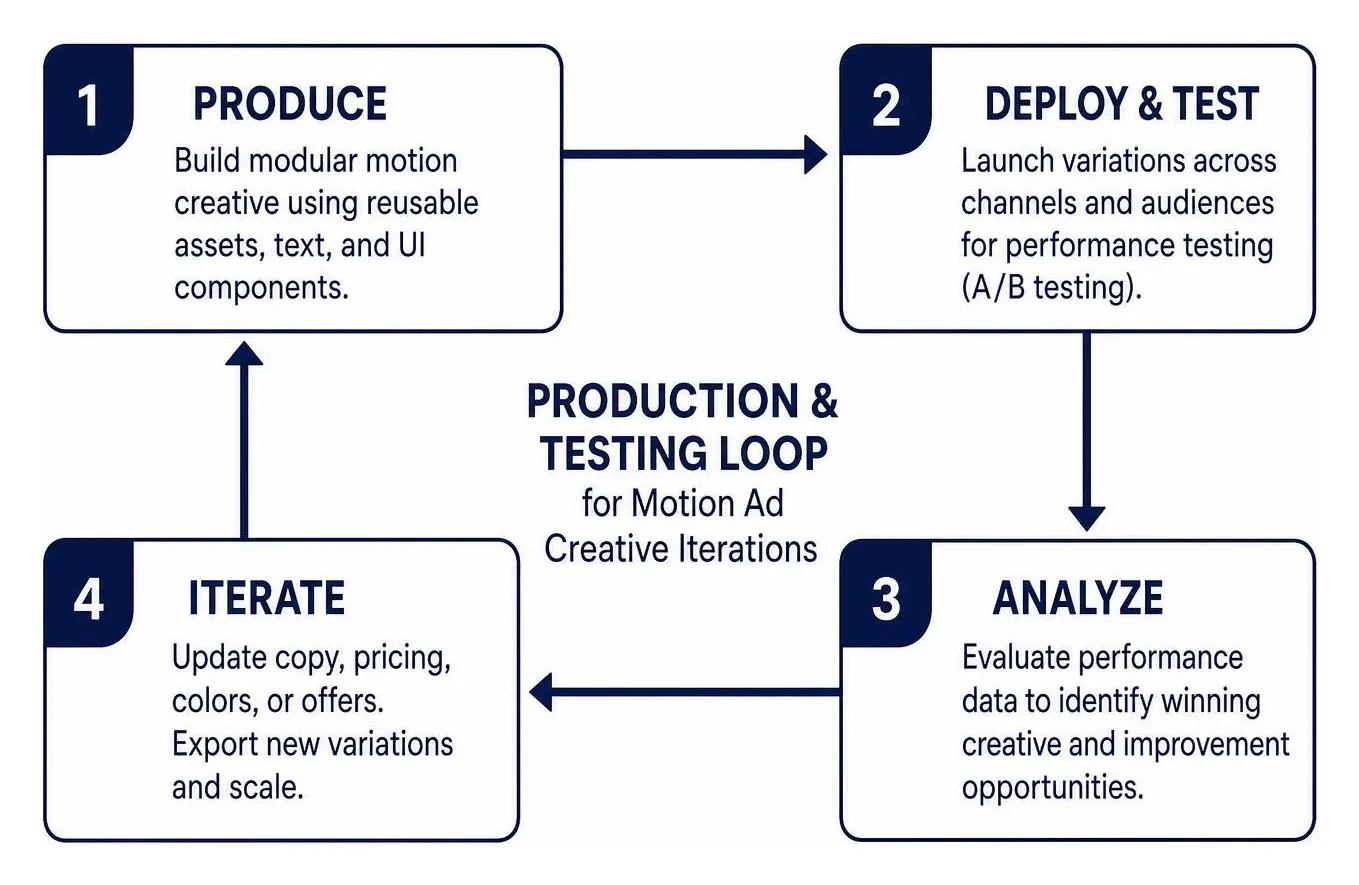
Beyond engagement metrics, motion design provides remarkable production agility. In traditional live-action shoots, updating a product feature, revising a price point, or testing a localized seasonal promotion requires rescheduling talent, booking studios, and incurring substantial re-filming expenses. With motion design systems, visual assets, text layers, and UI mockups remain entirely modular. Creative teams can alter pricing tags, color schemes, or promotional banners in minutes, enabling rapid A/B testing and seamless scaling across paid media channels.
Motion Graphics vs. Live-Action and Traditional Animation
Selecting the appropriate visual medium depends on campaign goals, production timelines, and overall messaging complexity. While live-action builds human rapport and character animation delivers emotional narrative arcs, motion design specializes in clear, abstract visual communication.
Feature / Dimension Live-Action Video Traditional Character Animation Motion Graphics Design Primary Strength Human connection & lifestyle context Character-driven emotional storytelling Clear visual communication & concept simplification Asset Modularity Low (requires physical reshoots) Moderate (redrawing keyframes is labor-intensive) High (layered digital assets update instantly) Concept Abstraction Difficult (limited by physical filming constraints) High (can draw fictional worlds) Exceptional (uses shapes, 3D CGI, and kinetic type) Turnaround Speed Weeks to months Months Days to weeks Cost per Revision High High Low to Moderate Ideal Ad Deployment Brand anthems & testimonial spots Entertainment & narrative ads commercial video advertising, feature reveals & UI explainers
Live-action commercials often show their age quickly when clothing styles shift, background hardware becomes obsolete, or physical actors move on. Motion design maintains a timeless quality. It translates technical hardware capabilities, internal software code, or intangible fintech transactions into clean, graphic visual metaphors that never feel visually dated.
The Psychology of Visual Momentum and Viewer Recall
Human brains process visual motion significantly faster than static text. Viewers retain approximately 95% of a message when delivered through video and animation, compared to just 10% when reading text alone.
By strategically deploying color shifts, rhythmic pacing, and kinetic transitions, motion design taps directly into the power of sensory marketing in advertising. Moving elements naturally guide the viewer's eye along a deliberate path: from a visual hook, to a feature demonstration, to a bold call to action.
Furthermore, a significant portion of digital video content is consumed with the sound muted on mobile feeds. Motion graphics excel in sound-off environments because kinetic typography, bold iconography, and floating UI callouts communicate the core value proposition instantly without relying entirely on a voiceover track.
Core Frameworks and Essential Design Principles
High-converting motion ads rely on deliberate visual hierarchy and structured graphic pacing. Without structured design rules, animation quickly devolves into visual clutter that overwhelms prospective buyers.
High-impact product promotion videos establish a clear visual throughline from the opening frame. Whether marketing consumer packaged goods or enterprise software, every moving element should actively guide viewer focus toward the primary value proposition. Using spatial depth, subtle lighting contrasts, and layered compositions prevents visual noise and keeps the product front and center.
Kinetic Typography, Color Palettes, and Pacing
Typography in motion design is a functional visual element, not just plain text. When designing for mobile-first feeds, text overlays must remain legible at small scale while maintaining rhythmic momentum.
High-Contrast Hierarchy: Use bold weights for primary hooks and price points, while keeping supporting details minimal to avoid visual overload.
Controlled Pacing (6 to 20 Seconds): Front-load the most compelling visual payoff within the first three seconds to arrest the scroll, then pace subsequent transitions to match the natural reading speed of the viewer.
Cohesive Brand Palettes: Restrict color usage to two or three core brand tones with a single contrasting accent color reserved exclusively for call-to-action buttons, key metrics, or transformation moments.
UI-Driven Storytelling and Metaphorical Abstraction
Enterprise software platforms, mobile applications, and high-tech hardware often feature intricate capabilities that are difficult to show through standard screen recordings. Raw interface captures often feel dense, cluttered, and difficult to parse on smaller mobile screens.
Creative motion design solves this challenge by abstracting the user interface. By simplifying complex screens into floating 3D panels, dynamic badges, and dimensional typographic highlights, motion graphics show what the product accomplishes for the customer rather than walking through tedious button clicks.
A notable commercial benchmark is the Apple No Sweat Campaign, which translated raw computing power and chip efficiency into a bold visual metaphor of a powerlifter moving with effortless athletic agility. Rather than overwhelming viewers with dense technical specs, the spot relied on dynamic CGI and choreography to communicate performance at a glance.
Strategic Formats and Production Pipelines
An effective motion design strategy treats animated creative as a scalable ecosystem deployed across every stage of the customer journey.
Paid Social Feeds (9:16 & 4:5): 6-to-15 second ads designed to stop the scroll, highlight a single functional benefit, and drive immediate click-throughs.
Landing Pages & Website Headers (16:9): Seamless looping motion headers and lightweight vector animations that explain product workflows, boosting on-page conversion rates by up to 80%.
Email Marketing (GIF / MP4): Short motion teasers that elevate email click-through rates by 200% to 300%.
Programmatic Billboards & DOOH: High-contrast, large-format motion loops that capture real-world foot and vehicle traffic without relying on audio.
Integrating modular motion assets into an automated ai sales funnel builder ensures that prospects encounter visually consistent, high-converting creative across every digital touchpoint.
Core Types of Product Advertisement Motion Graphics
Different campaign objectives call for tailored motion graphic styles:
B2B SaaS Explainer Motion Ads: Concise, interface-driven animations that turn multi-step platform workflows into clean, digestible visual summaries.
E-Commerce & CPG Product Reveals: 3D motion films showcasing material textures, dynamic liquid simulations, particle effects, and 360-degree rotations for physical products.
Feature Launch & Update Spots: Short-form kinetic clips designed to introduce a new capability or limited-time promotional offer.
Full Brand Commercials: Polished product advertisement video assets blending visual identity, kinetic design, and rhythmic audio to elevate brand positioning across paid broadcast and streaming networks.
Tools for Creating Product Advertisement Motion Graphics at Any Budget
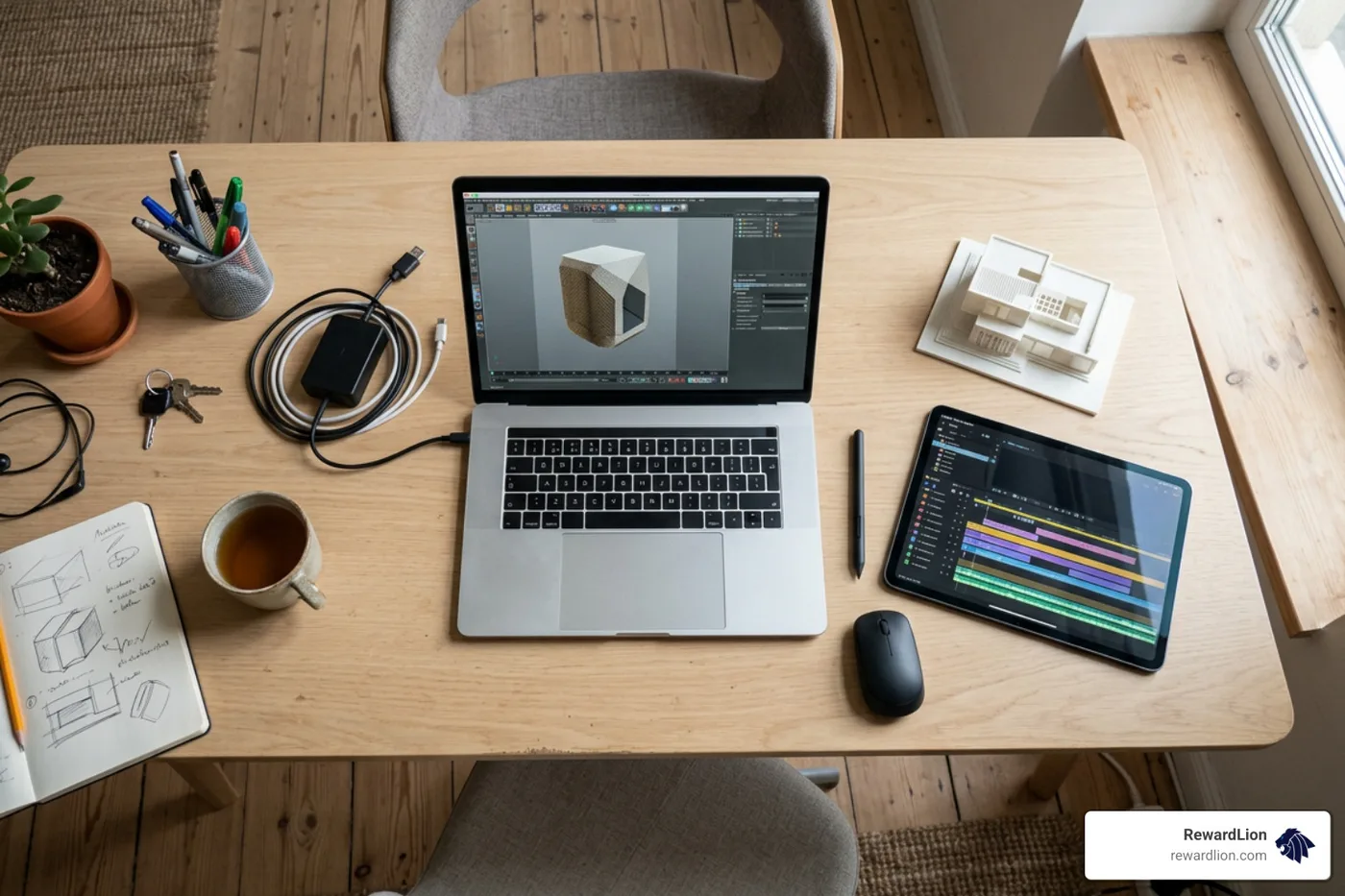
Building commercial motion graphics spans a wide range of production workflows, from accessible web-based tools to professional CGI render pipelines:
Adobe After Effects: The industry standard for 2D motion design, kinetic typography, visual compositing, and dynamic user interface animation.
Blender 3D & Cinema 4D: Advanced digital content creation suites used for 3D product modeling, procedural material simulations, custom camera choreography, and photorealistic CGI rendering.
Jitter & Web-Based Motion Editors: Streamlined design tools optimized for producing quick, template-based UI micro-interactions and social media promotional loops without deep technical rendering overhead.
Canva & Rapid Template Engines: Accessible graphic suites for non-technical creators assembling simple animated promo flyers and retail announcements on tight timelines.
Measuring ROI and Optimizing Motion Ad Performance
Creative motion design directly influences measurable bottom-line metrics across the marketing funnel. With 87% of marketers reporting that video provides a positive return on investment and 80% confirming it directly increases sales, tracking the right performance indicators ensures creative budgets yield predictable growth.
When evaluating motion ad performance, monitor these key metrics:
Hook Rate (3-Second View Rate): Evaluates the strength of the opening visual payoff and whether the motion concept successfully halts scrolling on paid social feeds.
View-Through Rate (VTR) & Retention Curves: Identifies exactly where viewer drop-off occurs, highlighting whether scene transitions, text overlays, or narrative pacing need refinement.
Click-Through Rate (CTR): Measures how effectively kinetic typography and on-screen value propositions drive prospective buyers to take action.
Conversion Rate & Cost Per Acquisition (CPA): Tracks direct sales, trial signups, or demo bookings generated from the traffic directed by the motion creative.
By establishing a structured A/B testing workflow—testing variable opening hooks, adjusting motion pacing, or alternating background color palettes—brands can systematically drive down customer acquisition costs while scaling winning creative variations.
Frequently Asked Questions About Product Motion Design
What is the ideal duration for a product motion graphic ad?
For paid social media channels like Meta, TikTok, and YouTube Shorts, the ideal duration is between 6 and 20 seconds. This timeframe provides enough room to deliver a clear visual hook, demonstrate a single core benefit, and present a bold call to action before viewer fatigue sets in. For in-depth website explainers or B2B landing pages, 30 to 60 seconds provides sufficient depth to illustrate complex platform capabilities.
How do motion graphics integrate with live-action product footage?
Motion graphics integrate seamlessly with live-action video through 3D camera tracking, digital screen replacements, floating UI callouts, and graphic overlays. This hybrid compositing technique allows brands to ground dynamic animation in real-world lifestyle contexts, combining human relatability with graphic clarity.
What metrics should businesses track to evaluate motion ad ROI?
To evaluate return on investment, track the 3-second hook rate, overall view completion rate, click-through rate, and downstream conversion rate. Additionally, consider the asset reuse value: modular motion design files can be adapted across multiple aspect ratios and promotional campaigns without the cost of new video shoots.
Conclusion
Product advertisement motion graphics provide the clarity, visual momentum, and scalability modern brands need to stand out in saturated digital feeds. By turning complex features into intuitive visual stories, motion design captures attention, simplifies value propositions, and systematically improves conversion performance.
At RewardLion, we install fully integrated growth systems that connect high-impact creative production with automated sales funnels, paid advertising, and omnichannel media management. Whether you need custom 3D product animations, automated lead generation systems, or a dedicated fractional marketing team, our AI-powered operating system delivers scalable, hands-off growth.
To explore real-world creative breakdowns and see high-performing animation in action, review our detailed product advertisement video example guide and start building motion campaigns that drive measurable revenue.