The Fundamental Pillars of Modern Personal Brand Architecture
Effective personal branding strategies start with three practical moves: define a narrow niche where your expertise and market demand overlap, build owned digital real estate such as a website and newsletter, and run a consistent omnichannel distribution system that repurposes your insights across search, social, and media platforms. These actions turn your name into the mental shelf space you occupy in the minds of your target market—the immediate set of expectations, associations, and trust that people attach to you before you even enter a room.
When we evaluate how industry authorities establish their market presence, we see that they treat identity as an integrated system. Effective brand positioning requires building comprehensive branding and identity systems that align your public persona with your actual commercial deliverables. Rather than broadcasting every detail of your daily routine, you invite your audience into your intellectual lens—the specific, deliberate perspective through which you analyze problems and create business solutions.
To engineer a brand that endures, we look at structured strategic frameworks. A well-established approach is the 7 Brand Pillars model:
Clarity: Unambiguous messaging regarding who you help and how you achieve results.
Credibility: Documented proof points, credentials, and verifiable client success stories.
Competence: Deep subject matter expertise demonstrated through real problem-solving.
Consistency: Regular publishing, steady positioning, and dependable quality across touchpoints.
Character: The distinct voice, core values, and authentic worldview you bring to the market.
Community: An engaged audience of peers, partners, and clients who advocate on your behalf.
Visibility: Deliberate distribution that ensures your ideas reach key decision-makers.
Complementing this structure is the 5 A’s Framework, which guides the strategic rollout of your public identity:
Aim: Your concrete business objectives (e.g., higher consulting rates, enterprise pipeline, keynote invitations).
Audience: The narrow group of buyers or peers you intend to influence.
Assets: Owned digital channels, intellectual frameworks, case studies, and brand collateral.
Actions: A predictable weekly and monthly publishing and networking cadence.
Assessment: Routine data reviews tracking inbound demand rather than vanity metrics.
As highlighted in the US Chamber of Commerce research on personal branding, the strongest brands operate with an authentic point of view, reliable consistency, and focused channel selection. When you define your position clearly and document real-world outcomes, your personal brand shifts from an abstract concept into a reliable driver of professional reputation.
Foundational Personal Branding Strategies for Niche Positioning
The most expensive mistake any expert can make is attempting to appeal to everyone. Broad appeal dilutes your authority, weakens your search visibility, and makes it difficult for potential clients to understand why you are the ideal choice.
To build an ownable niche, your positioning must sit at the exact intersection of your deepest competence, real market demand, and a distinct intellectual angle.
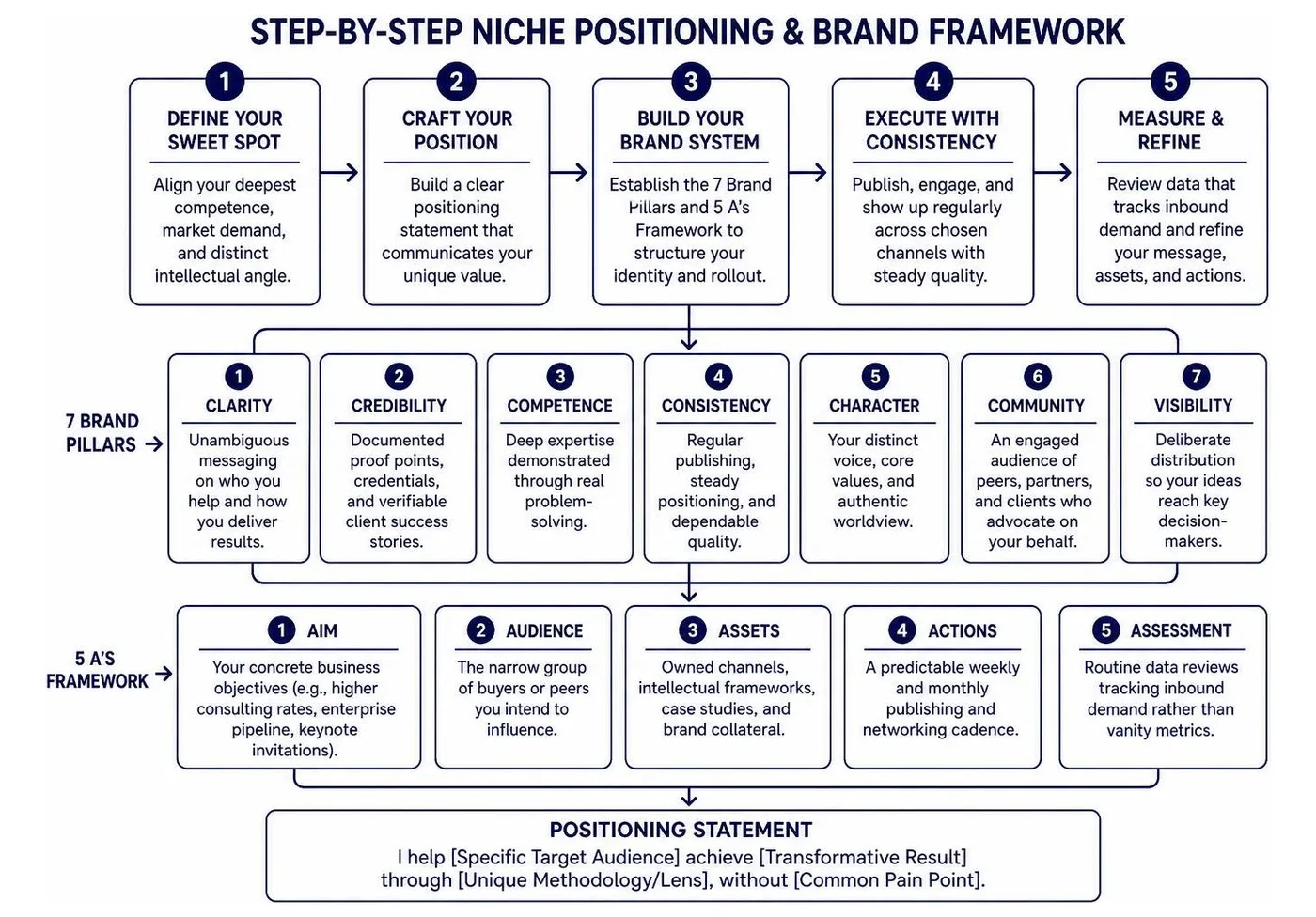
A practical positioning statement crystallizes this alignment:
"I help [Specific Target Audience] achieve [Transformative Result] through [Unique Methodology/Lens], without [Common Pain Point]."
When you define your territory narrowly, you eliminate superficial competition. You transition from a generalist competing on price to a specialized authority commanding premium value.
Establishing Digital Real Estate and Owned Media
Social media networks are rented land. Algorithmic changes, shifting platform rules, and account suspensions can wipe out your distribution overnight if your entire personal brand lives solely on third-party channels.
Long-term authority requires dedicated digital real estate. Developing an authoritative personal hub through custom website development provides a centralized home base where you control the user experience, capture first-party data, and present your portfolio without external distractions.
Your digital ecosystem should center on three foundational assets:
A High-Converting Digital Home Base: A clean, fast-loading website featuring your core positioning, case studies, media appearances, and a clear call to action.
An Owned Newsletter Asset: A direct line of communication to your audience via email, protecting your reach from algorithm volatility.
A Ready-to-Use Media Kit: A professional package including your high-resolution headshot, short and long biographies, core keynote topics, past press mentions, and brand assets.
Core Personal Branding Strategies to Command Market Authority
Building visibility without commercial credibility produces attention that fails to convert into revenue. Visible experts do not rely on generic inspiration; they demonstrate measurable outcomes. Industry studies show that high-visibility experts command significantly higher billing rates because buyers gladly pay a premium for verified authority. Furthermore, two-thirds of visible leaders produce a powerful halo effect that directly accelerates their firm's overall pipeline and business development.
To ensure your brand generates real business value, you must track meaningful commercial indicators rather than vanity metrics:
Vanity Metrics (Surface Attention) | Commercial ROI Metrics (True Authority) |
|---|---|
Raw follower counts | Inbound qualified sales discovery calls |
Viral post impressions | Invitations for paid keynote speaking engagements |
Passive post likes | Unsolicited direct referrals from industry peers |
Generic comments ("Great post!") | High-intent email newsletter subscriptions |
Video views without click-throughs | Podcast interview invitations & guest editorial requests |
Algorithmic reach spikes | Pipeline contract velocity and shorter sales cycles |
When you replace surface-level posting with structured authority building solutions, every piece of content reinforces your market position and protects your pricing power.
High-Impact Thought Leadership and Media Exposure
True market authority is built when third-party institutions validate your expertise. While social media allows you to speak to an audience, tier-1 media placements, guest contributions, and stage appearances validate that your ideas are recognized by the wider industry.
Deploying strategic public relations allows you to secure strategic coverage across major broadcast networks, leading trade journals, and influential industry publications. This external validation serves as a trust accelerator. When prospects search your name, verified editorial features immediately eliminate skepticism.
Beyond traditional media, peer-to-peer relationships remain a dominant engine for career and commercial mobility. A landmark Northeastern University study on career networking noted that 85% of all open positions and high-level opportunities are filled through professional networks, while over 90% of recruiters rely heavily on LinkedIn to vet candidate credibility. Adding a professional headshot alone can increase your profile views up to 14 times. When you combine proactive networking with curated media coverage, your personal authority expands predictably across your target sector.
Content Distribution and Omnichannel Personal Branding Strategies
Publishing original thought leadership does not mean spending forty hours a week writing from scratch. Sustainable brand growth relies on a systematic distribution engine that repurposes deep insights across multiple formats.
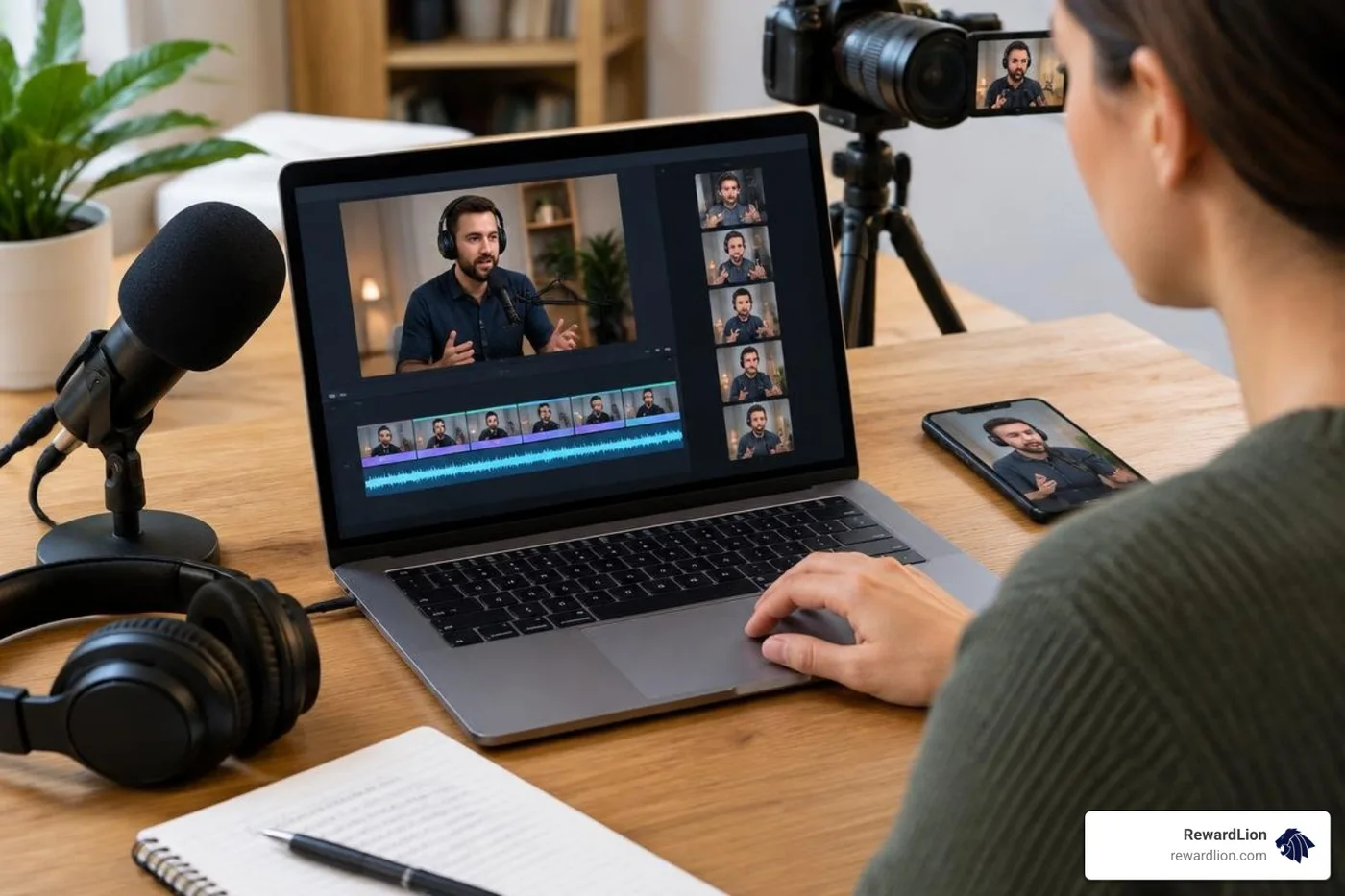
Creating high-quality audio and video content establishes familiarity far faster than written text alone. Establishing your own voice through professional podcast production allows you to explore complex ideas, interview strategic partners, and generate long-form anchor assets.
From a single 30-minute podcast episode or video recording, an integrated team can extract:
3 to 5 short-form video clips optimized for mobile feeds.
2 comprehensive text breakdowns for professional networks.
1 long-form technical article for your owned blog and newsletter.
Multiple visual quote graphics and data summaries.
By deploying comprehensive omnichannel marketing systems, your brand stays top-of-mind across search engines, social platforms, and digital feeds while filtering out repetitive manual work.
Operationalizing Your Growth: Automation and Brand Evolution
A personal brand cannot survive on sporadic bursts of enthusiasm. It requires operational discipline and consistent execution. Without a systematic operating rhythm, experts quickly burn out from content fatigue and return to being industry secrets.
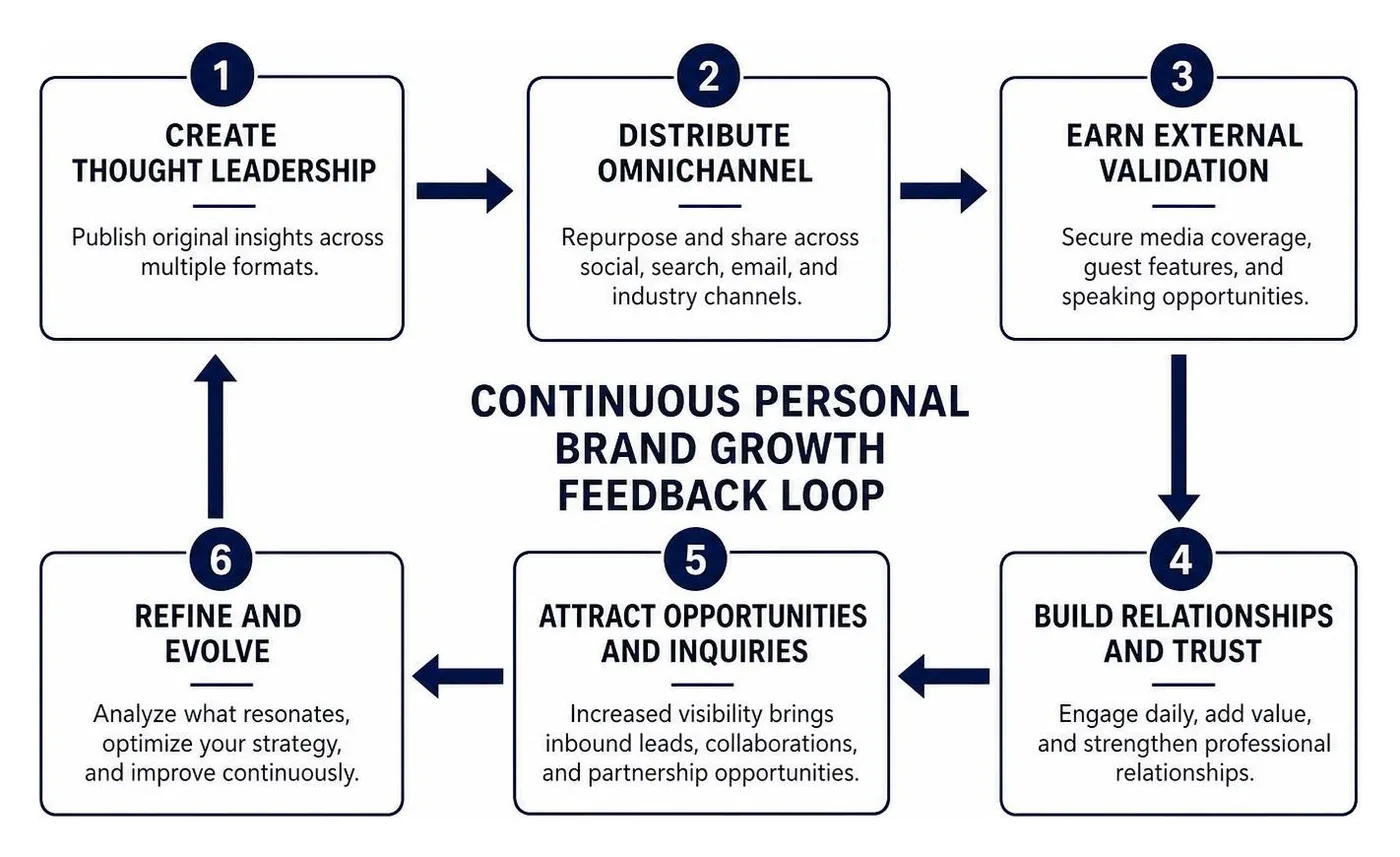
To maintain sustained visibility, we recommend establishing a predictable weekly execution rhythm:
Weekly Content Creation: Dedicate 90 minutes each week to outline core concepts or record raw long-form audio/video assets.
Daily Relationship Actions: Spend 15 minutes engaging meaningfully on key posts, replying to inbound direct messages, and connecting with relevant industry peers.
Automated Lead Nurturing: Implement AI-driven marketing automation to automatically welcome new subscribers, route inbound inquiries, and deliver requested lead magnets without delay.
Systematic Pipeline Capture: Connect your profile links directly to high-converting landing pages backed by a systematic lead generation infrastructure to convert audience attention into scheduled calls.
Quarterly Brand Audits: Review profile bios, update media kits with recent achievements, evaluate channel performance, and refresh core positioning statements every 90 days.
By treating your personal brand as an integrated business system, you create a compounding asset that builds authority, drives pipeline, and scales with your career.
Frequently Asked Questions About Personal Branding
How long does it take to see tangible ROI from personal branding strategies?
Building a recognized personal brand is a compounding process that typically requires 6 to 12 months of consistent execution to yield substantial inbound opportunities. However, initial traction can emerge much earlier:
Days 1–30 (Foundation): Clarify your positioning, audit existing profiles, launch your digital home base, and establish a weekly publishing cadence.
Days 31–60 (Momentum): First inbound inquiries, qualitative feedback from peers, and growing engagement on your primary distribution channel.
Days 61–90 (Acceleration): Regular podcast invites, qualified lead capture, speaking requests, and warmer sales conversations.
Months 6–12+ (Compounding Authority): Sustained inbound client pipeline, shortened deal cycles, premium billing power, and unsolicited media inquiries.
How do I balance authenticity with strategic positioning?
Authenticity does not require oversharing personal life details. Strategic authenticity means sharing your intellectual lens—the real-world reasoning, hard lessons, frameworks, and values that guide your work. You can be fully authentic about your professional philosophy, project challenges, and market opinions while keeping your private life entirely personal. Curate your insights around your core business territory while maintaining complete honesty in how you communicate.
Which single platform should I prioritize when launching a personal brand?
For the majority of executives, founders, and B2B professionals, LinkedIn remains the premier organic distribution platform. It provides direct, searchable access to industry decision-makers, corporate buyers, and media producers. However, your social platform must always be paired with an owned email newsletter and website. Master one primary social channel first to build attention, then systematically direct that audience onto your owned email list.
Conclusion
Your expertise is only as valuable as the market's awareness of it. Remaining an industry secret costs you high-value contracts, speaking opportunities, and leadership recognition. In an evolving commercial landscape, building an intentional personal brand is an essential business growth strategy.
By choosing a focused niche, building owned digital assets, publishing valuable insights consistently, and backing your claims with documented results, you transform your reputation into an enduring competitive moat.
If you are ready to scale your authority without managing disconnected tools or spending endless hours creating content, partner with RewardLion to deploy an all-in-one authority growth engine. From strategic positioning and custom web design to automated lead systems and omnichannel PR, our hybrid operating system delivers everything you need to command the spotlight and grow your business.