Essential Types of Lead Generation Tools for Modern Growth
Every growing company needs a structured mechanism to capture prospect interest and convert it into revenue. Modern growth teams do not rely on isolated point solutions; they deploy integrated systems that align lead routing, pipeline velocity, and buyer behavior. Using purpose-built Demand Generation Software enables teams to leverage intent data and lead scoring models, ensuring that high-value prospects receive immediate sales attention while early-stage inquiries enter automated educational tracks.
To build a reliable customer acquisition engine, businesses organize their technology around three foundational pillars: inbound conversion, intelligent outbound prospecting, and omnichannel nurturing.
Inbound Lead Capture and Landing Page Software
Inbound conversion begins the moment a prospect lands on your digital properties. Modern conversion technology has evolved far beyond static contact forms with standard text fields. Today’s top platforms use dynamic forms, interactive lead magnets, conditional questionnaires, and progressive profiling to maximize conversion rates without creating friction.
Deploying dedicated Lead Capture Software ensures that visitor intent transforms into actionable records. When coupled with an intuitive Lead Generation Landing Page Builder, marketing teams can rapidly deploy, test, and refine high-converting layouts. These tools allow for granular conversion rate optimization through multivariate testing, dynamic text replacement for paid search campaigns, and localized call-to-action triggers that adapt based on device type and traffic source.
AI-Driven Outbound and Prospecting Platforms
Outbound marketing in 2026 demands precision rather than volume. Spray-and-pray outbound tactics burn domain reputations and alienate potential clients. Modern outbound architectures rely on artificial intelligence to handle data enrichment, automated prospecting, and real-time contact validation.
By utilizing an AI Sales Funnel Builder, revenue teams can automate the identification of target accounts matching ideal customer profiles. These platforms filter vast B2B databases, verify email deliverability on the fly, append phone numbers, and monitor social triggers—such as executive hiring or tech stack adjustments—ensuring sales reps engage prospects with relevant context at precisely the right time.
Multi-Channel Automation and Nurturing Engines
Capturing a lead is only the initial step; maintaining momentum requires consistent, personalized communication across multiple channels. Multi-channel nurturing engines coordinate touchpoints across email, SMS, conversational chat, and targeted ad retargeting.
Using advanced Lead Automation Software, businesses construct complex drip sequences governed by behavioral triggers. If a prospect opens a pricing sheet, the system immediately notifies the account executive; if they ignore a top-of-funnel email, the engine redirects them toward educational video content. Coordinating these actions through centralized Marketing Automation eliminates manual follow-up delays, shortens sales cycles, and prevents qualified opportunities from falling through operational cracks.
Key Evaluation Criteria for Prospect Acquisition Platforms
Selecting the right software stack requires looking past feature lists to examine technical architecture, data integrity, and cross-platform communication. Disconnected tools create data silos, inflate tech spending, and lead to missed pipeline opportunities.
A functional platform must support real-time, bi-directional syncing between capture mechanisms and your core database. Implementing professional CRM Setup Automation ensures custom pipeline mapping, standardized data fields, and unified contact histories across all commercial departments.
Evaluating Scalability in Enterprise Lead Generation Tools
As lead volume expands, fragile software architectures buckle under the load. When evaluating enterprise platforms, technical leaders must assess database capacity, API rate limits, contact enrichment latency, and concurrent traffic handling.
A resilient Lead Generation System maintains sub-second page load times during traffic spikes and processes inbound webhook payloads without dropping records. Furthermore, high-velocity Sales Funnels require robust backend queue management to handle thousands of simultaneous checkouts, demo requests, or consultation bookings without latency or thread locking.
Data Compliance and Privacy Standards
Modern regulatory frameworks make data governance non-negotiable. Platforms must natively adhere to GDPR, CCPA, and evolving global privacy standards by offering automated opt-in management, granular consent audit trails, and self-service data deletion workflows.
Tools must enforce encrypted data transmission (TLS 1.3), secure storage at rest (AES-256), and role-based access controls to prevent unauthorized internal data exposure. Respecting user privacy not only protects your organization from severe regulatory penalties but also fosters trust with enterprise buyers who scrutinize vendor security profiles.
Analytics, Attribution, and Measuring Tool ROI
Software investments must directly demonstrate bottom-line impact. Marketing leaders require granular visibility into multi-touch attribution, blended customer acquisition cost (CAC), and customer lifetime value (LTV).
With comprehensive Lead Generation Analytics, teams can move beyond vanity metrics like raw impressions or generic form submissions. Advanced analytics identify which specific acquisition channels generate closed-won revenue, allowing finance and growth teams to allocate budget efficiently. In fact, benchmark studies across modern acquisition stacks demonstrate that approximately 1 in every 100 businesses optimizing their full acquisition workflow see up to a 3x ROI on total marketing spend.
Optimizing Performance and Resolving Pipeline Bottlenecks
As modern software stacks grow more interconnected, technical bottlenecks become inevitable. System lag, dropped webhooks, and interface lockouts can quietly drain pipeline revenue if infrastructure is not actively monitored.
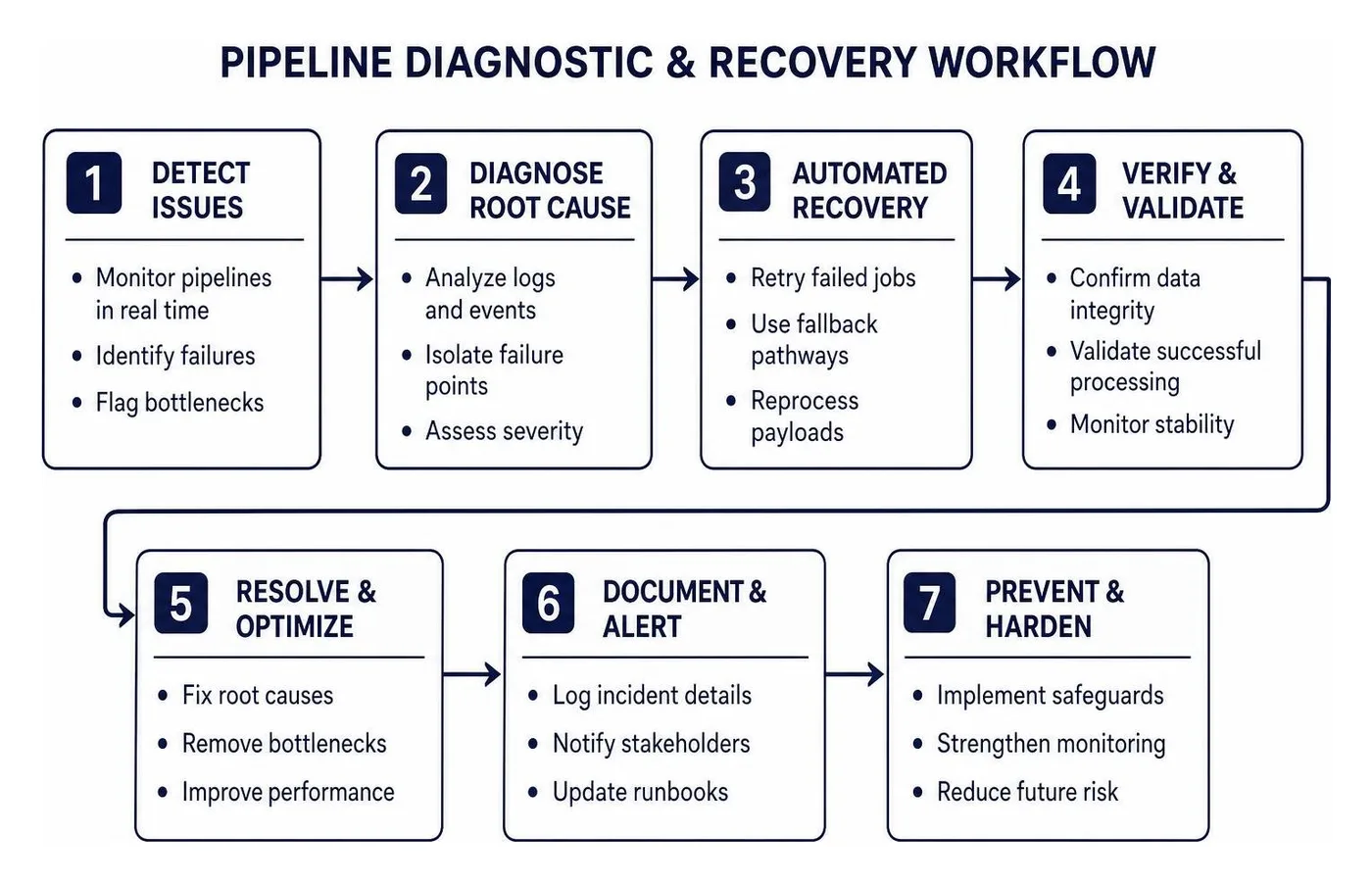
High-performance marketing operations build fault-tolerant architectures that incorporate automated retries, asynchronous processing, and fallback mechanisms for critical conversion paths.
Preventing System Freezes and Tool Failures
One of the most disruptive issues in modern digital workflows involves asynchronous process locking. For instance, in complex web applications and generative AI platforms, background tasks can experience desynchronization between backend servers and frontend user interfaces. Community discussions frequently highlight extreme edge cases—such as generative rendering threads getting stuck in continuous loading loops for over 24 hours, freezing the entire session and preventing users from submitting new inputs. In broader platform contexts, over 29.8k users across technical forums have documented issues where manually cancelling an active background job caused the interface to hang indefinitely, surviving page refreshes and application restarts.
To prevent these disruptions within your Automatic Lead Generation pipelines, systems must implement strict client-side timeout configurations, automated state reconciliation, and decoupled task queues. Background enrichment jobs and third-party API queries should execute asynchronously, ensuring that a delayed response from an external provider never blocks the end user from completing a form or advancing down a sales funnel.
Overcoming Automation Limitations and Technical Glitches
While automation handles routine data tasks efficiently, over-reliance on rigid scripts creates operational fragility. Unexpected API payload formats or edge-case user inputs can derail entire automated workflows.
Integrating Sales Automation AI Tools with built-in exception handling allows your tech stack to gracefully isolate errors. Best practices include:
Configuring Webhook Retry Logic: Deploy exponential backoff schedules to retry failed lead deliveries caused by transient endpoint timeouts.
Human-in-the-Loop Triggers: Automatically flag anomalies (e.g., duplicate records or incomplete company records) for manual SDR review rather than discarding the data.
Cross-Interface Fallbacks: Maintain alternate administrative access pathways (such as command-line tools or desktop management apps) to clear locked queues when web browser sessions hang.
Strategic Differences Between B2B and B2C Growth Funnels
Lead generation tactics vary widely depending on whether you sell to individual consumers or corporate buying committees. Applying B2C tactics to enterprise software leads to low conversion, while forcing B2B friction onto consumer products destroys conversion velocity.
Feature / Dimension | B2B Lead Generation | B2C Lead Generation |
|---|---|---|
Target Audience | Multi-stakeholder committees, executives, department heads | Individual consumers, household decision-makers |
Sales Cycle Duration | Weeks to several months | Immediate (minutes to days) |
Core Purchase Triggers | ROI, operational efficiency, compliance, risk mitigation | Emotion, personal convenience, price, brand status |
Data Acquisition Depth | Extensive (job title, tech stack, revenue, business email) | Minimal (phone number, personal email, shipping address) |
Primary Channels | LinkedIn, search, industry directories, webinars | Meta, TikTok, YouTube, programmatic display, SMS |
Follow-Up Strategy | Multi-touch SDR outreach, personalized demos, case studies | Automated discount drips, cart recovery, SMS flash sales |
Deploying Specialized B2B Lead Generation Tools
B2B customer acquisition centers on account-based marketing (ABM) and relationship orchestration. Enterprise buyers do not make impulse purchases; they evaluate security, budget impact, and integration capabilities across extended evaluation cycles.
When executing Lead Generation for B2B Companies, your software stack must map multiple contacts to single parent accounts, enrich firmographic data points, and coordinate account-tier nurture campaigns. Specialized B2B tooling allows SDRs to monitor account engagement across multiple executive stakeholders, ensuring timely outreach when target accounts demonstrate active buying intent.
B2C High-Volume Consumer Conversion Tactics
In contrast, consumer growth engines prioritize speed, simplicity, and low cognitive friction. B2C shoppers make quick decisions driven by urgency, social proof, and seamless mobile interfaces.
Consumer brands rely heavily on Omnichannel Marketing architectures that combine instant engagement triggers—such as one-click Apple Pay checkout, automated SMS abandon-cart sequences, and interactive social commerce widgets. The goal is to capture initial interest instantly and convert it before buyer attention shifts elsewhere.
Frequently Asked Questions about Lead Generation Software
How do businesses measure the true ROI of lead generation software?
Measuring true ROI requires tracking lead source data directly through to closed-won revenue rather than relying on top-of-funnel conversion rates. Calculate the total cost of the software (including subscription costs, implementation fees, and team management hours) and compare it against the gross margin generated by leads attributed to that specific platform. Multi-touch attribution modeling provides the clearest picture by distributing revenue credit across all software touchpoints that influenced the buyer's journey.
What are the major risks of over-automating lead outreach?
Over-automation can degrade brand reputation, compromise email deliverability, and cause buyer fatigue. When prospects receive generic, poorly timed AI messages that fail to account for context, engagement plummets. Additionally, aggressive outbound automation without proper domain warmup or spam-filter monitoring can lead to domain blacklisting. The most effective systems balance automated data processing with human oversight and genuine personalization.
How can teams recover lost leads during sudden tool disconnections?
To prevent permanent data loss during integration outages or API failures, configure lead capture endpoints to cache submission data locally before pushing it to third-party CRMs. Implement automated webhook event logging with replay capabilities so that once the receiving endpoint comes back online, all missed events can be retransmitted without manual data entry. Setting up real-time failure alerts via Slack or SMS ensures engineering teams can intervene immediately when data syncs fail.
Conclusion
Building a high-performing customer acquisition engine requires moving beyond disconnected point tools and fragile manual workflows. Today's competitive landscape rewards businesses that consolidate their growth operations into unified, resilient systems combining inbound capture, intelligent prospecting, multi-channel nurturing, and deep analytics.
At RewardLion, we eliminate the complexity of managing fragmented marketing software. From our offices across Florida—including Fort Lauderdale, Las Olas, Miami, and Boca Raton—as well as serving clients throughout all 50 states and internationally, we provide an all-in-one AI operating system managed by dedicated growth experts. Discover how our integrated Lead Generation Solutions replace scattered software subscriptions with a predictable, scalable revenue engine tailored for sustained growth.