Why Lead Capture Solutions Are the Missing Link in Your Sales Pipeline
Lead capture solutions are tools that collect contact information from potential customers - through forms, chatbots, landing pages, or event badge scans - and feed that data directly into your CRM.
Quick answer: What are the best lead capture solutions?
Solution Type Best For Key Feature Website form builders Website lead capture CRM sync, progressive profiling Landing page systems Campaign-specific capture A/B testing, visitor enrichment Conversational chat tools Conversational capture 24/7 engagement, context-rich leads Event and trade show apps In-person events Badge scanning, offline sync Data intelligence systems B2B prospecting Enrichment, intent signals AI funnel builders Agencies and service businesses AI-generated funnels, lead verification
Most small and medium businesses lose potential customers not because they lack traffic - but because they have no reliable system to capture, qualify, and route that interest before it goes cold. Companies using automated lead capture tools report a 10x improvement in lead follow-up speed, and businesses that implement these systems see an average 33% increase in qualified leads.
The challenge isn't just collecting names and emails. It's making sure that data is clean, enriched, and automatically synced to the right place so your sales team can act on it fast.
I'm Mike Ibrahim, Founder and CEO of RewardLion and Marketing Director for several companies, with over a decade of experience helping businesses build smarter lead capture solutions that turn traffic into revenue. In this roundup, I'll walk you through the top tool categories, what separates good from great, and how to choose the right fit for your business.
What are Lead Capture Solutions and How Do They Work?
If you have ever felt like capturing leads is like trying to catch a greased-up watermelon at a pool party, you are not alone. In June 2026, most brand interactions occur online, yet high-volume marketing campaigns often suffer from leaky funnels. This is where dedicated lead capture solutions come into play.
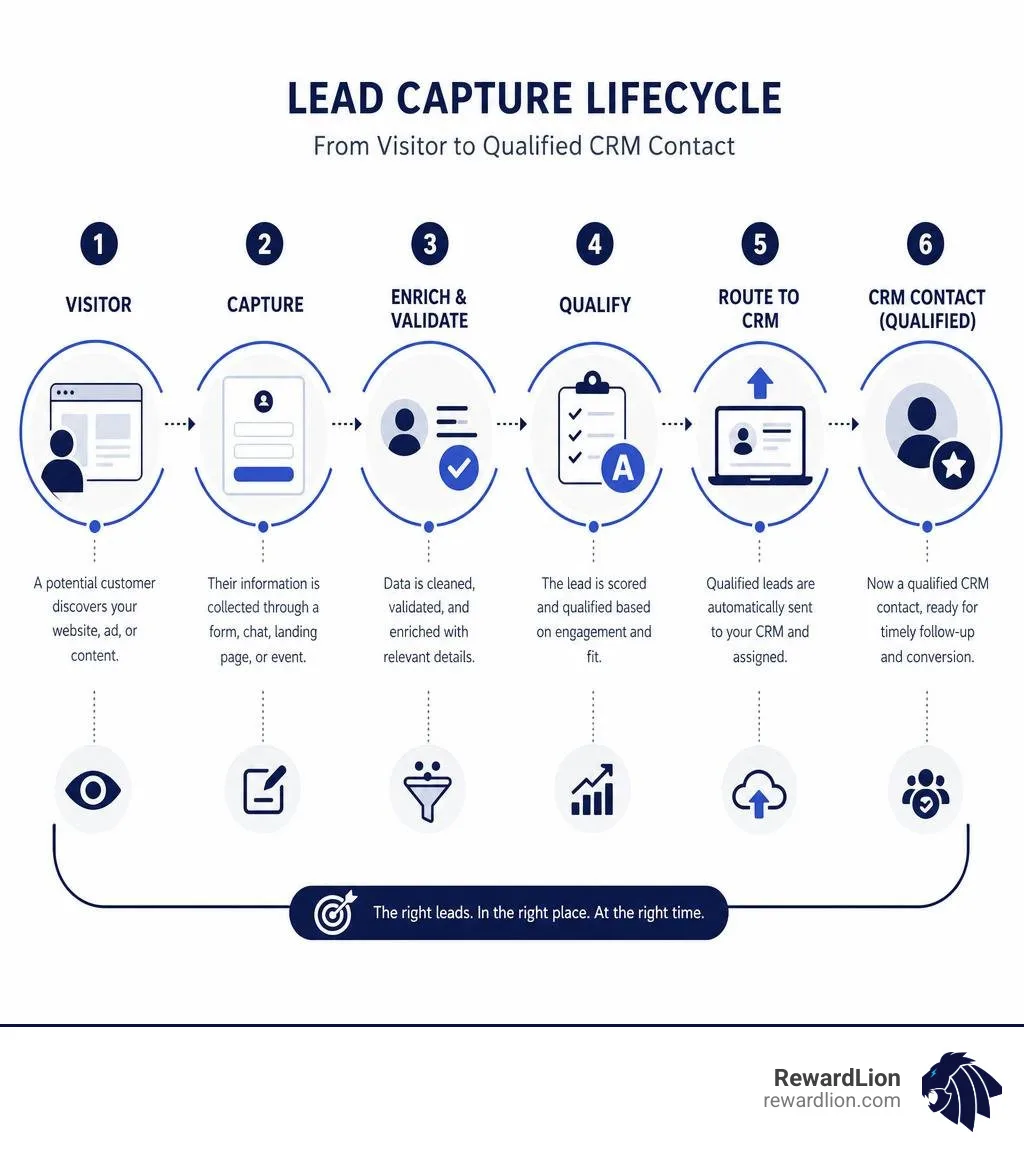
At its core, lead capture software turns anonymous website visitors, social media scrollers, and event attendees into structured leads. It does this by deploying interactive touchpoints—such as dynamic forms, conversational chatbots, or landing pages—to gather contact details.
But modern software does not stop at simple data collection. The magic happens during the CRM integration. Instead of forcing your team to manually export CSV files and run messy imports, these tools establish a real-time bridge to your CRM. The software captures the lead, instantly runs background validation (verifying phone numbers and emails), enriches the profile with firmographic data, and routes the record to the correct sales representative.
By automating this lifecycle, you ensure that high-intent prospects are contacted while their interest is at its peak. In fact, utilizing a robust system can increase your overall conversion rates by up to 50% compared to old-school, manual lead collection methods. If you are looking to build a highly efficient engine, choosing a platform that unifies your marketing and sales data under one roof is essential.
Core Features of Website Lead Capture Solutions
To move beyond basic email collection, an effective lead capture system must include several sophisticated technical features:
Progressive Profiling: Rather than overwhelming a first-time visitor with a 10-field form, progressive profiling recognizes returning visitors and dynamically displays new questions. This minimizes friction while gradually building a rich customer profile.
Visitor Enrichment: Advanced tools can resolve anonymous IP addresses to reveal the visitor’s company, industry, and job title before they even click "submit."
Conversational Chatbots: Modern chatbot platforms allow you to capture high-intent leads directly inside natural conversations, providing your reps with a full transcript and summary so follow-ups never start cold.
Single-Snippet Deployments: For busy marketing agencies and lean teams, advanced lead engines allow you to manage multi-channel lead tracking, automatic qualification, and direct Google Ads offline conversion syncing with a single line of code.
Lead Capture vs. Lead Retrieval
While they sound incredibly similar, lead capture and lead retrieval serve completely different purposes in your marketing stack.
Lead Capture is a broad, incoming process designed to gather new, previously unknown prospect information across digital and physical channels. It relies on the prospect actively engaging with a form, interactive quiz, or chatbot to build a brand-new profile in your database.
Lead Retrieval is a specific event-based extraction process. It is used at trade shows and conferences to extract existing registration data—usually by scanning a physical badge or QR code provided by the event organizer.
Understanding this distinction is vital when choosing a lead generation app complete guide to power your offline events, as retrieval tools focus on pulling pre-packaged data, while capture tools focus on qualifying and enriching that data in real time.
Maximizing ROI with CRM Integration and AI Automation
A lead capture tool that does not integrate deeply with your CRM is just a glorified spreadsheet creator. To drive actual revenue, your capture systems must talk to your sales pipelines in real time.
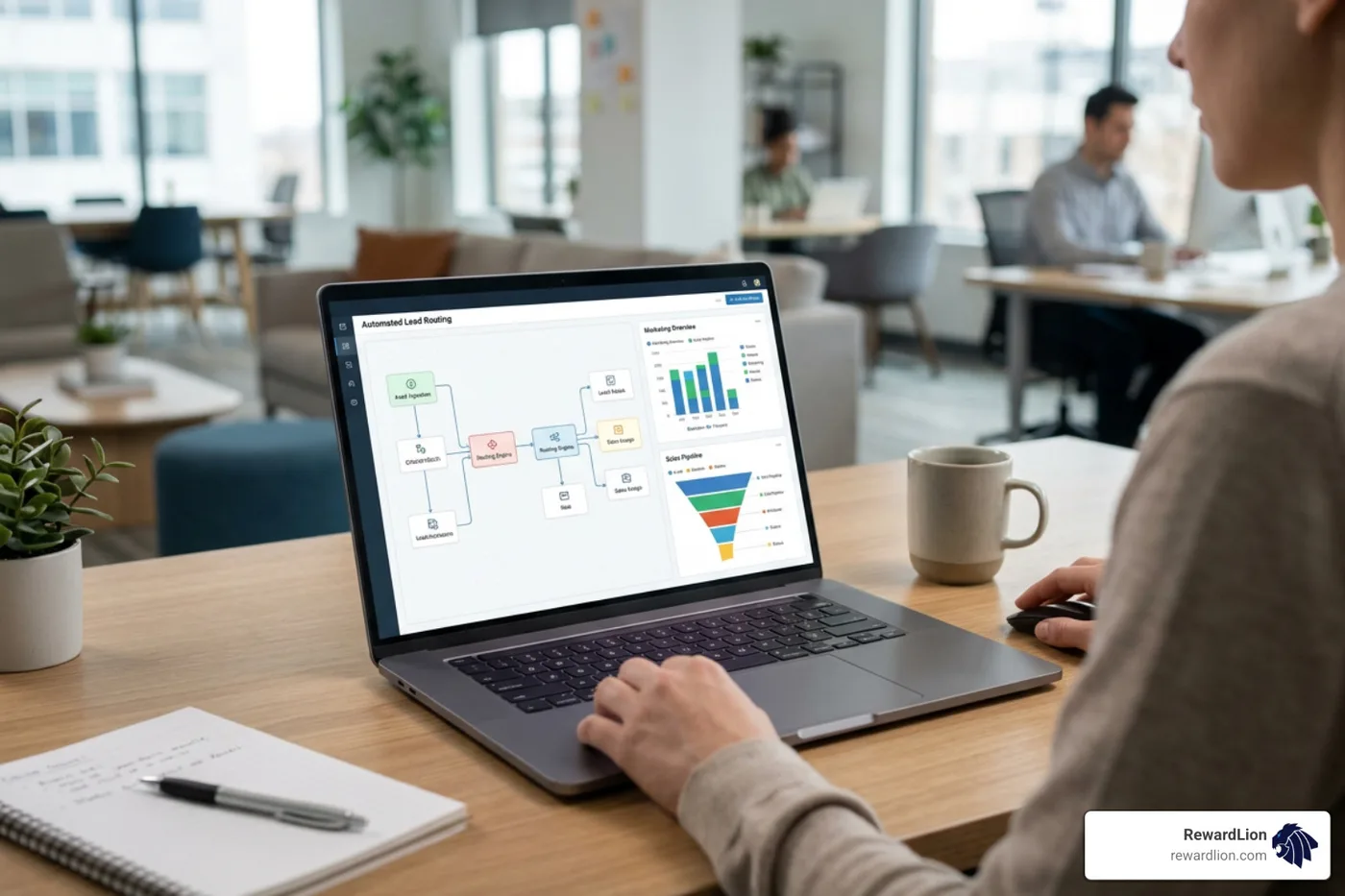
When a lead is captured, it should trigger a two-way sync. This means any update in your CRM (like a sales rep changing a lead's status) is reflected in your marketing automation platform, and vice versa. This keeps your data clean and prevents your marketing team from sending top-of-funnel educational emails to a prospect who is already in active contract negotiations.
Furthermore, integrating lead generation analytics directly into this pipeline allows you to see exactly which marketing campaigns, keywords, or event booths are generating closed-won revenue, rather than just raw contact counts.
How AI Enhances Lead Capture Solutions
Artificial Intelligence has completely transformed how we qualify and nurture incoming prospects. By implementing an ai lead generator guide 2026 framework, businesses can unlock several competitive advantages:
Real-Time Data Enrichment: AI-powered tools instantly scan public registries, LinkedIn profiles, and technographic databases to append missing corporate details to a basic email submission.
Predictive Lead Scoring: Instead of relying on arbitrary point systems, machine learning algorithms analyze historical sales data to predict which incoming leads are most likely to close, automatically prioritizing them for immediate outreach.
Intent-Based Routing: AI can read the contextual intent of a chatbot conversation or form submission, instantly routing urgent inquiries (like emergency service requests) directly to on-call reps while filtering out irrelevant job seekers or spam.
Privacy and Compliance in the AI Era
With great data comes great responsibility. Regulatory frameworks like GDPR and CCPA have strict guidelines on how consumer data is collected, processed, and stored.
When setting up automatic lead generation workflows, compliance must be built directly into the user experience. This means incorporating explicit consent checkboxes, publishing transparent privacy policies, and ensuring your lead capture databases are fully encrypted. AI tools must be configured to respect "do not track" requests and allow users to easily request data deletion. Staying compliant not only protects you from massive legal penalties but also builds essential trust with your prospects from their very first interaction.
Website vs. Event-Based Lead Capture Strategies
Your digital website strategy and your physical event strategy require different approaches, features, and workflows to be successful.
Feature / Capability Website Lead Capture Event/Trade Show Lead Capture Primary Channels Web forms, landing pages, chatbots Badge scanning, business card OCR, tablet forms Connectivity Needs Continuous high-speed internet Must support offline local storage & delayed sync Contextual Data Browser behavior, UTM parameters, page history In-person booth notes, custom qualifying questions Enrichment Source IP lookups, API-driven database matching Official event registration database integrations Follow-up Speed Instant automated email or SMS triggers Batch sync or real-time mobile CRM routing
Website-based capture relies heavily on software that tracks digital behavior, offering tools like exit-intent popups and conversational AI. Conversely, event-based solutions must be incredibly durable. When your sales reps are standing on a crowded convention floor, they need mobile-first lead generation platforms that function perfectly without internet access, storing scanned badges locally on their devices and syncing them to the cloud once a stable connection is established.
Best Practices for Forms and Landing Pages
To maximize the performance of your online lead gen software, keep these highly actionable optimization strategies in mind:
Ruthlessly Reduce Fields: Every extra field you add to a form decreases your conversion rate. Only ask for what is absolutely necessary to route the lead; let background enrichment handle the rest.
Deploy Multi-Step Quizzes: For complex offerings, break your forms into short, engaging multi-step quizzes. Prospects find these far less intimidating than a single, massive wall of input boxes.
Optimize for Mobile: Over half of your traffic will access your pages via mobile devices. Ensure your buttons are tap-friendly, inputs are large, and loading speeds are under 200 milliseconds.
Partner with Local Experts: If you are looking to scale your local presence, working with specialized regional agencies can make a massive difference. For businesses in our home state of Florida, partnering with a local team that understands the regional market dynamics can provide invaluable insights and help you target high-value prospects more effectively.
Measuring Success and ROI Metrics
To prove the financial impact of your capture solutions, you must move past vanity metrics like "total form submissions" and focus on hard business data. If you are managing lead generation for b2b software companies, you should closely monitor these three key performance indicators:
Cost Per Lead (CPL): Calculate your total campaign spend divided by the number of captured leads to measure acquisition efficiency.
Lead-to-Opportunity Conversion Rate: The percentage of captured leads that successfully pass your qualification filters and turn into active sales pipelines.
Pipeline Velocity: How quickly a captured lead moves from their initial submission to a closed-won deal. Slow follow-up speeds drag this metric down, highlighting the need for tighter CRM automation.
Frequently Asked Questions About Lead Capture
What is the difference between lead capture and lead retrieval?
Lead capture refers to the general digital or physical process of gathering new contact information and qualifying details from prospects (such as through a website form or survey). Lead retrieval is a specific event-based tool that extracts pre-existing registration data by scanning an attendee's badge or QR code at a trade show or conference.
How do privacy regulations like GDPR impact lead capture?
Privacy regulations require businesses to obtain explicit, active consent before collecting, storing, or marketing to a prospect's personal data. Your lead capture tools must feature clear opt-in checkboxes, easily accessible privacy disclosures, and secure, compliant data-handling practices to avoid heavy compliance fines.
Can lead capture tools work offline during events?
Yes, professional event-based lead capture applications are designed with offline-first capabilities. They allow reps to scan badges, take notes, and qualify prospects without an active internet connection, safely saving the data locally on the device and automatically syncing it to your CRM once Wi-Fi or cellular service is restored.
Conclusion: Build a Connected Growth System with RewardLion
Navigating the fragmented world of standalone form builders, disconnected databases, and manual CRM imports can feel exhausting. That is why we built RewardLion.
Originated in Fort Lauderdale, Florida, RewardLion provides an AI-powered, all-in-one operating system that unifies your marketing, sales, automation, and analytics into a single, cohesive platform.

We do not just hand you a piece of software and expect you to figure it out. Through our unique hybrid SaaS model, your business gets a dedicated, fractional in-house marketing agency (your CAPSS team) that handles the heavy lifting for you. We will design your custom website, build high-converting sales funnels, deploy smart lead capture systems, configure your CRM pipelines, and manage your paid advertising campaigns across Google, Meta, and beyond.
Whether you are located down the street from us in Las Olas, Miami, or Boca Raton, or operating anywhere across the United States, we install one fully connected growth system to help your business scale hands-free.
Ready to stop losing qualified leads and start scaling your business on autopilot? Get a custom quote for your business today, and let us deploy a high-converting, fully integrated lead engine for your brand.