Why Email Automation Services Matter for Growing Businesses

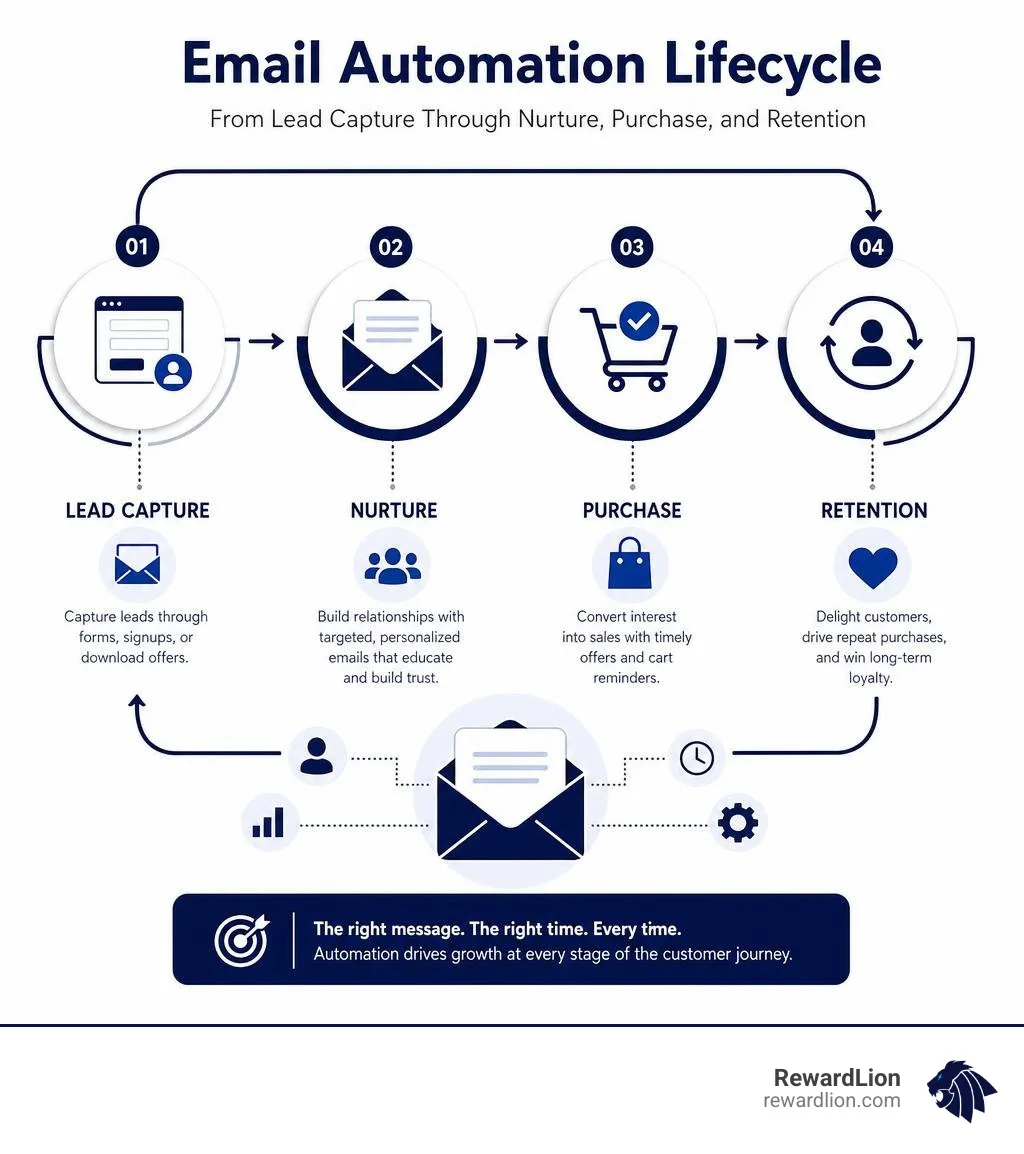
Email automation services send the right message when a customer takes a meaningful action, without your team having to press send every time. They can welcome new leads, follow up after a form submission, recover abandoned carts, nurture prospects, and bring back inactive customers based on triggers, timing, and audience data.
For a small or midsize business, the practical goal is simple: build a few high-value workflows first, connect them to your CRM or ecommerce platform, and keep your contact data clean. That creates more consistent follow-up while freeing your team from repetitive campaign work.
Email still reaches nearly everyone, and it remains one of the stronger ROI channels in digital marketing. Automation makes that channel more useful by combining relevance, timing, and personalization at scale. Businesses that use automation software generate roughly twice as many leads as businesses that do not, but results depend on trustworthy data, clear consent, strong deliverability practices, and messages people actually want.
I am Mike Ibrahim, founder and CEO of RewardLion, with more than a decade of experience building sales and marketing strategies that improve customer relationships and revenue. In this guide, I will break down how to choose and use email automation services without turning your marketing stack into another full-time job.
What to Look for in Modern Email Automation Services
Selecting the right platform is the difference between setting up effortless growth systems and creating an administrative nightmare. If your inbox feels like a chaotic party where unread messages crash through the door, automation should act as the smart DJ keeping the rhythm flawless.
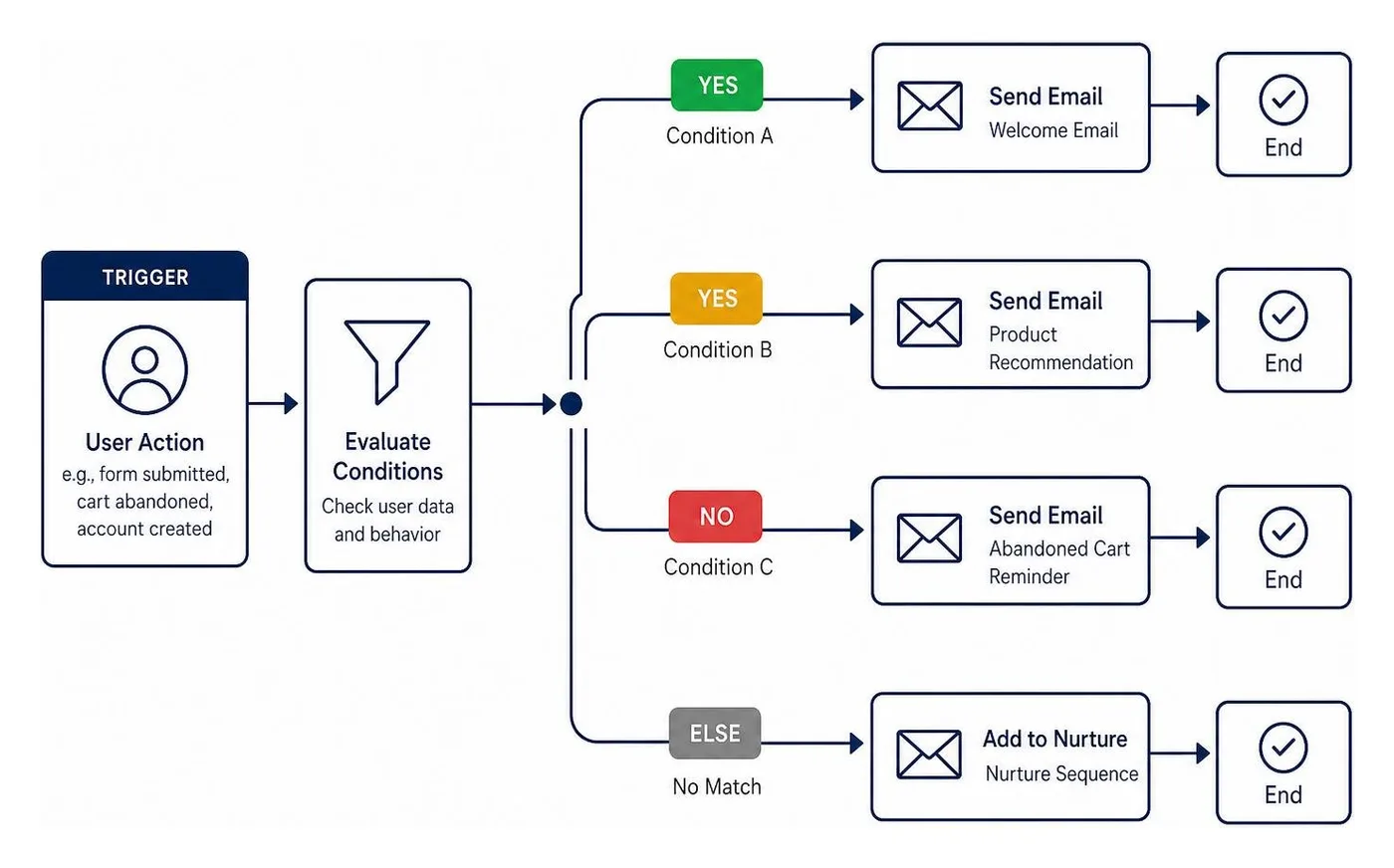
The best email automation engines do not just send scheduled blasts; they react dynamically to user intent. Modern platforms rely on visual canvas builders that allow you to map out customer journeys intuitively. When evaluating modern Marketing Automation Services, you should look for tools that offer deep behavioral branching, dynamic smart segmentation, and native data synchronization.
Core Features of Top-Tier Email Automation Services
Modern marketing demands agile tools that let you construct campaigns without coding expertise. Top-tier providers pair intuitive visual editors with enterprise-grade data engines:
No-Code Visual Design: A drag-and-drop editor allows your team to assemble responsive layouts quickly while preserving brand guidelines.
Integrated Multi-Channel Capabilities: Combining dedicated Email Marketing Services with synchronized SMS Automation Software ensures urgent transactional updates and high-converting promotional nudges land on the right screen at the right time.
Dynamic Personalization: Beyond inserting a first name, advanced systems render personalized product recommendations, localized offers, and unique countdown timers tailored to individual user data.
Intelligent Optimization: Leveraging AI Driven Marketing Services helps predict the optimal time of day to send emails to individual subscribers based on their historical engagement patterns.
Pricing Models Across Email Automation Services
Pricing structures vary significantly across providers, impacting your overall cost of acquisition as your contact list expands. Most solutions follow one of two models: billing by the size of your contact database or billing by the actual volume of sends.
Pricing Structure | How Billing Operates | Best Suited For | Common Pitfalls to Avoid |
|---|---|---|---|
Per-Contact (List Size) | You pay a monthly fee based on total stored subscriber records, often with unlimited or high send caps. | Brands sending frequent newsletters, daily updates, or complex multi-step drip campaigns. | Paying extra for unengaged or duplicate contacts that linger on your list without purchasing. |
Per-Send (Volume-Based) | You pay strictly for the number of messages dispatched each billing cycle, regardless of total audience size. | Businesses with large databases that only send occasional highly targeted broadcasts or transactional alerts. | Costs can spike unexpectedly during peak promotional periods or seasonal sales sprints. |
Feature-Gated Tiers | Pricing steps up as you unlock advanced capabilities like multivariate testing, dedicated IPs, and predictive AI. | Growing organizations scaling from basic autoresponders to complex, branched enterprise workflows. | Essential automations like CRM webhooks or lead scoring may be restricted to high-cost enterprise plans. |
High-ROI Automated Workflows That Run on Autopilot
Setting up automated marketing should not require dozens of complicated sequences. By focusing on a handful of foundational workflows, you can build reliable revenue pipelines that work in the background.
Automating B2B Lead Nurturing and Pipeline Velocity
In longer sales cycles, automated drip sequences keep your pipeline moving without requiring your sales reps to draft individual check-ins manually. Using specialized Drip Email Marketing Software allows you to distribute educational assets, case studies, and webinar invitations systematically.
When paired with modern Lead Generation Automation Tools, behavioral data flows directly to your pipeline. For example, if a prospect views your pricing page three times in 48 hours, the system assigns a higher lead score and routes the contact directly into targeted Sales Automation Services, prompting your sales rep to initiate personalized outreach at the ideal moment.
Ecommerce Lifecycle Triggers and Revenue Recovery
For digital storefronts, behavioral automations capture sales that would otherwise be lost. Automated sequences like cart-recovery flows, browse-abandonment reminders, and replenishment notices turn digital window shoppers into repeat buyers.
Integrating optimized Shopify Automated Email Marketing workflows captures checkout abandonment data in real time, firing tailored reminders paired with dynamic product images. Over time, lifecycle automations like win-back campaigns and order confirmations systematically Automate Customer Acquisition Process workflows and boost customer lifetime value (LTV) on autopilot.
Unifying Email Sequences with CRM and Omnichannel Systems
Email functions best when it communicates directly with your broader technology stack. Operating your email platform in isolation creates data silos, resulting in mismatched messaging and lost sales opportunities.
Unifying your tech stack through comprehensive CRM Setup Automation ensures that marketing touchpoints, support tickets, and sales notes are accessible in a single customer profile.
If you are a local business owner looking to scale marketing systems seamlessly across South Florida, consulting vetted Marketing Automation Agencies In Fort Lauderdale or partnering with full-service providers can help integrate these channels into one cohesive engine.
Combining Email, SMS, and Conversational AI
Modern customer journeys move across multiple channels. Integrating your email pipelines with intelligent conversational agents and mobile notifications accelerates response times dramatically.
When your email campaigns link directly into AI Sales Automation and cross-channel Omnichannel Marketing systems, prospects receive consistent, personalized messaging across every touchpoint.
Deploying smart AI Marketing Automation allows 24/7 AI assistants to answer buyer questions immediately after an email click, qualifying leads and scheduling discovery calls without delay.
Deliverability, List Hygiene, and Compliance
Even the most well-crafted email workflow fails if your messages land in the spam folder. Maintaining consistent deliverability requires proactive list hygiene and proper technical authentication:
Authentication Protocols: Configure SPF, DKIM, and DMARC records on your sending domain to establish verified sender authority.
Automated Scrubbing: Regularly remove unengaged subscribers, invalid addresses, and hard bounces to preserve your domain reputation.
Regulatory Compliance: Ensure compliance with global privacy standards, including GDPR and CAN-SPAM regulations, by offering clear single-click unsubscribe links and maintaining explicit opt-in records.
How to Pick the Right Solution for Your Business Scale
Selecting an automation system depends on your operational capacity, technical bandwidth, and growth goals. Early-stage startups often thrive using straightforward Small Business Automation Software that simplifies workflow creation without complex setups.
Conversely, growing tech firms and digital platforms require specialized SaaS Marketing Automation Software capable of tracking in-app product milestones, subscription renewals, and user onboarding behaviors.
However, many growing companies run into an operational bottleneck: software alone does not write high-converting copy, design responsive templates, or optimize behavioral funnels. If your internal team lacks the time to manage campaigns daily, investing in fully managed Done For You Email Marketing bridges the gap between powerful software and real-world execution.
Frequently Asked Questions About Email Automation
What is the difference between standard email tools and automated services?
Standard email marketing tools rely on manual broadcasts—meaning you manually write, design, and schedule a newsletter sent to a broad list at one specific time. In contrast, automated services use predetermined behavioral triggers, user actions, and data filters to send highly contextual, individual emails automatically whenever a contact meets specific criteria.
Can small businesses access enterprise-grade automation on a budget?
Yes. Many modern platforms offer accessible entry points, including freemium tiers or usage-based pricing models. By testing solutions through Marketing Automation Software Free plans, small teams can deploy essential welcome series and basic tagging workflows before upgrading to advanced paid features as their revenue grows.
How does CRM integration improve automated campaign performance?
Connecting your email system to your CRM ensures your marketing sequences adapt to live sales activities. Instead of sending generic promotions to active sales prospects, your automation can pause marketing broadcasts during deal negotiations, trigger onboarding sequences the moment a contract is signed, and give your sales reps full visibility into how leads engage with your emails.
Conclusion
Effective email marketing is not about spending hours manually hitting send on individual campaigns; it is about building automated systems that nurture relationships, qualify prospects, and drive sales around the clock.
Rather than juggling disconnected tools and disjointed point solutions, high-growth brands rely on integrated ecosystems that align automation, CRM pipelines, and creative execution into a unified workflow. Discover how RewardLion combines cutting-edge AI automation technology with dedicated operational expertise to accelerate your business growth today.