Core Features of the Best Social Marketing Platforms
The best social marketing platforms for small business growth are Meta (Facebook and Instagram) for local reach and retargeting, LinkedIn for B2B lead generation, TikTok for short-form discovery, and YouTube for high-intent evergreen video. At its core, modern Marketing connects audience attention directly to measurable business outcomes.
When evaluating software and publishing tools, teams look for core capabilities that reduce cognitive load, eliminate manual tasks, and turn scattered efforts into a unified growth engine. Professional social media management relies on several non-negotiable features:
AI-Powered Scheduling and Predictive Posting: The platform must analyze audience activity patterns to publish posts when your prospective buyers are actually scrolling.
Unified Engagement Inbox: Juggling tabs leads to missed messages. A centralized inbox brings comments, direct messages, and brand mentions from every network into one streamlined dashboard.
Social Listening and Sentiment Monitoring: Real-time brand monitoring tracks consumer sentiment, industry keywords, and competitor mentions so your team can respond proactively.
Deep Hashtag and Keyword Discovery: AI-driven hashtag discovery across multiple languages helps boost discoverability without manual guesswork.
Granular Team Roles and Governance: Multi-user environments require role-based permissions, draft approval workflows, and client-facing review portals to protect brand integrity.
Multi-Channel Publishing and Content Optimization
Executing a cohesive strategy across multiple networks requires structured planning. Rather than logging into five native apps every morning, teams rely on visual drag-and-drop calendars to map out weeks of content across Facebook, Instagram, LinkedIn, TikTok, YouTube, X, and Pinterest.
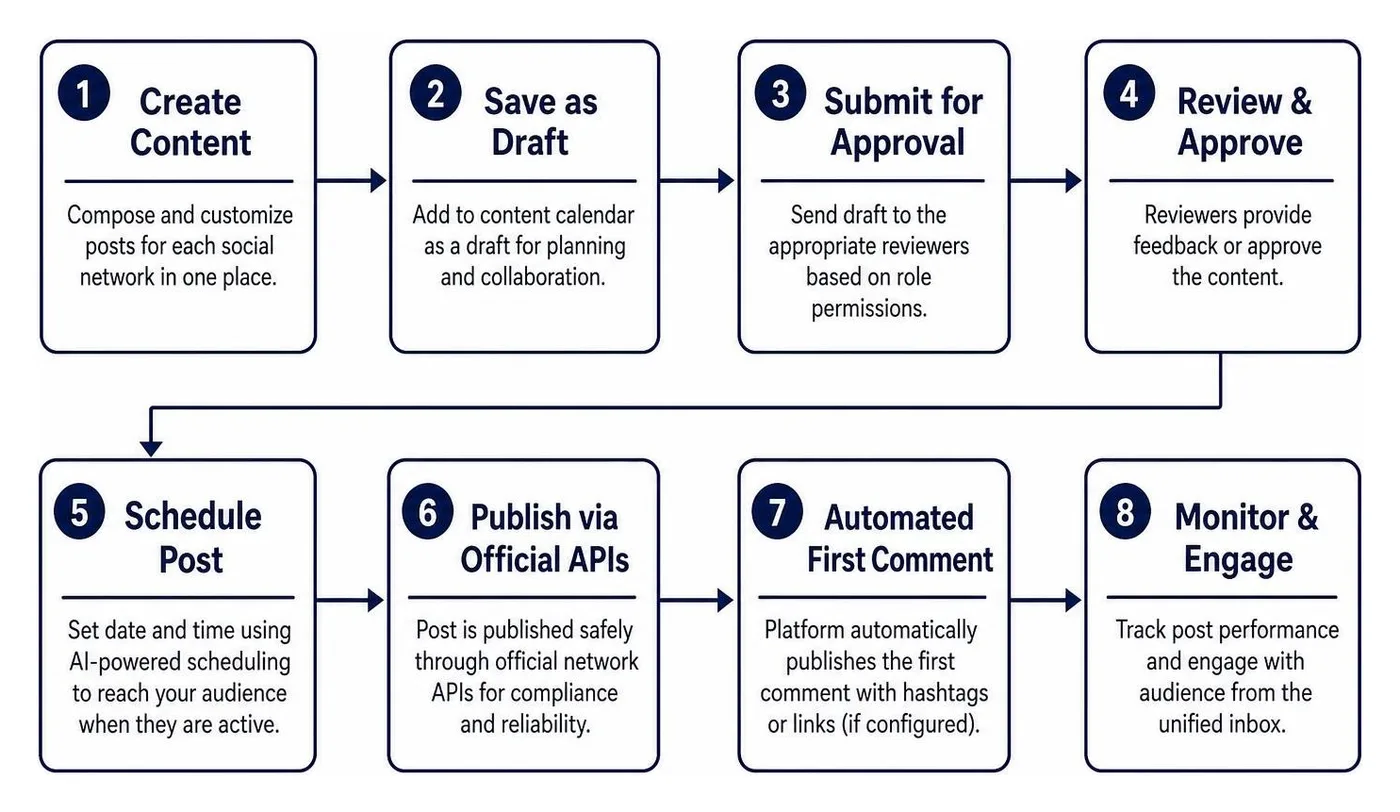
A solid publishing workflow incorporates:
Direct API Compliance: Publishing via official, verified network APIs keeps your accounts safe from shadowbans and unexpected policy suspensions.
Network Customization: Tailoring text, aspect ratios, and media formats for each specific network directly inside a single composer window.
Automated First-Comment Scheduling: Keeping post captions tidy by auto-publishing hashtags or promotional links in the first comment.
For a deeper dive into structuring your editorial calendars and operational cadences, explore our comprehensive social management guide.
Advanced Analytics and ROI Tracking
Vanity metrics like likes and impressions look great on paper, but they do not pay operational bills. High-performing marketing platforms connect organic engagement and paid promotions directly to business pipeline growth.
Detailed engagement analytics alongside native CRM integrations help teams track custom UTM parameters, conversion paths, and customer acquisition costs (CAC). When paired with targeted social media ads, these dashboards show which campaigns generate qualified leads, booked appointments, and closed revenue. This visibility ensures every dollar spent delivers measurable business results rather than surface-level activity.
Top Social Media Marketing Platforms Ranked by Small Business Use Case
Not every channel makes sense for every business. Selecting the right mix means matching your target buyer’s behavior with the platform that delivers the highest organic engagement and ad performance. For most small businesses, the best social marketing platforms are Meta, LinkedIn, TikTok, and YouTube, with each ecosystem serving a distinct role in the customer journey.
Platform Ecosystem | Primary Audience Focus | Top Ad & Content Formats | Small Business Strengths |
|---|---|---|---|
Meta (Facebook & Instagram) | Broad Consumer & Local B2B (Ages 25–65+) | Carousel Ads, Reels, Local Lead Forms, Stories | Dominant local reach, retargeting precision, native shopping |
Decision-Makers, Founders, B2B Professionals | Sponsored InMail, Document Carousels, Thought Leader Ads | Highest B2B lead quality, precise firmographic targeting | |
TikTok | Gen Z & Millennials (Ages 18–40) | Short-Form Video, Spark Ads, Creator Collaborations | Rapid organic discoverability, viral commerce potential |
YouTube | High-Intent Searchers (All Demographics) | Long-Form Video, YouTube Shorts, In-Stream Ads | Long evergreen content lifespan, high buyer intent |
Meta Ecosystem for Targeted Local and Direct-Response Reach
Meta remains the undisputed backbone for consumer brands and localized service providers. With billions of daily active users, its advertising engine lets businesses create precise custom audiences and lookalike segments.
Instagram drives visual storytelling and product discovery, while Facebook groups and local pages build neighborhood trust. Implementing structured lead generation systems on Meta allows service businesses to capture high-intent inquiries directly through interactive instant forms without making users leave the app.
LinkedIn for High-Value B2B Lead Acquisition
For B2B service firms, consultancies, and SaaS companies, LinkedIn is the premier channel for pipeline acceleration. Instead of targeting general demographics, LinkedIn allows campaigns filtered by:
Specific job titles and seniority levels
Company headcounts and revenue thresholds
Member groups and industry specializations
Pairing organic thought leadership with Account-Based Marketing (ABM) ad strategies turns cold prospects into booked discovery calls. Connecting these touchpoints into an integrated omnichannel marketing architecture ensures prospects see consistent messaging whether they visit LinkedIn, Google, or their inbox.
TikTok and YouTube for Short-Form Video and Discovery
Video content captures attention faster than static images. TikTok excels at raw, unfiltered discovery, turning everyday product demonstrations into viral purchasing trends. Meanwhile, YouTube acts as the world's second-largest search engine, providing evergreen visibility for tutorials, customer case studies, and brand documentaries.
Leveraging modern AI marketing workflows allows teams to script, produce, and repurpose long-form YouTube productions into dozens of micro-videos for TikTok and Reels, multiplying organic reach across all demographics.
Strategic Implementation and Workflow Integration
Managing disconnected software tools slows down marketing execution. An effective marketing tech stack functions as a unified operating system where customer interactions automatically sync with internal workflows and sales pipelines.
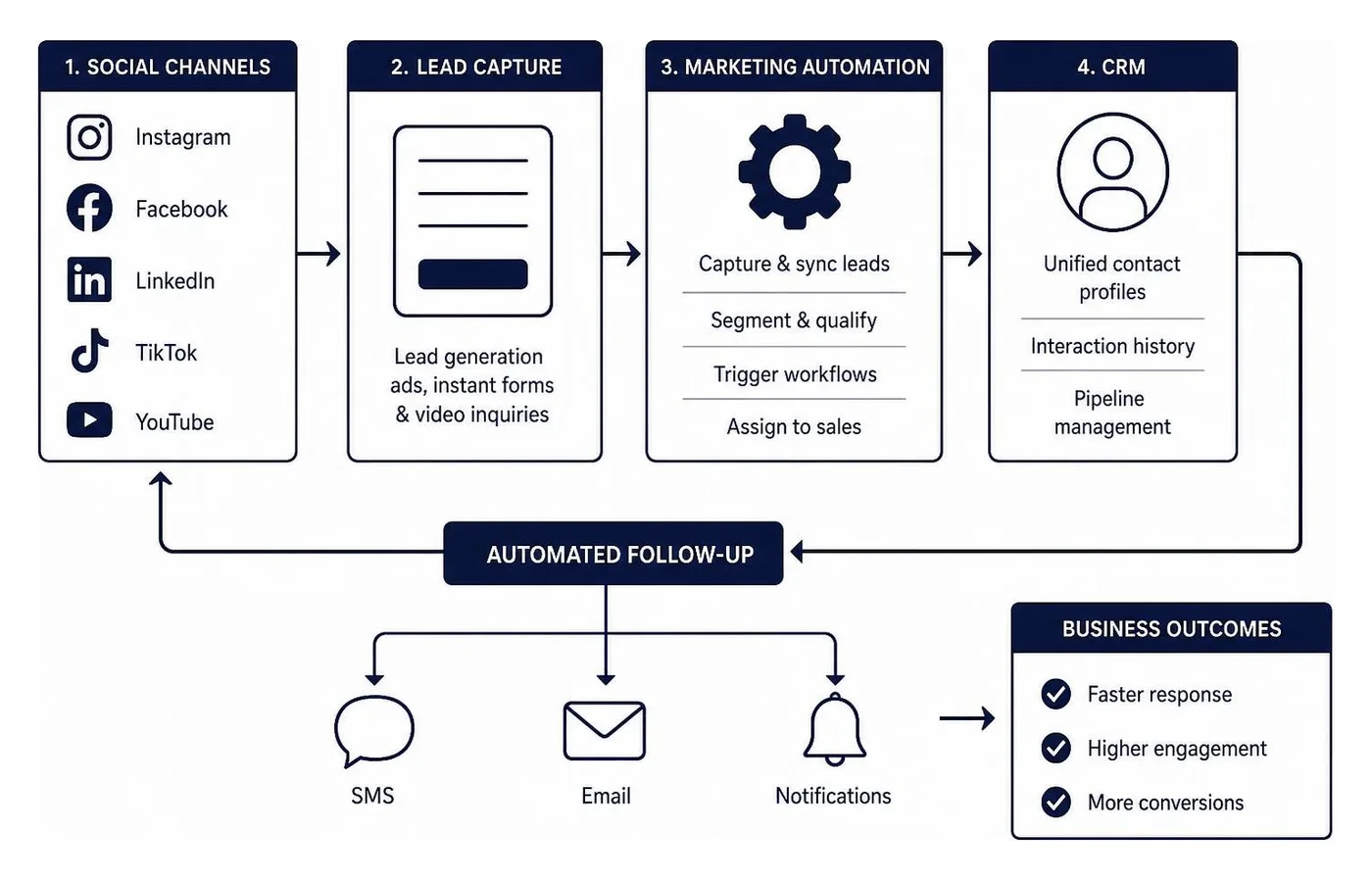
Integrating Social Channels with Business Operations
Connecting your social channels directly into centralized marketing automation platforms provides several key advantages:
Immediate Lead Routing: Inquiries submitted via social lead ads sync straight into your CRM within seconds, triggering immediate SMS and email follow-up workflows.
Unified Contact Timelines: Sales representatives can see which social posts or ads a prospect interacted with before picking up the phone.
Data Privacy and Policy Adherence: Centralizing customer data ensures compliance with global privacy regulations and platform policies without manual list uploads.
How the Best Social Marketing Platforms Drive B2B and B2C ROI
Investing in top-tier social platforms delivers compounding returns across the entire customer lifecycle:
Top of Funnel (Awareness): Targeted video campaigns and algorithmic organic reach introduce your brand to relevant prospects.
Middle of Funnel (Consideration): Retargeting campaigns, social proof, and thought leadership nurture prospects and answer common objections.
Bottom of Funnel (Conversion): Frictionless lead forms, direct messaging automation, and targeted offers convert interest into revenue.
Assigning a dedicated social media channel manager guarantees that every post, response, and campaign aligns directly with your broader business growth goals.
Selecting the Best Social Marketing Platforms for Your Business Scale
When deciding which tools and channels to prioritize, assess your organization against three simple criteria:
Team Capacity: Do you have the internal bandwidth to manage multiple complex tools, or do you need a streamlined, done-for-you operating system?
Budget Scalability: Does the platform scale predictably as you add profiles and team members without excessive per-seat penalties?
Cross-Channel Synergy: Does the software play nicely with your existing CRM, creative assets, and analytics tracking?
A well-integrated stack also improves reporting accuracy. When social engagement data flows into the same dashboard as email performance, ad spend, and sales activity, business owners can compare channel efficiency side by side. This unified view makes it easier to identify which platforms deserve more budget and which campaigns need creative refreshes. Over time, these insights compound into a repeatable growth system that supports both short-term promotions and long-term brand building.
Frequently Asked Questions About Social Marketing Platforms
What makes an all-in-one social marketing platform essential for small businesses?
An all-in-one platform consolidates publishing, social listening, direct messaging, and analytics into a single dashboard. This eliminates tool fatigue, prevents dropped leads, and gives business owners a clear view of which channels actually generate revenue.
How do AI-powered features enhance modern social media platforms?
Modern AI features assist teams by generating caption ideas, identifying trending industry hashtags, suggesting optimal posting windows based on audience activity, and drafting initial responses to routine customer inquiries.
How often should small businesses audit and adjust their social platform mix?
We recommend conducting a performance audit every quarter. This cadence lets you review cost-per-acquisition (CPA), account growth, and conversion rates across each active channel, giving you the data needed to reallocate budget toward your highest-performing assets.
Which social marketing platforms should a small business prioritize first?
Most small businesses should start with the platforms where their target audience is already active. Meta works well for local consumer reach and retargeting, LinkedIn suits B2B service providers, and TikTok or YouTube can accelerate discovery through short-form and long-form video. Rather than spreading limited resources across every network, focus on two or three channels that align with your buyer demographics and content production capacity.
Conclusion
Building a profitable digital presence does not require juggling twenty disconnected apps or spending hours manually scheduling daily updates. The key is deploying an integrated marketing operating system that unifies social scheduling, audience analytics, CRM follow-ups, and conversion tracking under one roof.
At RewardLion, we install and manage complete, AI-powered growth engines for expanding businesses. From paid media buying to creative production and daily platform optimization, our team handles execution so you can focus on running your business. Ready to take your digital marketing to the next level? Discover how you can scale your social advertising with expert management.