Why Every Modern Marketing Team Needs an Automated Marketing System
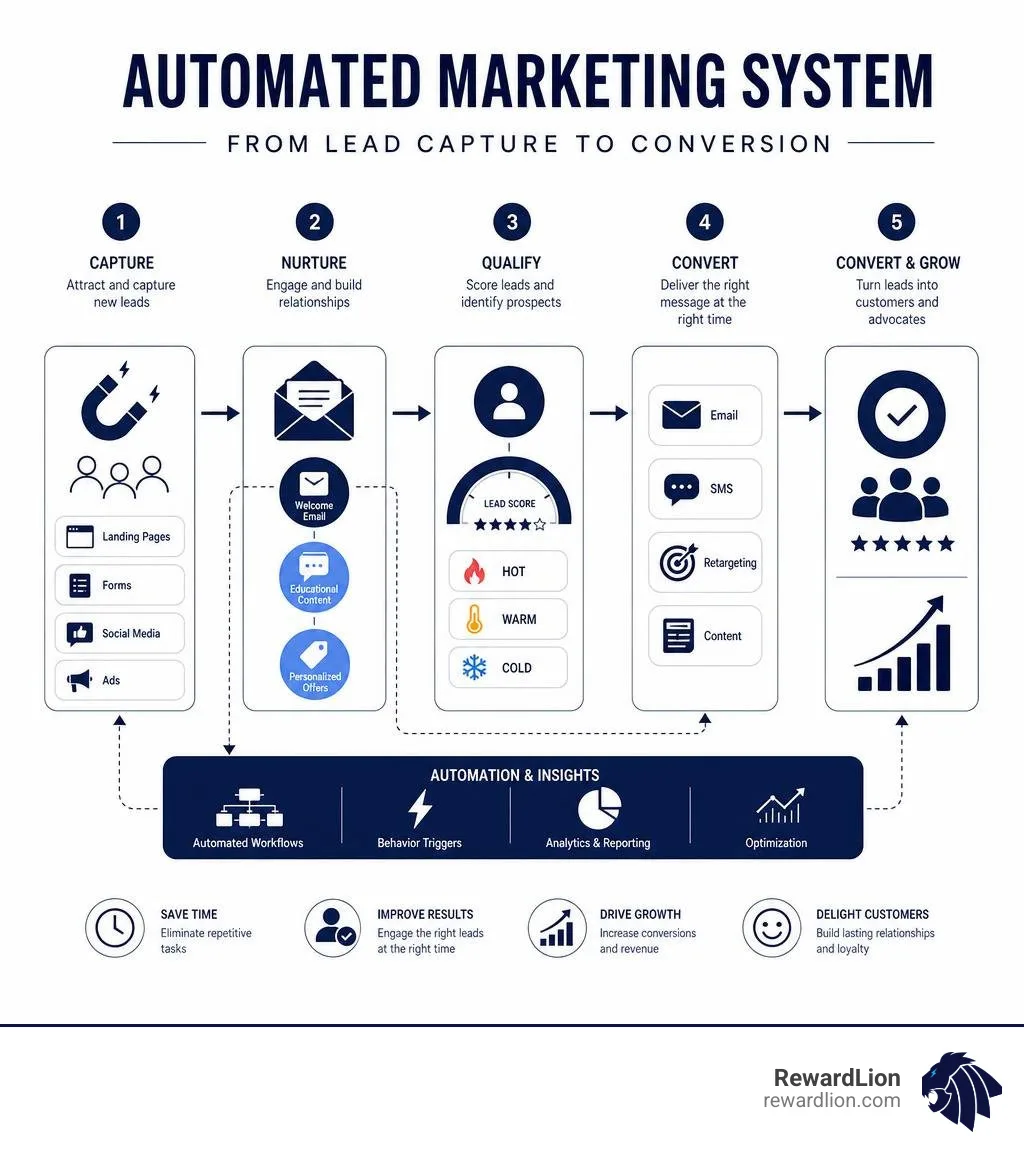
An automated marketing system is software that replaces repetitive marketing tasks — like sending emails, scoring leads, and scheduling campaigns — with rules, triggers, and AI that run without manual effort.
Quick answer: What is an automated marketing system?
Element What It Does Triggers Starts actions based on customer behavior (e.g., a signup, a click, an abandoned cart) Workflows Moves leads through a defined sequence automatically Personalization Sends the right message to the right person at the right time Analytics Tracks performance and optimizes campaigns without manual reporting Integrations Connects your CRM, email, SMS, ads, and other tools into one system
Planning campaigns, chasing approvals, manually scheduling every email — marketing can feel less like strategy and more like spinning plates. Most small and medium businesses aren't short on ideas. They're short on time and tools that actually work together.
The numbers tell the story clearly. Companies using marketing automation see up to a 451% increase in qualified leads. Automated email campaigns generate 18x more revenue than standard broadcast emails. Marketers save an average of 5+ hours per week on repetitive tasks alone.
Yet many business owners are still stitching together disconnected tools — one for email, one for CRM, one for social — and wondering why their results feel scattered.
This guide is written to help you cut through the noise and find the right system for your team, your budget, and your goals.
I'm Mike Ibrahim, Founder and CEO of RewardLion and Marketing Director for several companies, with over a decade of hands-on experience designing and deploying automated marketing systems across diverse industries. My work spans e-commerce strategy, lead generation, and revenue growth — giving me a practical, results-first perspective on exactly what separates systems that perform from ones that just add complexity.
Understanding the Modern Automated Marketing System
To truly leverage an automated marketing system, we must first understand what it is - and, just as importantly, what it is not. For a neutral overview of the broader category, see this reference on marketing automation.
A common misconception is that marketing automation is simply a glorified email blast tool or a basic Customer Relationship Management (CRM) system. In reality, while a CRM tracks sales interactions and customer data, and email tools send broadcast messages, a marketing automation platform bridges the gap between the two. It acts as the central brain that listens to customer behaviors across all touchpoints and triggers hyper-personalized, multi-channel responses in real-time.
For example, when a prospect downloads an e-book on your website, a basic email tool might send a generic "thank you" email. A true marketing automation platform, however, will:
Log the activity in your customer profile.
Score the lead based on their engagement level.
Trigger a targeted follow-up sequence.
Notify a sales representative if the lead's behavior indicates high buying intent.
By consolidating customer data from email, SMS, social media, and web interactions, businesses can eliminate fragmented data silos. This consolidation yields a massive financial benefit: organizations using these systems report an average 12.2% reduction in marketing overhead.
To explore how these systems function in a broader digital landscape, check out our deep dive on Digital Marketing Automation Software.
Scaling Automation: SMB Needs vs. Enterprise Requirements
The beauty of a modern automated marketing system is its scalability. However, the way a small business uses automation differs drastically from how a global enterprise deploys it.
While both seek to drive revenue, their resource allocation, workflow complexity, and daily operational hurdles require distinct approaches.
Tailoring an Automated Marketing System for SMBs
For small and medium-sized businesses (SMBs), the primary goals are budget efficiency and saving precious hours. SMB owners and lean marketing teams wear multiple hats. They cannot afford to spend hours manually sorting leads or sending individual follow-ups.
Implementing automation allows SMBs to scale their personalization from 100 to 10,000 customers without hiring a massive department. With automated lead nurturing, sales productivity increases by an average of 14.5%, allowing small sales teams to focus only on hot leads that are ready to buy.
If you are a growing business looking to optimize your workflow, utilizing Small Business Automation Software can help you streamline operations. Local businesses throughout Florida—from Fort Lauderdale to Miami—frequently use these tools to maintain a competitive edge and scale their operations efficiently.
Deploying an Automated Marketing System for Enterprise Scale
At the enterprise level, the challenges shift from basic time-saving to managing extreme complexity. Enterprises deal with millions of contacts, massive data silos, and strict security compliance requirements (such as GDPR and CCPA).
For these organizations, an enterprise-grade automated marketing system must offer:
True Cross-Channel Orchestration: Coordinating messaging across web, mobile apps, SMS, email, WhatsApp, and paid media.
Granular Role-Based Access: Ensuring large, distributed teams can collaborate safely without altering master workflows.
Enterprise Security: Guaranteeing 99.9%+ uptime and secure data handling across global regions.
To understand how high-level organizations manage these complex workflows, see our comprehensive guide on Enterprise Marketing Automation Solutions.
Essential Features of Next-Generation Automation Platforms
When evaluating marketing automation platforms in June 2026, certain core features are non-negotiable for achieving a high return on investment.
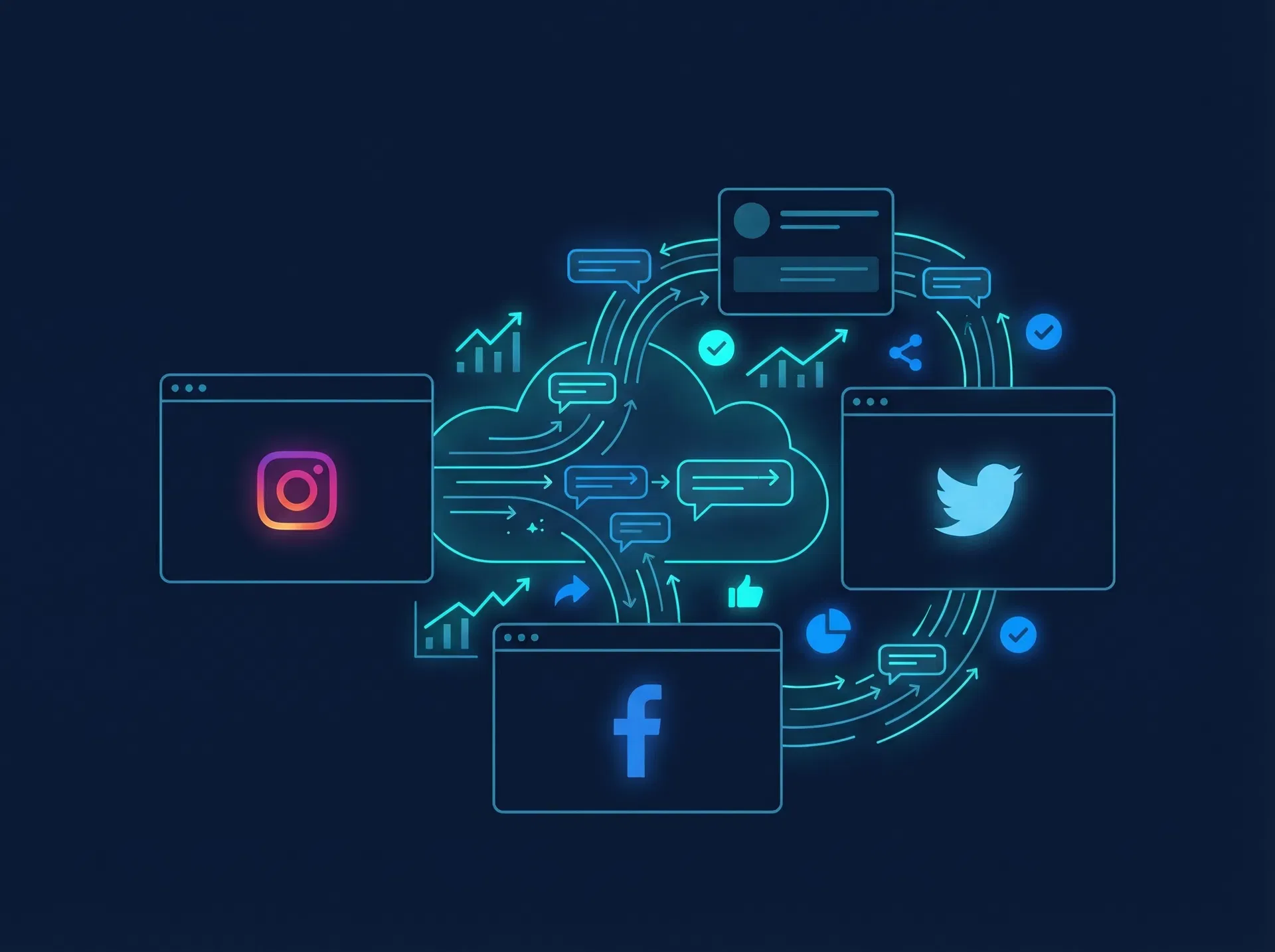
Visual Journey Builders: Drag-and-drop interfaces that allow you to map out the entire customer lifecycle, setting conditional logic (if/then branches) based on real-time user actions.
Automated A/B Testing: Systems that automatically test subject lines, send times, or content variations, and autonomously route the majority of traffic to the winning version.
Unified Customer Data Platform (CDP) Integration: Consolidating structured and unstructured data to build a true 360-degree view of your customer.
Comprehensive Analytics Dashboards: Moving past basic open rates to measure closed-loop revenue attribution and funnel velocity.
AI Personalization and Predictive Analytics
The integration of artificial intelligence has revolutionized marketing. Instead of basic personalization (like inserting a first name), next-generation platforms use predictive analytics to anticipate customer needs.
AI-powered systems analyze historical data to target users based on their "discount affinity," likelihood to purchase, or churn risk. For example, if the system detects a customer is losing interest, it can automatically trigger a specialized re-engagement campaign. Furthermore, automated personalized product recommendations can drive 40% higher conversion rates.
To discover how modern AI can supercharge your conversions, explore our insights on building an Ai Driven Sales Platform.
Cross-Channel Orchestration and Integrations
Your automation system cannot exist on an island. It must integrate seamlessly with your existing tech stack, including your CRM, e-commerce platform, and analytics tools.
Modern systems use advanced APIs and webhooks to synchronize data instantly. When a customer interacts with an SMS campaign, that data should immediately inform the emails they receive and the ads they see on social media.
To learn more about setting up these seamless, multi-channel flows, read our guide on Email Marketing Automation Software. For businesses in specialized niches, utilizing pre-built, industry-specific workflows can help streamline operations and ensure compliance.
How to Evaluate and Choose the Right Platform
Selecting the right platform requires balancing your business goals, team capabilities, and budget. Most platforms scale their pricing based on contact volume or the number of monthly emails sent, meaning a tool that seems cheap initially can become incredibly expensive as your database grows.
Platform Tier Target Business Size Key Strengths Typical Pricing Model Entry-Level / SMB Solopreneurs & Small Teams User-friendly, quick setup, affordable Flat monthly fee or low contact-based tiers Mid-Market Growing SMBs & B2B Teams Advanced workflows, CRM integration, SMS Tiered pricing scaling with contact volume Enterprise Global Brands & Corporations Omnichannel CDP, AI agents, strict compliance Custom annual contracts with onboarding fees
To make an informed decision, you must evaluate the total cost of ownership, including setup fees, integration costs, and the internal resources required to manage the software.
If you want a fully managed, hassle-free setup tailored to your business, consider Partnering with a Marketing Automation Agency to deploy a custom growth engine.
Implementation Best Practices and Common Pitfalls
Even the most expensive automated marketing system will fail without a strategic implementation plan. Too many teams purchase software and immediately begin building complex workflows without laying the proper groundwork.
To ensure a successful rollout, follow these proven best practices:
Clean and Segment Your Database: Before importing contacts, clean your list to remove duplicates and inactive users. Segment your audience by demographics, purchase history, and engagement level.
Visualize Your Workflows First: Sketch your customer journeys on a whiteboard or digital canvas before building them in the software. This keeps your campaigns organized and prevents logical errors.
Build a Modular Content Library: Create reusable email templates, pre-approved copy blocks, and brand assets. This accelerates your campaign creation and ensures brand consistency.
Start Small and Test Continuously: Do not try to automate your entire customer journey overnight. Start with a simple welcome series, test it, optimize it, and then expand to more complex sequences.
For a deeper look at managing your incoming leads and setting up automated qualification rules, read our resource on Lead Automation Software. For regional businesses, implementing localized email marketing strategies can dramatically improve local engagement and deliverability.
Frequently Asked Questions about Marketing Automation
How does marketing automation improve lead conversion rates?
Marketing automation improves conversion rates by ensuring that no lead is left behind. Through automated lead scoring, the system tracks a prospect's behavior—such as visiting pricing pages or opening emails—and identifies exactly when they are ready to buy.
By delivering highly relevant content at the precise moment of interest, companies using automation experience up to a 451% increase in qualified leads.
What is the difference between CRM and marketing automation?
A CRM (Customer Relationship Management) system is primarily a sales tool used to manage one-on-one relationships, track sales pipelines, and store customer contact histories.
Marketing automation, on the other hand, is a marketing-focused system designed to manage scale. It uses automated triggers and workflows to nurture large groups of leads across multiple channels before they are handed off to the sales team inside the CRM.
How do AI agents enhance automated marketing workflows?
AI agents represent the future of marketing automation. While traditional automation relies on static, human-defined "if/then" rules, AI agents can execute tasks autonomously based on broad strategic goals.
These agents can analyze campaign performance in real-time, write optimized copy variations, reallocate ad budgets to high-performing channels, and dynamically adjust email send times for individual subscribers without requiring manual intervention.
Conclusion: Building Your Automated Growth Engine
At RewardLion, we believe that modern businesses shouldn't have to choose between complex software they don't have time to run and traditional agencies that don't understand technology.
That is why we built the RewardLion OS—an AI-powered, all-in-one operating system that unifies your marketing, sales, automation, and analytics into a single, cohesive platform.
Our unique differentiator is our hybrid SaaS + expert team management model. We don't just hand you a login and wish you luck. Our dedicated, fractional CAPSS team acts as your in-house marketing agency. We install, optimize, and manage your entire automated growth system for you—handling everything from Local SEO and paid advertising to CRM setups, video production, and custom automated workflows.
Whether you are based in Las Olas, Fort Lauderdale, Miami, Boca Raton, or operating internationally, we are ready to help you scale your business on autopilot.
Are you ready to stop spinning plates and start growing predictably? Get Your Quote today, and let us build your automated growth engine.