How to Advertise Real Estate on Social Media in 2026
Start with a short property tour or neighborhood video, not another “Just Listed” graphic. Post three to five times a week on one main platform, such as Instagram, and share useful local advice more often than listings. End each post with a clear invitation to message you, then reply quickly and track which conversations lead to appointments.
That approach fits how people shop for homes in 2026: 96% of buyers use online tools during their search. Social media can help them discover a property, but its bigger job is to make your name familiar before they are ready to move. This guide shows how to plan content, run compliant ads, and turn that familiarity into leads without spending every day making posts.
I’m Mike Ibrahim, founder and CEO of RewardLion. I bring more than a decade of marketing and lead-generation experience to this guide on advertising real estate on social media, with a focus on practical systems that connect content to business results.
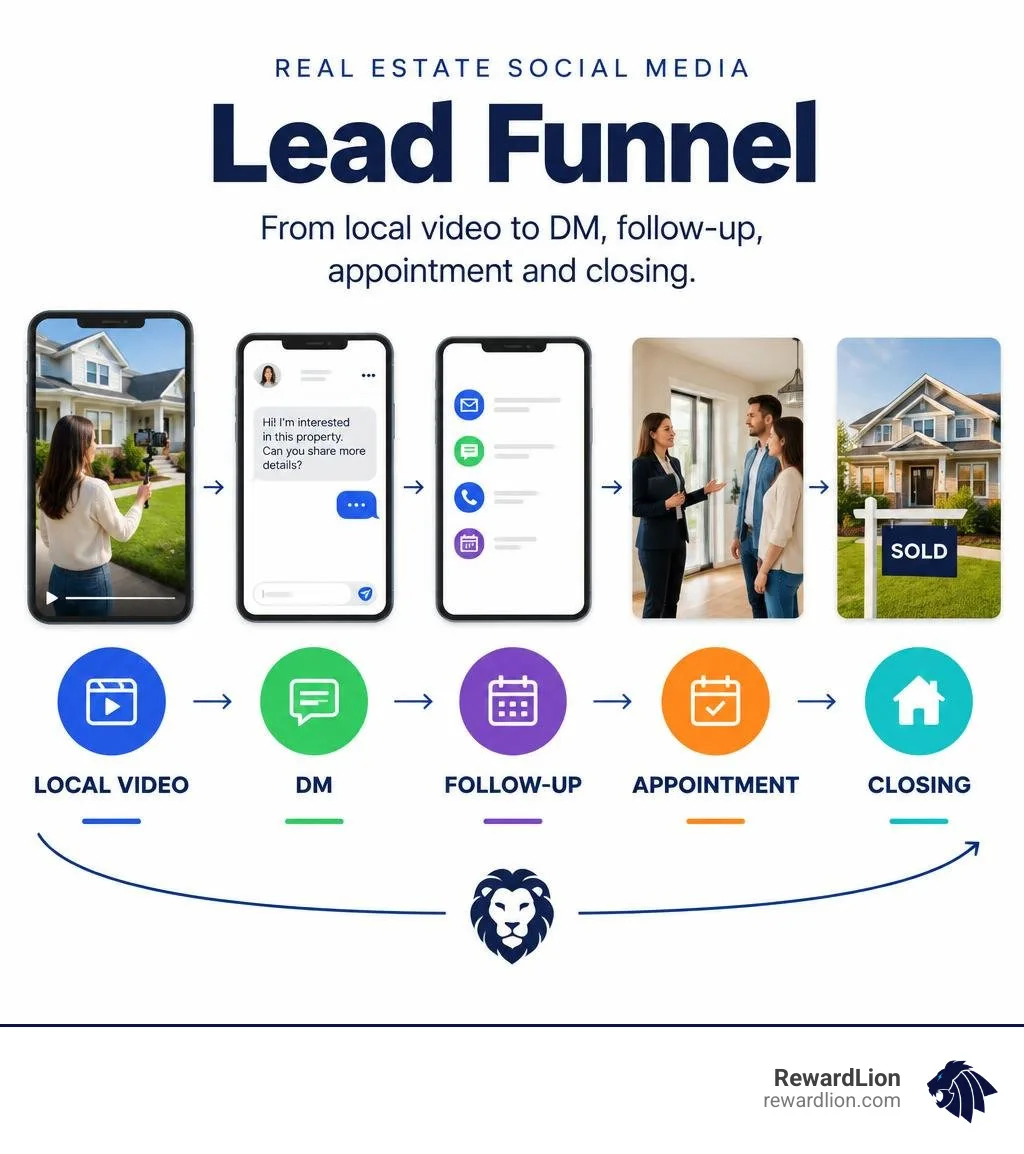
The Modern Engine: Advertising Real Estate on Social Media with High-Converting Content
The digital landscape has fundamentally evolved. Static flyers, flat graphics, and sterile open-house announcements no longer capture attention in crowded social feeds. Today, the single highest-converting content format for real estate professionals is short-form vertical video (Reels, TikToks, and YouTube Shorts).
The data makes the advantage undeniable: listings with video generate 403% more inquiries than static posts, and properties marketed with dynamic video sell 31% faster. Furthermore, short-form vertical video drives roughly 5x more local discovery compared to standard image posts because social algorithms actively prioritize motion, watch time, and retention.
Many agents believe they need expensive cinema cameras and studio crews to see results. In practice, high-polish production can often create emotional distance. High-converting content thrives on authenticity: a clean smartphone camera, natural light, crisp audio, and an agent speaking directly to the audience build immediate rapport.
While investing in specialized video production is invaluable for flagship luxury listings and core branding assets, your day-to-day social cadence should focus on relatable, face-on-camera moments that algorithms distribute directly to local homeowners.
Core Strategy: The 70/30 Content Rule for Inbound Inquiries
A common trap in real estate marketing is turning an Instagram feed or Facebook page into an endless digital billboard of "Just Listed" and "Just Sold" announcements. When an account posts only transactions, prospective buyers and sellers tune out because the content offers no inherent value to their daily lives.
To build an audience that actively engages and converts into inbound direct messages (DMs), we implement the 70/30 Content Rule:
70% Value, Education, and Community: Market breakdowns, relocation tips, local school district guides, interviews with neighborhood business owners, behind-the-scenes negotiation stories, and homebuyer FAQs.
30% Active Listings and Direct Promotion: Property walkthroughs, open-house invitations, price adjustments, and recent client success stories.
By anchoring your messaging in comprehensive content marketing, you position yourself as the undisputed local market authority. When community members eventually decide to list their home, your brand is already their trusted, default choice.
Step-by-Step Blueprint for Property Tour Reels and Neighborhood Guides
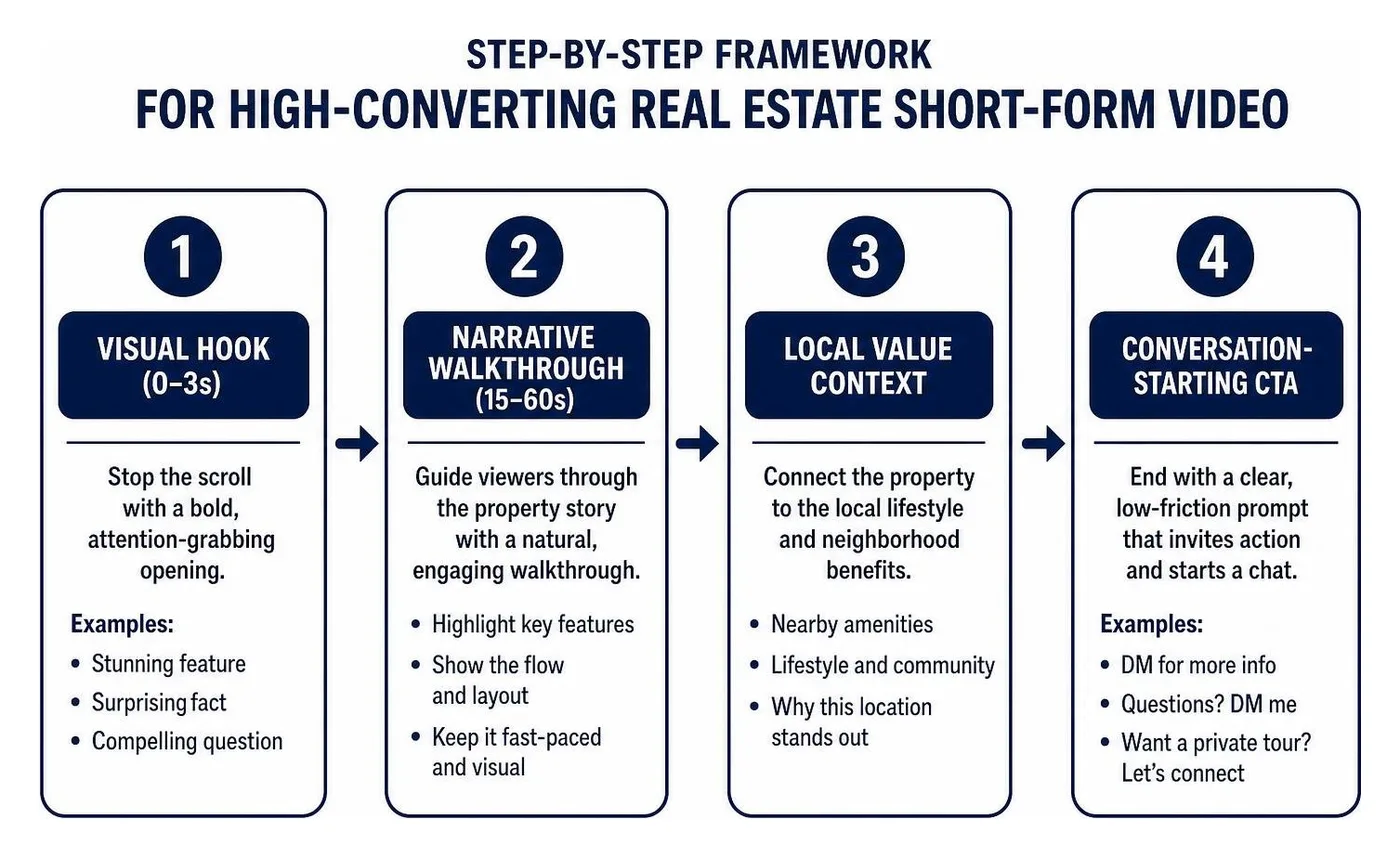
Creating engaging property tours and neighborhood spotlights requires a repeatable framework. Here is our step-by-step blueprint designed to maximize algorithmic discovery and inbound DMs:
The 3-Second Hook: Open directly in front of the home’s standout feature—such as a chef's kitchen, custom pool, or architectural entryway. Use a verbal and visual hook: "This is what $850,000 gets you in Las Olas, and wait until you see the primary suite closet."
Pacing and Flow (45–75 Seconds): Move dynamically through the home. Keep individual clips between 2 to 4 seconds to maintain viewer retention. Avoid long, static pan shots.
Hyper-Local Context: Connect the property to its surroundings. Mention walking distances to neighborhood parks, local coffee shops, or popular transit routes.
On-Screen Text Overlays & Captions: Over 60% of social media users watch videos without sound. Include dynamic, auto-generated subtitles and key property details (square footage, bed/bath count, HOA facts) directly on screen.
Micro-Geotagging: Tag the exact neighborhood or district rather than just the broader metropolitan area to improve local search visibility.
Friction-Free Call to Action (CTA): Instead of directing viewers to an external link, prompt a direct conversation: "Comment 'TOUR' below, and I’ll send you the full private walkthrough video and floor plan directly to your DMs."
Multi-Platform Strategy: Where and When to Post for Compounding Reach
No single social network covers every buyer and seller persona. Winning in modern digital real estate requires an integrated omnichannel marketing system that distributes targeted content across distinct demographics while maintaining consistent social media management.
Platform | Primary Audience Demographic | Best Content Format | Ideal Weekly Cadence | Core Strategic Advantage |
|---|---|---|---|---|
25–44 years old (46% of user base) | Reels, Stories, High-Res Carousels | 3–5 Reels, Daily Stories | Visual lifestyle storytelling & direct DM conversion | |
35–65+ years old (3B active users) | Community Posts, Video Tours, Local Groups | 3–4 Feed Posts, Active Group Chats | Sphere of Influence (SOI) nurturing & local event promotion | |
TikTok | 18–35+ years old (Rapidly aging up) | Raw Vertical Video, Agent Commentary | 3–5 Short Videos | Uncapped organic local discovery for new accounts |
YouTube | All demographics (84% of US adults) | Long-Form Tours, YouTube Shorts | 1 Long Tour, 2–3 Shorts | Evergreen search engine optimization on Google |
High earners (Over 50% high-income) | Market Analysis, Commercial & Investor Posts | 2–3 Text/Carousel Updates | B2B networking, high-net-worth investors, and corporate relocations |
Platform Priorities: Best Practices for Advertising Real Estate on Social Media
Instagram: Use Stories for behind-the-scenes moments, client walkthroughs, and interactive polls that gauge buyer intent. Use your main grid and Reels to showcase polished listings and community highlights.
Facebook: Facebook remains the operational hub for your existing sphere of influence. Share neighborhood market reports, client testimonial stories, and host Facebook Live virtual open houses.
TikTok: Take advantage of TikTok's recommendation engine. Focus on candid commentary, real estate myth-busting, and honest home reviews. The platform allows agents with small followings to generate tens of thousands of local views.
LinkedIn: With more than 1 billion global users and a demographic heavy with high-income earners, LinkedIn is ideal for sharing commercial listings, local economic development news, and real estate investment strategies.
YouTube: YouTube operates as the world's second-largest search engine. Long-form neighborhood deep-dives (e.g., "Moving to Fort Lauderdale: The Complete 2026 Relocation Guide") rank in Google search results and generate passive leads for years.
Scaling Content with AI Without Losing Authenticity
The primary reason agents fail to maintain a consistent social media presence is creative fatigue. Incorporating modern AI marketing automation enables you to streamline production time by 50% to 70% while keeping your unique voice front and center:
Script Outlines and Ideation: Use AI writing assistants to generate video outlines, local market talking points, and caption drafts tailored to specific buyer personas.
Automated Video Editing: AI-powered editing tools allow you to edit vertical video simply by modifying transcribed text, automatically cutting awkward pauses, and adding dynamic subtitles.
24/7 DM Response Automation: Pairing conversational AI systems with your social accounts ensures that whenever a prospect comments a keyword on your post, an automated workflow delivers the requested resource and collects their contact details in seconds.
From Views to Closings: Paid Campaigns, DM Funnels, and Conversion Systems
Organic reach creates brand awareness, but paid social campaigns build predictable pipeline growth. Running paid real estate ads requires strict adherence to digital advertising regulations, including Meta’s Special Ad Category for Housing.
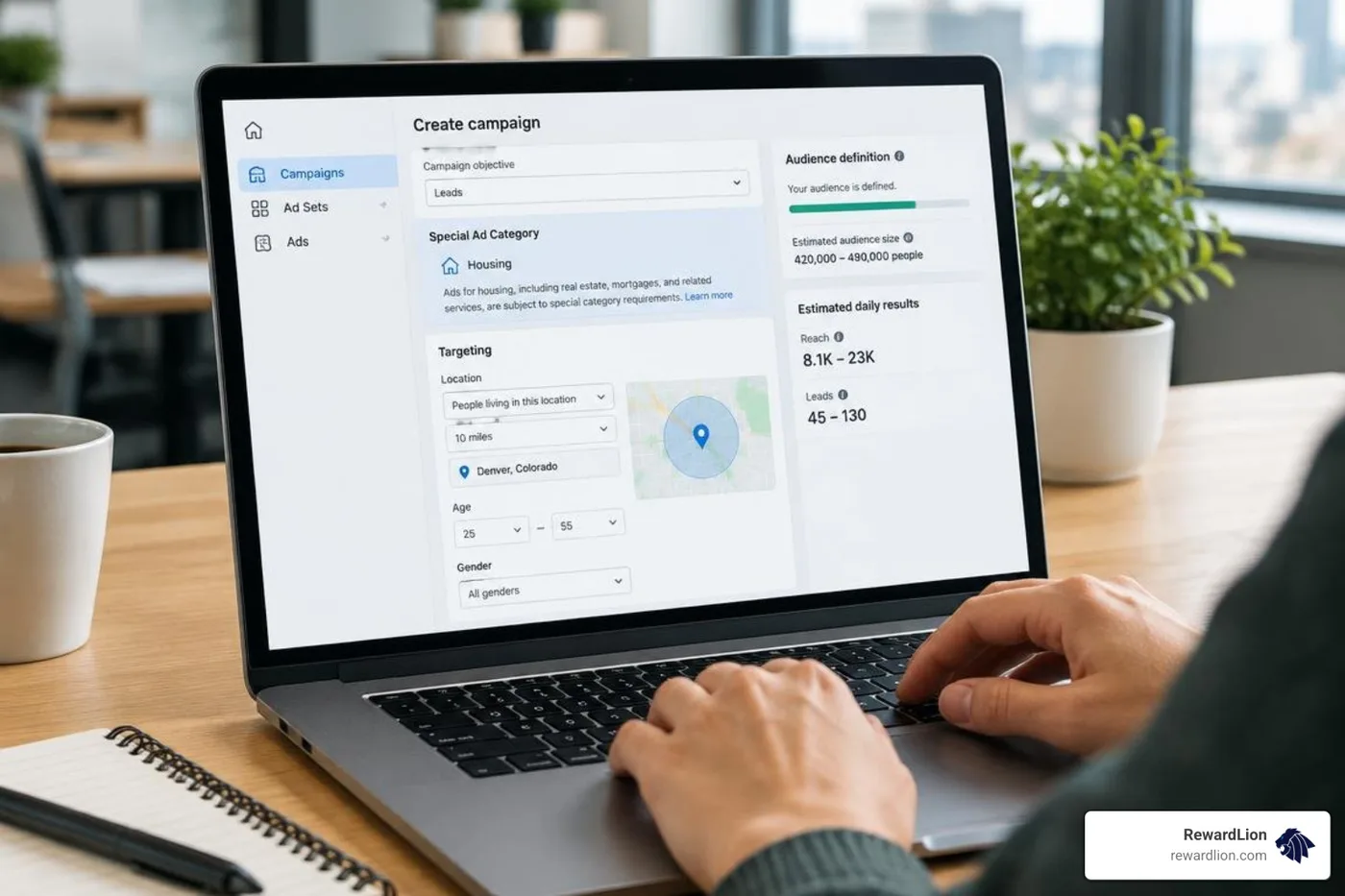
Under these compliance rules, demographic targeting options such as age, gender, parental status, and ZIP codes are restricted to prevent discrimination under the Fair Housing Act. Successful targeting now relies on:
Broader Geographic Radii: Setting minimum 15-mile radius targeting around your core market.
Creative-Led Targeting: Designing ad copy and video visuals that naturally filter and attract your specific target demographic (such as first-time buyers, luxury move-ups, or downsizers).
Mandatory License Disclosures: Ensuring your brokerage name, state license numbers, and altered-image disclosures (such as virtually staged photos) are clearly visible on profiles and ad creatives.
Step-by-Step Funnel: Turning Social Followers into Signed Listing Agreements
Social media interactions must lead prospects into a structured conversion funnel. Social leads generally take 6 to 12 months to transition from first discovering your profile to signing an agreement, making an automated nurture system essential.
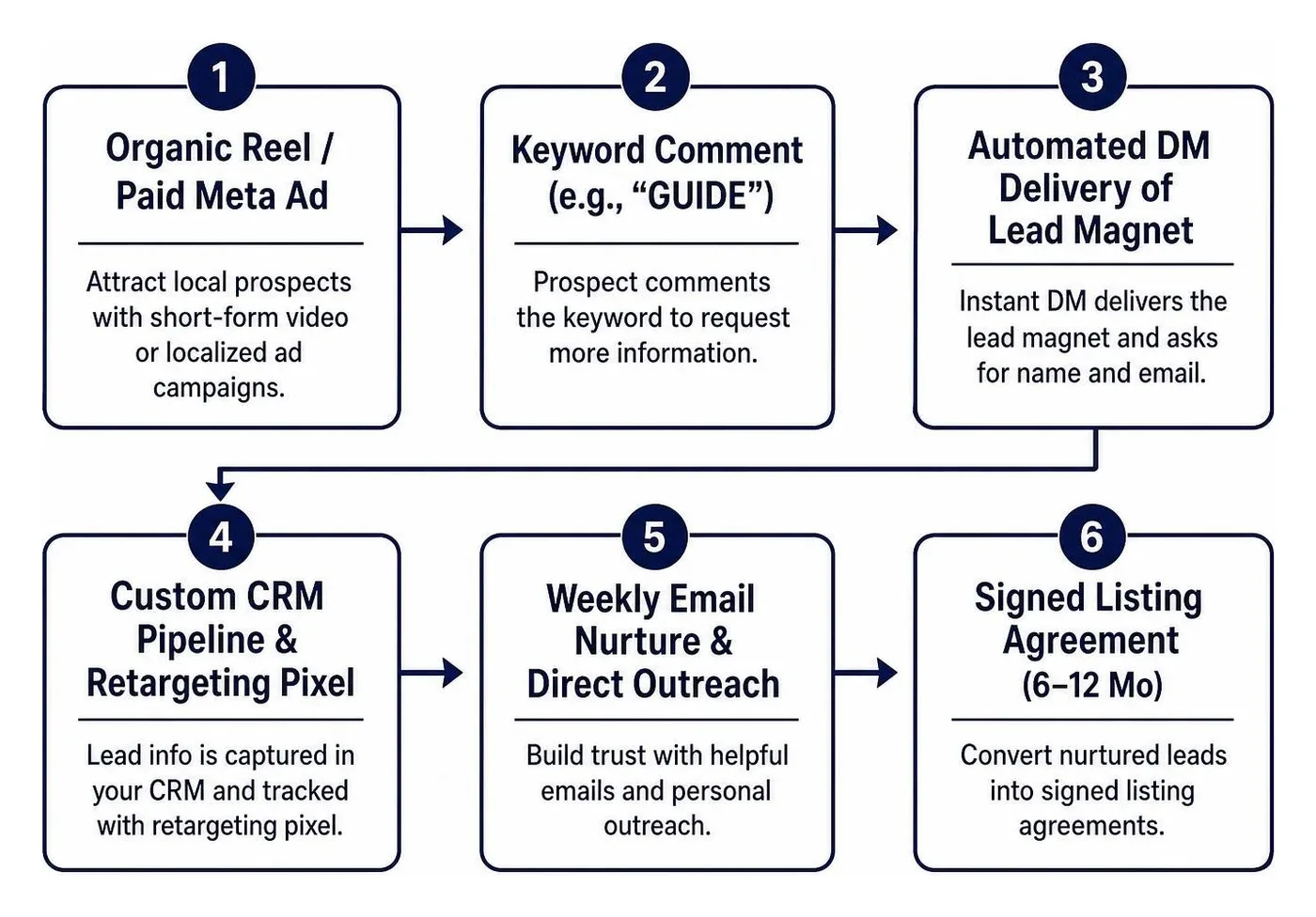
Top of Funnel (Discovery): Attract local prospects through short-form video Reels or localized paid ad campaigns.
Lead Magnet Delivery: Offer a tangible resource—such as a "2026 Neighborhood Market Report," "First-Time Buyer Checklist," or "Off-Market Property List."
Automated DM Capture: Use comment triggers to immediately direct-message the resource link, prompting users for their name and email in exchange for instant access.
CRM Integration: Route captured lead information directly into your centralized lead generation system.
Retargeting Sequences: Deploy custom Meta pixel retargeting ads to serve helpful video testimonials and new listing alerts to anyone who visited your landing page over the past 90 days.
Avoiding Costly Pitfalls When Advertising Real Estate on Social Media
To protect your budget and build sustainable digital authority, steer clear of these six common industry pitfalls:
Ignoring Direct Messages and Comments: Research shows 76% of consumers expect rapid responses on social media. Letting inbound inquiries sit unaddressed for days kills conversion rates.
Buying Fake Followers or Engagement: Purchasing followers destroys algorithmic distribution by filling your audience with bot accounts that never interact with your content.
Broadcasting Only Listings: Posting nothing but property flyers turns your profile into an ad catalogue. Balance your feed using proven effective advertising strategies.
Failing to Show Your Face: Faceless brokerage channels consistently underperform. People hire agents they know, like, and trust.
Neglecting Compliance and Disclosures: Omitting brokerage details or failing to label virtually staged photos can result in MLS fines and regulatory penalties.
Giving Up Too Soon: Expecting instant closings from organic posts within 30 days leads to premature abandonment. Treat social media as long-term business infrastructure.
Budgeting, KPIs, and Agency Management for Real Estate Professionals
Evaluating the performance of your social media marketing requires shifting focus from vanity metrics (likes and impressions) to pipeline metrics (saves, shares, DM inquiries, and cost per qualified lead).

On Facebook and Instagram, real estate leads typically cost between $5 and $25 per lead through targeted lead forms and DM campaigns, compared to portal platforms where cold leads often range from $20 to $60+.
When managing social marketing initiatives, agents generally choose between handling production internally using specialized lead generation tools for real estate agents or hiring an external agency.
Agency Retainer Benchmarks and Contract Red Flags
If you partner with an agency to handle your creative production, paid ads, and automation, standard monthly retainers typically range from:
$1,500 – $3,000/month: Essential ad management, basic video editing, and campaign setup.
$3,000 – $5,000+/month: Full-service omnichannel management, custom video production, CRM integration, and automated nurture pipelines.
Agency Red Flags to Watch Out For:
Guarantees of Overnight Closings: Social real estate marketing requires a consistent 6–12 month nurturing cycle.
No Direct Ad Account Access: You should always own your Meta Ads Manager, creative assets, and lead databases.
Focusing Exclusively on Vanity Metrics: Reporting on "impressions" without tracking actual cost-per-lead, CRM entries, or inbound consultations.
Generic, Cookie-Cutter Templates: Using stock photos and generic graphics that strip away your local brand identity.
Frequently Asked Questions About Real Estate Social Media Ads
How long does it take for social media leads to convert into closed transactions?
Social media leads generally convert within 6 to 12 months. Unlike search portal users who may be looking to tour a property immediately, social media prospects often enter your ecosystem earlier in their research phase.
Nurturing these contacts through consistent video content, automated email newsletters, and structured marketing automation ensures that when they are ready to transact, your brand is top of mind.
How much should a real estate agent spend on paid social advertising per month?
A balanced starting budget for an individual agent is $500 to $1,500 per month allocated toward paid campaigns. We recommend dividing this spend across two primary categories:
70–80% for Cold Audience Discovery: Running localized video view and lead-generation campaigns targeted within a 15-mile radius.
20–30% for Retargeting: Serving active listings, market updates, and client success stories to custom audiences of past website visitors, video viewers, and CRM contacts using targeted social media ads.
Do I need professional videography equipment to succeed on social media?
No. Modern smartphones equipped with 4K recording capabilities, paired with an inexpensive wireless microphone and a compact gimbal stabilizer, are more than sufficient to build a high-performing social presence.
Native, candid video content routinely outperforms high-production studio pieces in social algorithms because it feels authentic, approachable, and integrated into the user's feed. Consistency and clear delivery matter far more than expensive camera gear.
Conclusion
Succeeding with social media advertising in 2026 requires moving past isolated property posts and building a connected, client-focused growth engine. By publishing value-first vertical video, maintaining the 70/30 content rule, engaging directly through automated DM workflows, and reinforcing your reach with compliant paid ads, you create a sustainable pipeline that turns casual viewers into signed agreements.
At RewardLion, we help real estate professionals deploy connected, AI-driven growth systems. From custom creative workflows to automated multi-channel lead funnels, our team provides the unified platform and hands-on management you need to scale your market presence.
Ready to transform your digital strategy into predictable closings? Explore our dedicated paid advertising and marketing solutions today to dominate your local market.